donderdag 16 juni 2022

Oud-privacyfunctionaris: bij de overheid heerst een cultuur van achterhouden


Oud-privacy-functionaris: 

bij de overheid heerst een cultuur van achterhouden

Ben van Hoek : Delen van de overheid plegen „grootschalige obstructie” om informatie maar niet openbaar te hoeven maken, zegt Ben van Hoek, tot april de privacyfunctionaris bij de korpsleiding van de politie.

De vergadering op het hoofdkantoor van de politie is net afgelopen als Ben van Hoek aan de praat raakt met een collega. De man vertelt dat hij werkte op het ministerie van Justitie en Veiligheid. Ook Van Hoek stelt zichzelf voor: hij coördineerde bij de politie jarenlang de Wob-verzoeken. „De Wób?” – de ambtenaar schiet in de lach. Via deze Wet openbaarheid van bestuur proberen journalisten allerlei interne informatie op vragen, zegt hij. Maar deze ambtenaar werkt daar niet aan mee. „Je vergeet weleens een documentje, hè.”

Het is typerend voor hoe binnen grote delen van de overheid wordt gedacht over transparantie, zegt Van Hoek over zijn anekdote. Volgens de Wob-jurist vindt er „grootschalige obstructie” plaats van de wet die de openbaarheid van overheidsinformatie bepaalt.

Sinds de Toeslagenaffaire, waarbij informatie werd achtergehouden die schadelijk was voor de Belastingdienst, is de roep om een transparantere overheid gegroeid. Vorige maand kwam premier Mark Rutte (VVD) in de problemen omdat hij bijna al zijn sms’jes wiste, waardoor deze niet meer opvraagbaar waren. Het is in lijn met de werkwijze van ministeries en gemeenten, zegt Van Hoek. „Daar heerst een cultuur van achterhouden.”

Ben van Hoek (65) was tot eind april functionaris gegevensbescherming bij de korpsleiding van de politie. Hij hield toezicht op de naleving van de privacyregels. Vorige maand ging hij met pensioen, na 44 jaar bij de politie. Hij werkt mee aan dit interview, omdat hij wil dat de overheid transparanter wordt.

Voordat Van Hoek privacytoezichthouder werd, werkte hij aan grote onderzoeken. Voor de Rijksrecherche coördineerde hij een onderzoek naar aanleiding van de IRT-affaire, een uit de hand gelopen infiltratietraject in de jaren negentig, waarbij de politie zelf drugs verhandelde. Hij speurde naar bouwfraude en naar fraude in het Rotterdamse stadshuis, toen oud-burgemeester Bram Peper ervan werd verdacht privéuitgaven door de gemeente te laten betalen.

Weerstand

In 2010 kwam Van Hoek terecht bij de afdeling juridische zaken van de politie. Hij coördineerde vanaf dat moment de naleving van de Wob – sinds dit jaar overgegaan in de Wet open overheid (Woo). Burgers en journalisten kunnen met een beroep op die wet in principe alle overheidsdocumenten opvragen, tenzij er goede redenen zijn die geheim te houden. Politiek gevoelige Wob-verzoeken die worden ingediend bij de politie, gingen langs Van Hoek.

Binnen politie-eenheden was weerstand tegen het openbaar maken van documenten, zegt hij. „Dat kwam soms omdat ze niet wilden dat bepaalde zaken naar buiten kwamen, maar in verreweg de meeste gevallen omdat ze opzagen tegen het werk dat het opzoeken van documenten met zich meebrengt. Die tijd besteedden ze liever aan het vangen van boeven.”

Van Hoek ging alle eenheden langs om leidinggevenden uit te leggen dat ze de Wob niet als extra werk moesten zien. „Het hoort bij het verantwoording afleggen over de politietaak. Het is ónderdeel van ons werk.” De politie wordt er ook beter van, zegt Van Hoek. Zo kwam pas na een Wob-verzoek zicht op de hoge kosten van afscheidsrecepties, waarna er een limiet aan werd gesteld. „Het scheelt de politie tienduizenden euro’s.”

Als medewerkers bleven weigeren om Wob-documenten te verstrekken, ging Van Hoek over op een andere methode. Hij vroeg de medewerkers een brief te ondertekenen, waarin ze verklaarden dat de opgevraagde informatie niet in hun bezit was. „Dan zaten die documenten dezelfde dag nog in mijn mailbox.”

Terwijl de korpsleiding hem steunde, ervoer Van Hoek búiten de politieorganisatie juist weerstand. Met name bij ministeries of gemeenten werd tot zijn verbazing openlijk gesproken over het frustreren van Wob-verzoeken en het ‘kwijtraken’ van gevoelige documenten.

De eerste keer dat hij dat meemaakte, was tijdens een overleg op het ministerie van Justitie en Veiligheid. RTL Nieuws diende in 2018 een Wob-verzoek in verband met de uit de lucht geschoten MH17. „Het ging om documenten die aanwezig waren bij verschillende ministeries en de politie – daarom zat ik bij dat overleg. Het was duidelijk dat veel documenten niet waren verstrekt. Een topambtenaar van het ministerie van Infrastructuur en Waterstaat liet tijdens het overleg merken dat we niet naar meer stukken moesten zoeken. ‘Dit blijft alles’, zei hij. Iedereen aan tafel wist: we worden belazerd.”

Toch greep niemand in, zegt Van Hoek. Waarom deed hij zelf niets? „De politie had alles aangeleverd. Over de ministeries had ik niets te zeggen.”

Vreugdevuren

Een ander voorbeeld speelde zich af in Den Haag. In 2019 lag er een Wob-verzoek van RTL bij de Haagse politie over de uit de hand gelopen vreugdevuren in Scheveningen. De eenheid vond een document dat belastend was voor toenmalig burgemeester Pauline Krikke: zij had kunnen weten dat het vreugdevuur uit de hand kon lopen.

Van Hoek, inmiddels landelijk Wob-coördinator, moest de situatie oplossen. Hij overlegde met ambtenaren van de gemeente Den Haag.

„Tijdens dat overleg stelde een van de ambtenaren voor om te doen alsof het stuk niet bestond. ‘Je hóéft toch niet te zeggen dat jullie dat document hebben?’, zei hij. 

Ik heb hem toen duidelijk gemaakt dat wij niet zo werken. Dat een hoge ambtenaar dit voorstelt, zegt veel over de cultuur daar.”

Van Hoek adviseerde de politie-eenheid het betreffende document naar buiten te brengen. Hij had geen bemoeienis met de verdere afhandeling van het Wob-verzoek. Achteraf bleek dat de eenheidschef al zijn appjes over de vreugdevuren had verwijderd. In het najaar van 2019 trad Krikke af vanwege haar rol bij de vreugdevuren.

Meer recent hoorde Van Hoek, vanuit zijn laatste positie als functionaris gegevensbescherming, over een gemeente die informatie achterhield. Tijdens de lockdown in de coronapandemie reden er in Rotterdam camerawagens rond die inwoners filmden die zich niet aan de coronaregels hielden, zoals de anderhalvemeterregel. De Autoriteit Persoonsgegevens (AP) stelde een onderzoek in en concludeerde dat de filmende gemeentewagens in strijd waren met de wet: de inbreuk op de privacy was te groot.

De AP wilde de uitkomst van het onderzoek eind vorig jaar naar buiten brengen om andere gemeenten, die hetzelfde van plan waren, te waarschuwen. Na overleg met burgemeester Ahmed Aboutaleb (PvdA) gaf de politie geen toestemming voor vervroegde publicatie. Hierdoor moest de toezichthouder eerst een langdurig traject in, waarbij onder meer de hoogte van de boete zal worden vastgesteld. Het rapport is daardoor nog altijd niet openbaar, maar werd wel ingezien door NRC.

„Aboutaleb probeerde het onderzoek te vertragen”, zegt Van Hoek. „In een overleg met de politie heeft hij gezegd dat de publicatie van het rapport over de verkiezingen heen moest worden getild.”

Intern mailverkeer bevestigt zijn verhaal. „Burgemeester stelt voor om het over de verkiezingen te tillen”, staat in een verslag van het driehoeksoverleg over de vraag of de politie moet instemmen met de publicatie van het rapport.

Dit verslag is door de politie achtergehouden bij een eerder Wob-verzoek van NRC. Hierbij is een „onjuiste afweging” gemaakt, stelt de Rotterdamse politie-eenheid nu. Volgens de politie klopt de inhoud van haar eigen verslag niet. Niet Aboutaleb, maar de politiechef zou tijdens het overleg hebben gezegd dat uitstel betekent dat het rapport pas door de nieuwe gemeenteraad kan worden besproken – na de verkiezingen dus. Aboutaleb wil zelf niet reageren op vragen.

De gebeurtenis laat volgens Van Hoek zien hoe gemeentebesturen omgaan met transparantie. „Een publicatie verhinderen omdat het niet goed uitkomt voor de verkiezingen, is geen motief dat past binnen een goed werkende democratie.”

De overheid leeft zijn eigen regels over transparantie niet na, zegt hij. Dat doet afbreuk aan het gezag en de betrouwbaarheid van het openbaar bestuur. „Waarom zouden burgers zich nog aan de wet houden als de overheid het zelf niet doet?”

Neem de recente opmerkingen van premier Rutte over het wissen van zijn sms’jes, zegt Van Hoek. „Een deel was wellicht privé, maar er zaten gegarandeerd berichten tussen die gingen over politieke besluitvorming. Al blijkt uit zo’n sms’je alleen maar dat de minister-president over een kwestie was geïnformeerd, dan moet die informatie volgens de wet worden bewaard.” Rutte geeft zo een verkeerd signaal af, vindt hij. Als de premier te veel weggooit, zullen ambtenaren voortaan bij een gevoelig Wob-verzoek ook eerder informatie vernietigen. „De obstructie van de wet wordt zo verder genormaliseerd. Het is funest voor het vertrouwen in de overheid.”

woensdag 15 juni 2022

What is DARVO?


-------------------------------

What is DARVO?

Jennifer J. Freyd, PhD

Professor Emerit of Psychology, University of Oregon

Founder and President, Center for Institutional Courage

Adjunct Professor of Psychiatry and Behavioral Sciences at Stanford Med School

Faculty Fellow at the Clayman Institute for Gender Research at Stanford

Faculty Affiliate of the Women's Leadership Innovation Lab at Stanford University


Definition | Empirical Research | Press  | Disclaimers |  History | Denial Types | FAQs

Definition of DARVO

DARVO refers to a reaction perpetrators of wrong doing, particularly sexual offenders, may display in response to being held accountable for their behavior. DARVO stands for "Deny, Attack, and Reverse Victim and Offender." The perpetrator or offender may Deny the behavior, Attack the individual doing the confronting, and Reverse the roles of Victim and Offender such that the perpetrator assumes the victim role and turns the true victim -- or the whistle blower -- into an alleged offender. This occurs, for instance, when an actually guilty perpetrator assumes the role of "falsely accused" and attacks the accuser's credibility and blames the accuser of being the perpetrator of a false accusation.

Institutional DARVO occurs when the DARVO is committed by an institution (or with institutional complicity) as when police charge rape victims with lying. Institutional DARVO is a pernicious form of institutional betrayal.

Anti-DARVO refers to both ways to reduce the negative impact of DARVO and also to teaching more constructive responses to allegations.


Theory & Empirical Research

Concept: DARVO was introduced in this article:

Additional articles developed aspects of the relationship between DARVO, grooming, and betrayal trauma theory. (See section History of term on this page.)

Empirical research is more recent.

Research: DARVO and Self-Blame

In a 2017 peer-reviewed open-access research study, Perpetrator Responses to Victim Confrontation: DARVO and Victim Self-Blame, Harsey, Zurbriggen, & Freyd reported that: "(1) DARVO was commonly used by individuals who were confronted; (2) women were more likely to be exposed to DARVO than men during confrontations; (3) the three components of DARVO were positively correlated, supporting the theoretical construction of DARVO; and (4) higher levels of exposure to DARVO during a confrontation were associated with increased perceptions of self-blame among the confronters. These results provide evidence for the existence of DARVO as a perpetrator strategy and establish a relationship between DARVO exposure and feelings of self-blame. Exploring DARVO aids in understanding how perpetrators are able to enforce victims’ silence through the mechanism of self-blame."

Research: DARVO's impact on third parties and Anti-DARVO

Sarah Harsey and I completed several experiments (Harsey & Freyd, 2020). In one experiment we presented participants with accounts of abuse followed by a DARVO response versus a control response. We found exposure to the DARVO response was associated with less belief of the victim and more blame of the victim. In another experiment in the same report Sarah Harsey and I examined whether learning about DARVO could mitigate its effects on individuals' perceptions of perpetrators and victims. DARVO-educated participants (compared with control) rated the perpetrator as less believable. While much more research is needed, these results suggest that DARVO is an effective strategy to discredit victims but that the power of the strategy can be mitigated by education.

Research: DARVO and college women's contact with their perpetrators after sexual assault

This study explores the experiences of 89 women who were sexually assaulted during college, asking to what extent they experience continued exposure to their perpetrators, whether such contact includes patterns characteristic of DARVO, and how they perceive such contact. Most participants experienced some contact with their perpetrator after their assault, and nearly half indicated experiencing DARVO tactics from their perpetrator.

More Research:


DARVO in the News (Selected Examples)

Podcasts:

Videos:

south park

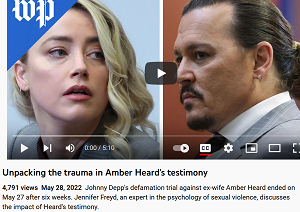
WaPo with Freyd

In print and on-line (selected):

DARVO Illustrated:

Public events have been remarkably illustrative of the pattern we see in DARVO. From some of my tweets about this, referencing a New York Times article:

  • “None of this ever took place" -- the Deny of #DARVO (1 of 3)
  • “You are a disgusting human being,” the Attack of #DARVO (2 of 3)
  • "making up the allegations to hurt him" -- Reverse Victim & Offender of #DARVO (3 of 3)

And strikingly: "Trump on sex assault allegations: 'I am a victim'" (CNN reports)

For more see: Fitzgerald, L.F. & Freyd, J.J. (2017) Trump’s DARVO defense of harassment accusations. The Boston Globe, 20 December 2017.

Disclaimers

  • State of Empirical Evidence: DARVO as a concept was based on observation and analysis. The systematic empirical research testing the coherence or frequency of DARVO is now emerging. See specific publications listed above in the section on Empirical Research. More research is needed.
  • Other Terms in Use: Other observers have likely noted aspects of the same phenomena and related phenomena using different terms; the author has been informed that some people have found the term DARVO a helpful mnemonic and organizing concept.
  • More Research is Needed: DARVO is offered as a potentially memorable and useful term for anticipating the behavior of perpetrators when held accountable, and for making sense of responses that may otherwise be confusing (particularly when victim and offender get reversed). Based on observation and analysis, the author hypothesizes that some sorts of denials and reactions such as DARVO are more likely when the perpetrator is guilty than innocent (Freyd, 1997). Additional research is needed. In the meantime we have indication, based on the research completed to date, that DARVO has deleterious impact on the credibility and well-being of victims exposed to it.

History of Terminology & Writings about DARVO

Jennifer Freyd introduced the term "DARVO" near the end of a 1997 publication about her primary research focus, "betrayal trauma theory." (For more on betrayal trauma theory, see http://pages.uoregon.edu/dynamic/jjf/defineBT.html.)

Podcast: Sexual Violence & Institutional Courage

human centered


listenIn this Podcast: Sexual Violence & Institutional Courage - Jennifer Freyd, Host John Markoff speaks with Dr. Freyd about her career of groundbreaking research, from developing betrayal trauma theory to current work supporting institutional courage.

In the podcast Freyd also discusses what inspired her to develop the concept of DARVO.


The reference for the 1997 article introducing the term is:

Freyd, J.J. (1997) Violations of power, adaptive blindness, and betrayal trauma theory. Feminism & Psychology, 7, 22-32.

In that paper Freyd explained that DARVO responses may be effective for perpetrators. "...I have observed that actual abusers threaten, bully and make a nightmare for anyone who holds them accountable or asks them to change their abusive behavior. This attack, intended to chill and terrify, typically includes threats of law suits, overt and covert attacks on the whistle-blower's credibility, and so on..... [T]he offender rapidly creates the impression that the abuser is the wronged one, while the victim or concerned observer is the offender. Figure and ground are completely reversed... The offender is on the offense and the person attempting to hold the offender accountable is put on the defense." (Freyd, 1997, p 29-30)

These ideas were further developed in an article by Veldhuis and Freyd (1999):

Veldhuis, C. B., & Freyd, J. J. (1999). Groomed for silence, groomed for betrayal. In M. Rivera (Ed.), Fragment by Fragment: Feminist Perspectives on Memory and Child Sexual Abuse (pp. 253-282). Charlottetown, PEI Canada: Gynergy Books.

In the 1999 article Veldhuis and Freyd explore the separate components of DARVO, and they also note a connection between DARVO and "betrayal blindness," a concept from betrayal trauma theory (Freyd, 1996).

"By denying, attacking and reversing perpetrators into victims, reality gets even more confusing and unspeakable for the real victim. .... These perpetrator reactions increase the need for betrayal blindness. If the victim does speak out and gets this level of attack, she quickly gets the idea that silence is safer." (Veldhuis & Freyd, 1999. p 274).

Since then the concept of DARVO has appeared in various writings, including our book Blind to Betrayal (Freyd & Birrell, 2013).

blind to betrayalFreyd, J.J.& Birrell, P.J. (2013).  Blind to Betrayal.  John Wiley & Sons. 

In Blind to Betrayal we urge institutions to cherish the whistle blower (see p. 173) and we offer suggestions for specific steps institutions can take to prevent and repair institutional betrayal. In Blind to Betrayal we also talk about institutional denial which plays such a crucial role in institutional betrayal. DARVO is a particularly pernicious form of denial (see p 119 of Blind to Betrayal).

The first empirical research reports specifically testing the concept of DARVO are recently published (Harsey, Zurbriggen, & Freyd, 2017; Harsey & Freyd, 2020; Rosenthal & Freyd, 2022). See more about the research publications in the section on Empirical Research.

dinsdag 14 juni 2022

The 1977 White House climate memo that should have changed the world


The 1977 White House climate memo that should have changed the world


Frank Press, left, with President Jimmy Carter. Press wrote a letter to Carter warning of CO2 emissions causing ‘catastrophic climate change’.
Frank Press, left, with President Jimmy Carter. Press wrote a letter to Carter warning of CO2 emissions causing ‘catastrophic climate change’. Composite: The White House, courtesy of AIP Emilio Segrè Visual


I

n 1977 Star Wars hit movie theaters, New York City had a blackout that lasted 25 hours, and the Apple II personal computer went up for sale. It was also the year that a remarkable one-page memo was circulated at the very highest levels of US government.

Years before the climate crisis was part of national discourse, this memo outlined what was known – and feared – about the crisis at the time. It was prescient in many ways. Did anyone listen?

memo
Click to view the full memo. Photograph: Office of the President

By July 1977, President Jimmy Carter had only been in office for seven months, but he had already built a reputation for being focused on environmental issues. For one, by installing solar panels on the White House. He had also announced a national renewable energy plan .

“We must start now to develop the new, unconventional sources of energy we will rely on in the next century,” he said in an address to the nation outlining its main goals.

The climate memo arrived on his desk a few days after the Independence Day celebrations on July 4. It has the ominous title “Release of Fossil CO2 and the Possibility of a Catastrophic Climate Change.”

One of the first thing that stands out is the stamp at the top, partially elided, saying THE PRESIDENT HAS SEEN.

President Jimmy Carter speaks against a backdrop of solar panels at the White House Washington on 21 June 1979.
President Jimmy Carter speaks against a backdrop of solar panels at the White House Washington on 21 June 1979. Photograph: Harvey Georges/AP

The memo’s author was Frank Press, Carter’s chief science adviser and director of the Office of Science and Technology Policy. Press was a tall, serious, geophysicist who had grown up poor in a Jewish family in Brooklyn, and was described as “brilliant” by his colleagues. Before working with the Carter administration, he had been director of the Seismological Laboratory at the California Institute of Technology, and had consulted for federal agencies including the Navy and NASA.

“Carter had a great respect for Frank [Press] and for science,” said Stu Eizenstat, who served as Carter’s chief domestic policy adviser from 1977 to 1981.

Press starts the memo by laying out the science of the climate crisis as it was understood at the time.

Fossil fuel combustion has increased at an exponential rate over the last 100 years. As a result, the atmospheric concentration of CO2 is now 12 percent above the pre-industrial revolution level and may grow to 1.5 to 2.0 times that level within 60 years. Because of the “greenhouse effect” of atmospheric CO2 the increased concentration will induce a global climatic warming of anywhere from 0.5 to 5°C.

These far-sighted assertions were in line with the climate science that originated the previous decade, when the US government funded major science agencies focused on space, atmospheric and ocean science. Research produced for President Lyndon B Johnson in 1965 found that billions of tons of “carbon dioxide is being added to the earth’s atmosphere by the burning of coal, oil, and natural gas”.

Press’s memo was on the mark. In 2021, for the first time ever, the atmospheric concentration of CO2 reached 420PPM, the halfway point to the doubling of pre-industrial CO2 levels that Press posited.

The potential effect on the environment of a climatic fluctuation of such rapidity could be catastrophic and calls for an impact assessment of unprecedented importance and difficulty. A rapid climatic change may result in large scale crop failures at a time when an increased world population taxes agriculture to the limits of productivity.

Press was right. We have indeed seen the catastrophic effects of a climatic fluctuation, in the form of increasingly severe weather events including droughts, heatwaves, and hurricanes of greater intensity. Meanwhile, in many parts of the world heating has already stemmed increases in agricultural productivity, and large-scale food production crises are thought to be possible.

The urgency of the problem derives from our inability to shift rapidly to non-fossil fuel sources once the climatic effects become evident not long after the year 2000; the situation could grow out of control before alternate energy sources and other remedial actions become effective.

This is correct. By the 2000s, the effects of the climate crisis had become apparent in some regions in the form of more deadly heat waves and stronger floods and droughts.

Natural dissipation of C02 would not occur for a millennium after fossil fuel combustion was markedly reduced.

This prediction by Press was actually debunked at least a decade ago. Scientists used to believe that some warming was “baked in”, but scientists have since found that as soon as CO2 emissions stop rising, the atmospheric concentration of CO2 levels off and slowly falls.

As you know this is not a new issue. What is new is the growing weight of scientific support which raises the CO2-climate impact from speculation to a serious hypothesis worthy of a response that is neither complacent nor panicky.

But there were other currents mitigating against the sort of response Press calls for. “​​The story of climate policy in the US, generally, is one missed opportunities and unjustifiable delay,” said Jack Lienke, author of the book Struggling for Air: Power Plants and the “War on Coal.”

Many other issues may have seemed more pressing, or simply better understood. As Lienke writes in Struggling for Air, “At a time when Americans were still dying somewhat regularly in acute, inversion-related pollution episodes, it is unsurprising that legislators were more concerned with the known harms of sulfur dioxide and carbon monoxide than the uncertain, seemingly distant threat of climate change.”

The authoritative National Academy of Sciences has just alerted us that it will issue a public statement along these lines in a few weeks.

That public statement, released later that month, emphasized the importance of shifting away from fossil fuel energy and highlighted the urgency of starting to transition to new energy sources as soon as possible: “With the end of the oil age in sight, we must make long-term decisions as to future energy policies. One lesson we have been learning is that the time required for transition from one major source to another is several decades.”

So what happened? When Press’s memo made it to the president’s desk, Jim Schlesinger, America’s first secretary of energy, also attached his own note in response:

​​My view is that the policy implications of this issue are still too uncertain to warrant Presidential involvement and policy initiatives.

Carter seems to have heeded this warning, and did not make much progress on climate crisis mitigation during his presidency. Yet he did sign some significant pieces of environmental legislation, including initiating the first federal toxic waste cleanups and creating the first fuel economy standards.

A significant challenge facing Carter was his own contradictory energy aims. Despite his goal of encouraging alternative energy, he also felt there was a national security interest in boosting US oil production in the wake of the 1973 oil crisis.

“We realized our dependence on foreign oil was dangerous and, very importantly, alternative energy was in its infancy,” Eizenstat said. “So Carter was both doing conservation and still encouraging more domestic oil and gas as a way of reducing dependence on foreign oil,” said Eizenstat. “As with all policy, you have conflicting goals.”

Gas pump restricting gas purchases to 10 gallons during the first Oil Crisis of 1973. Denver, Colorado, August 1973.
Gas pump restricting gas purchases to 10 gallons during the first Oil Crisis of 1973. Denver, Colorado, August 1973. Photograph: Everett Collection Historical/Alamy

Still, it seems possible that if Carter had been re-elected, the world might have been in a better position regarding climate impacts today. One of the first things Reagan did after winning the election in 1981 was take down the White House solar panels. Meanwhile, the fossil fuel industry – whose scientists were already studying the ways that fossil fuels were changing the climate – started spending tens of millions of dollars sowing doubt about climate science.

Did the Press memo accomplish anything at all? For one person it was in fact a “transformational moment” – this was Eizenstat himself. He says it was instrumental in his own future work on the climate crisis, including his decision in 1997 to serve as the United States’s principal negotiator for the Kyoto global warming protocols.

Those protocols set the stage for the first international effort to tackle climate policy on a global level. So even if Press’s memo had a muted impact at the time, his warning wasn’t entirely ignored.

https://www.theguardian.com/environment/2022/jun/14/1977-us-presidential-memo-predicted-climate-change