zaterdag 28 februari 2026

Trump vies for Bush’s crown for worst foreign policy decision in history


Analysis

Trump vies for Bush’s crown for worst foreign policy decision in history

in Washington

The US president upended half a century of US foreign policy in an eight-minute video with another attempt at Middle Eastern regime change

It was another date that would live in infamy. But whereas Franklin Roosevelt declared war in sombre tones to a joint session of Congress, Donald Trump did it his way.

The US president wore a white “USA” cap, dark jacket and white shirt open at the collar. He stood at a blue lectern bearing the US presidential seal and a black microphone, with the Stars and Stripes behind him, presumably at his Mar-a-Lago residence in Florida. He released a video on his own social media network, Truth Social, at 2.30am on Saturday – a time when most Americans are asleep but Trump is often found rage-tweeting into the night.

In the space of eight minutes, Trump proceeded to upend half a century of US foreign policy, renege on his campaign promise to avoid the risk of forever wars and leave the Fifa boss, Gianni Infantino, with some explaining to do about why he gave Trump a made-up peace prize.

“There is also a beautiful medal for you that you can wear everywhere you want to go,” the oleaginous Infantino told Trump last December. Trump was not wearing that medal on Saturday. Instead, he delivered a performance that would have had soccer fans chanting: “Are you George Bush in disguise?”

Bush dragged the US into a tragic war in Iraq in 2003 that costs hundreds of thousands of lives and trillions of dollars and was recently crowned by the Council on Foreign Relations thinktank as the worst foreign policy decision in history. The avaricious Trump seems determined to seize that title for himself with another act of Middle Eastern regime change.

At least Bush tried to make a case to justify his invasion – mendacious as it was – and tried to convince the UN of its merits. Trump did not even bother. He amassed a huge “armada” in the Middle East with little explanation to Congress or the public. He did not mention Iran until more than an hour into this week’s State of the Union address.

Finally, when the bombs were already falling, he tried to offer a rationale in his social media video. The Iranian regime, he said, are “a vicious group of very hard, terrible people” whose menacing activities “directly endanger” the US and its allies. Trump ran through the history of the Iran hostage crisis, the Marine barracks bombing, the attack on the USS Cole and Iran’s hand in killing and maiming US troops in Iraq.

“It’s been mass terror, and we’re not going to put up with it any longer,” he said. But none of that answered a simple question: why now?

Trump went on to reference Iranian proxy groups “that have soaked the earth with blood and guts” and cite Hamas’s 7 October attacks on Israel, saying: “Iran is the world’s No 1 state sponsor of terror and just recently killed tens of thousands of its own citizens on the street as they protested.”

Trump underlined the US policy that Iran can never have a nuclear weapon and glided past his own past claim that last June’s attack had “obliterated” its programme, contending that the US wanted to make a deal but Tehran refused. “They rejected every opportunity to renounce their nuclear ambitions, and we can’t take it anymore,” he said.

The president said the US had undertaken “a massive and ongoing operation to prevent this very wicked, radical dictatorship from threatening America and our core national security interests” – an ominous sign that Washington could be in for the long haul. The chair-for-life of the new Board of Peace promised to “raze their missile industry to the ground” and “annihilate their navy”.

Then came an unexpected admission: “The lives of courageous American heroes may be lost, and we may have casualties. That often happens in war, but we’re doing this not for now. We’re doing this for the future, and it is a noble mission.”

Here was Trump, the reality TV president, understanding how desperate the optics will look if American service members return home in body bags, their lives sacrificed for a cause that the public little understands and still less believes in.

Ruben Gallego, a Democratic senator for Arizona and Iraq war veteran, responded on social media: “Draft dodger is willing to sacrifice working-class kids. How charitable of him.”

Trump warned members of the Islamic Revolutionary Guard to lay down their weapons: “You will be treated fairly with total immunity, or you will face certain death.”

But he saved the most extraordinary statement of all to the end. Having warned the Iranian people to stay sheltered because “bombs will be dropping everywhere”, Trump urged: “When we are finished, take over your government. It will be yours to take. This will be, probably, your only chance for generations.

“For many years, you have asked for America’s help, but you never got it. No president was willing to do what I am willing to do tonight. Now you have a president who is giving you what you want. So let’s see how you respond.”

There it was. After all those years of railing against neocons, foreign entanglements and regime change, Trump was calling for the overthrow of the Iranian government. The ghost of Donald Rumsfeld was smiling down on him; John Bolton and Lindsey Graham were high-fiving; Bush was dancing a jig of delight – this guy makes people miss me!

What happened? Nothing out of character. Trump the business was always a reckless gambler, whether building casinos in Atlantic City or launching his own ill-fated airline. Trump the politician has moved the US embassy to Jerusalem, killed Iranian commander Qassem Suleimani, imposed sweeping tariffs on trading partners and captured the Venezuelan president, Nicolás Maduro.

Each time, the experts warned of catastrophe; each time, something less than Armageddon happened, and so Trump felt increasingly emboldened to roll the dice again. (​Even his demolition of the White House East Wing was a case of “act now, let others ask questions later”.) Iran, however, is a gamble of an entirely different magnitude and the president is yet to articulate a long-term strategy beyond hoping for the best. The lesson of Iraq is that regime change is the easy part, but what happens next can be hell.

Yet still the man who was given a Nobel peace prize by true winner María Corina Machado – and kept it! – has launched Operation Epic Fury on an unready world. As Ben Rhodes, a former deputy national security adviser under Barack Obama, tweeted: “Trump’s second term has been the worst-case scenario.”

https://www.theguardian.com/us-news/2026/feb/28/trump-iran-analysis-us-foreign-policy-george-bush

A Clean Break for Israel


A Clean Break for Israel

Israeli involvement with the Kurds is not a new phenomenon. In its search for non-Arab allies in the region, Israel has supported Kurdish militancy in Iraq since the 1960s. In 1980, Israeli premier Menachem Begin publicly acknowledged that besides humanitarian aid, Israel had secretly provided military aid to Kurds in the form of weapons and advisers. Later on, that relationship was kept low profile due to Washington's alliances in the region; first with Iran during the Shah's monarchy, and then with Saddam Hussein's Iraq when he fought Ayatollah Ruhollah Khomeini's Iran. Israel's partnership with Turkey that was founded mainly to counter threats from Iran, Syria and Iraq, was also a factor.

Israel and the Kurds also share a common bond through the Kurdish Jews in Israel, who number close to 50,000. Prominent among them is Itzhak Mordechai, an Iraqi Kurd who was defense minister during Benjamin Netanyahu's last term as prime minister.

Israeli-Kurd relationships soured a bit in February of 1999, when the Kurds accused the Israeli intelligence agency Mossad of providing information that led to the arrest of Turkish Kurdistan Workers' Party (PKK) leader Abdullah Ocalan in Kenya. Kurdish protestors attacked the Israeli embassy in Berlin, resulting in the shooting deaths of three protestors by Israeli security forces. In an unprecedented public denial, the then Mossad chief Efraim Halevy dissociated Israel from Ocalan's capture. Despite such bumps and its alliance with Turkey, Israel succeeded in keeping its relationship with the Iraqi Kurds intact, by keeping a safe distance from the PKK, which is primarily a Turkish Kurd entity, and not becoming a party to the bloody infighting between the various Turkish and Iraqi Kurdish groups.

However, Israel does have a favorite - the Barzani family-dominated Kurdish Democratic Party (KDP), whose current head, Massoud Barzani, inherited the mantle from his father, the legendary Mullah Mustafa Barzani. Israeli television has in the past broadcast photographs from the 1960s showing father Barzani embracing the then Israeli defense minister Moshe Dayan. In alliance with its erstwhile rival, the Patriotic Union of Kurdistan (PUK) party, the KDP in post-Saddam Iraq commands the largest and most formidable of the Iraqi militias, the Peshmerga, with estimates of anywhere from 50,000 to 75,000 battle-hardened fighters. In contrast, the next in line of militias is the Iranian-sponsored Shi'ite political party, the Supreme Council for the Islamic Revolution (SCIRI), with no more than 15,000 fighters.

So why in the post-Saddam Iraq has Israel chosen to dramatically escalate the nature of its involvement with Kurdish militants, and in so doing, risk its strategic alliance with Turkey, while confirming its activities on record through individuals like Patrick Clawson (one of the named sources in Seymour Hersh's expose in the New Yorker), known to have close ties with the Israeli government?

According to Hersh's report, "hundreds" of undercover Israeli Defense Force intelligence officers and Mossad agents have reestablished cooperation with Kurdish militiamen in northern Iraq, with the aim of launching cells that might yield new intelligence on Iran's nuclear program. Israeli operatives are also said to be providing an ancillary role to the Kurds and are aiding Kurdish elements in northern Syria. Kurdish riots and the seeds of a minor rebellion in northern Syria have recently rocked Syrian President Bashar Assad's regime.

A questionable pretext Quoting Clawson, the Hersh article presents a pair of weak justifications for Israeli intervention in Iraq. The first one is the fear of Iranian nuclear ambitions. This information is hardly new. The latest revelations about the Iranian nuclear program were in fact provided by an Iranian dissident group. Furthermore, Iran is under constant US satellite surveillance and sustained political pressure by the US, the United Nations' International Atomic Energy Agency and European powers to roll back its nuclear efforts. It is therefore doubtful as to what quality or value the Israelis can add to such a formidable lineup.

The second motivation that the article talks about is the urgent need for Israel to move on Iraq as a national security imperative to counter the growing Iranian influence. A quick analysis, however, reveals such urgency to be exaggerated, and any Israeli surprise at the growing Iranian footprint in Iraq to be unconvincing. One of the most predictable outcomes of the Iraq conflict was the growth in Iranian influence in that country. Besides a 1,500 kilometer border, the two neighboring Shi'ite-majority nations share deep historical and religious bonds making it almost impossible for the US to prevent the ascent of Iranian-backed groups without inviting a full-scale Shi'ite rebellion in Iraq. Realizing this, American officials moved quickly during pre-war days to co-opt Iran-backed groups such as the SCIRI, with tacit Iranian approval.

Would it not be naive to expect that Washington would create a situation hospitable for growth in clout of its Iranian adversary in a region key to American interests, and thereby limit its own options?

Unclean break To begin to answer the preceding questions, we need to take a look at a now famous policy paper: "A Clean Break: A New Strategy for Securing the Realm". This neo-conservative-authored paper presented in 1996 to the then Israeli prime minister Benjamin Netanyahu offered a bold strategy to provide "the nation [Israel] the room to engage every possible energy in rebuilding Zionism", and strengthen and increase its influence in the Middle East. "Our claim to the land - to which we have clung for hope for 2000 years - is legitimate and noble," the authors proclaimed. "Israel will not only contain its foes; it will transcend them" through means including "reestablishing the principle of preemption, rather than retaliation alone".

The paper emphasized that Israel needed to enhance its strategic position independent of the US, in order to deny the US any leverage it may want to exercise on Israel to maintain stability in the region under the "peace process". The paper betrays a high degree of discomfort regarding US influence over Israel and suggests ways to actively neutralize it. What is most surprising are the names of its authors that comprise past and present US civilian policy-makers, including ex-chairman of the Defense Policy Board Richard Perle, present Under Secretary of Defense Douglas Feith, and Vice President Dick Cheney's adviser for Middle East Affairs, David Wurmser. How individuals with such openly stated positions preferring Israeli interests over those of the US became influential members of the US government is quite mystifying.

The paper bemoans the status quo where Israel is asked to follow European and American prescriptions for peace and stability, and proposes that a key ingredient of the "US-Israeli partnership" must be "mutuality" and that Israel must position itself to be the protector of the "West's security" in the Middle East rather than being a junior partner. Such strategic co-dependence, specifically between Israel and the US, and to a general degree between Israel and Western powers, would imply dismissing the strategic status quo. Thus, to achieve a "clean break", the security map of the Middle East would have to be significantly re-built to assign Israel an apex role, rather than being just a party to territorial disputes with its neighbors and being treated as another ally, albeit a strong one, along with Washington's oil-allies in the region.

The removal of Saddam Hussein, enunciated to be a key goal in "Clean Break", was to be the first phase of this new strategy of independence through co-dependence. As has been discussed earlier (see Asia Times Online, All going according to plan? , May 12), under the pretext of regime change, the US quite intentionally annihilated the Iraqi state and its military forces, the largest in the Arab world. In his article titled "Beyond Fallujah: A Year With the Iraqi Resistance" in the June issue of Harper's Magazine, Patrick Graham, a freelance journalist, quotes a resistance fighter's account of looting the Iraqi army's weapons caches. "They [American soldiers] almost gave us the weapons. They watched us taking RPGs [rocket-propelled grenades] and other weapons," he continued, "They thought we were destroying the Iraqi army."

An opening is created The strategic space created from the ruins of the Iraqi state and its pillars offers immense opportunities by employing persecuted minorities as proxies that can provide a strong foothold in a pivotal oil-rich nation hundreds of miles away from Israel. Furthermore, the Kurdish beachhead in Iraq would serve to project influence in key adversaries such as Iran and Syria.

In "A Clean Break", the authors called for signaling to the Syrians that their "territory is not immune" to attacks "by Israeli proxy forces". Kurdish unrest in Syria has been quite rare. In early March of this year, northeastern Syria broke out in violent protests that eventually reached the capital Damascus. The Syrians were caught completely off guard. The riots lasted for days and left scores of people dead before being brought under control.

In a war viewed by the neo-conservatives as an unavoidable course of action for protecting American interests, the growth in Iranian influence was an inevitable consequence. But Iranian reach would be dangerous only if it spread beyond southern Iraq and a unified Iraq emerged. With uncertainty surrounding the future of high levels of US troops in Iraq, the Israeli-backed Peshmerga is the ideal proxy as a powerful rival to the Iranian-inspired Shi'ite ascendancy in Iraq. With their superior numbers, excellent training and materiel, thanks to the US and Israel, the Peshmerga can set the terms for the Iraqi federation or for its disintegration. Furthermore, the Kurds are completely dependent on extra-regional players due to their isolation in the area. The current situation in Iraq points to a nominal sovereign existing in the shadow of armed militias competing for power, with the most powerful of the militias aligned with the occupying forces. The Peshmerga number more than the proposed Iraqi Security Forces (an entity that closely resembles a highly equipped police force rather than a proper military), and are being trained by elite and highly secret Israeli commandos, the Mistaravim according to Hersh's Central Intelligence Agency sources.

To see these developments as just attempts in securing cheap oil (Israel relies on expensive Western imports due to the Arab boycott), would be to underestimate the resultant benefits to Israel from the situation. Without engaging its military directly, the Israelis have made themselves a major power-broker in the region and a party to internal stability of important regional states. Unable to confront the only regional nuclear power and the military of its principal sponsor providing strategic cover in Iraq, Israel's foes in the vicinity must acknowledge that they need to deal with Israel in new ways and be ready to offer concessions if need be.

A significant threat, albeit a remote one, emanates from a possible strategic accommodation between Iran and Saudi Arabia regarding Iraq and the future of the Organization of Petroleum Exporting Countries. But such a scenario seems less and less likely. The present leadership of Saudi Arabia is battling with a series of high-impact acts of violence in areas key to oil production. Furthermore, a carefully crafted ambiguity surrounds Saudi Arabia's role in America's wider regional ambitions, which when combined with recent signaling from the US and the United Kingdom, is causing great alarm in Riyadh.

Conclusion The spate of high profile bombings in Iraq, including the one that killed the UN representative for Iraq and another that killed Ayatollah Baqir Hakim, head of the Iran-backed SCIRI militia, must now be viewed in the light of this new information.

A UN presence in Iraq would have led to an early rehabilitation of a federal Iraqi state, something that would have led to the disarming of the Kurdish militias, thereby denying a major source of influence to Israel in the region. By ramping up armed proxies devoted to a crypto-secessionist struggle and leaking its support for them, Israel has delivered a masterstroke of strategic foresight. It clearly knows that the creation of a Kurdish republic in Iraq, let alone a greater Kurdistan, is not viable for several reasons.

Some of the crucial factors include the religious and ethnic diversity of Iraqi Kurds themselves (though mutually intelligible, Iraqi Kurds speak two different languages and are religiously quite mixed), lack of access to natural resources, recent history of bloody strife within the Kurdish parties, and their autonomy posing an existential threat to the Turkish state.

Nevertheless, by its plausibly deniable support for Kurdish militias, Israel has declared to the regional power centers that it is an indispensable power broker in the future stability of the greater Middle East. Israel can manage its alliance with Turkey as the Turks are mainly concerned with degrading the PKK and denying it a safe haven in northern Iraq. Iran is gearing for a proxy war with Israel in Iraq, but with the presence of US forces has to work in a far stricter environment than it had in southern Lebanon. Of all the three, Syria seems to be in the worst position, with the least economic and political clout and unable to turn up the heat in Lebanon without Iran's help; an Iran that is engaged on multiple fronts in Iraq and Afghanistan, apart from its nuclear woes. The road to Iraq's future therefore, and by extension that of the "New Middle East", now has a detour through Tel Aviv.

Sadi Baig is a freelance political analyst.

https://www.miftah.org/Display.cfm?DocId=4121&CategoryId=5

Israeli ‘liberal’ opposition leader agrees with Mike Huckabee that the bible gives Israel the right to land from Egypt to Iraq


Israeli ‘liberal’ opposition leader agrees with Mike Huckabee that the bible gives Israel the right to land from Egypt to Iraq

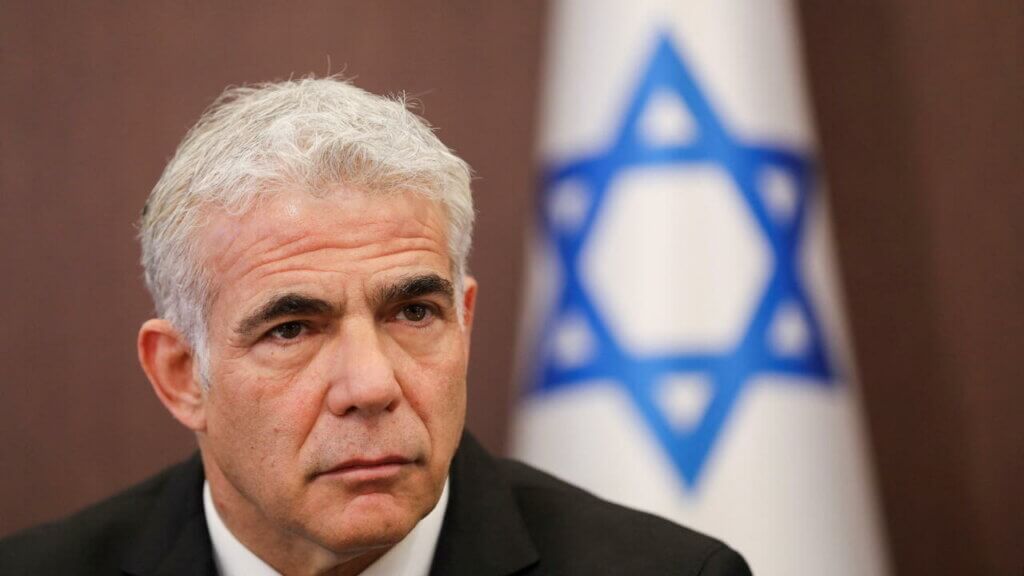
Mike Huckabee made headlines when he said Israel has a biblical right to land from Iraq to Egypt in an interview with Tucker Carlson. Israel supporters tried to dismiss the idea as nonsense, but Israeli opposition leader Yair Lapid says he agrees.

Everyone is talking about Tucker Carlson’s interview with U.S. Ambassador to Israel, Mike Huckabee. It has amassed millions of views, and if there’s one item that caught attention, it was Huckabee’s view that Israel had a biblical right to the land from the Euphrates River in Iraq to the Nile River in Egypt. 

Carlson was shocked and pressed him on this:

“What does that mean? Does Israel have the right to that land? Because you’re appealing to Genesis, you’re saying that’s the original deed.”

Huckabee was clear: “It would be fine if they took it all.” 

Some were in shock. Israeli hasbarists like Eylon Levy tried to tone it down – responding on X that “literally nobody” with power in Israel believes this and to think so is “a delusional fantasy of the antisemite’s imagination.” To which he added, “Stop spreading mindless conspiratorial bullshit.”

Even Haaretz journalist Gideon Levy opined that Huckabee was an extremist who neither represented the U.S. nor Israel, “he barely represents its crazies,” he wrote. “Huckabee Speaks Boldly in Ways Even Ben-Gvir and Kahane Wouldn’t Dare,” was Levy’s title: 

“Not for nothing did Carlson say: This man doesn’t represent my country; he represents Israel. It’s neither of these, Carlson. This man doesn’t represent Israel; he barely represents its crazies. But it’s definitely possible that he represents an America in the making, one whose Secretary of State Marco Rubio recently lauded the West’s “Christian heritage” while in Munich.”

But then, the ‘liberal’ Israeli opposition leader Yair Lapid proved both the Levys wrong. 

In a press conference Monday for his party Yesh Atid (‘There is a Future’), Lapid answered a question from a religious Kipa News  journalist:

“Good afternoon sir. The Ambassador Huckabee said this week, and we know the extent of the American administration on the government here, that he supports Israeli control from the Euphrates to the Nile, this means [control] over Lebanon, Jordan, Syria, do you support it or do you think this should be stopped?”

Lapid’s answered:

“Look, I don’t think I have a dispute on the biblical level [about] what the original borders of Israel are. The Euphrates, the last time I checked, was in Iraq. I don’t think that when the Americans entered Iraq, they experienced great relief. I support anything that will allow the Jews [to have] a big, vast, strong land, and a safe shelter for us, for our children, and for our children’s children. That’s what I support.”

Lapid was challenged on the size: 

“How vast?”

“However possible.”

“Until Iraq?”

“The discussion is a security discussion. The fact that we are in our ancestral land… Yesh Atid’s position is as follows: Zionism is based on the bible. Our mandate of the land of Israel is biblical. The biblical borders of Israel are clear. There are also considerations of security, of policy, and of time. We were in exile for 2,000 years… you don’t really want all this lecture, right? At least you were not waiting for it… The answer is: there are practical considerations here. Beyond the practical considerations, I believe that our ownership deed over the land of Israel is the bible, therefore the borders are the biblical borders.”

“Wait, so fundamentally, the great, big land of Israel?”

“Fundamentally, the great, big and vast Israel, as much as possible within the limitations of Israeli security and considerations of Israeli policy”. 

So there you have it. The bible is our deed. Like the first Israeli Prime Minister, David Ben-Gurion, said

Lapid has stated his principle of “maximum Jews on maximum land with maximum security and with minimum Palestinians” over ten years ago. Now he is saying that the “maximum land” is just a question of exigency – “practical considerations.” 

A ‘liberal’, ‘secular’ Israeli opposition leader, just told us that “Zionism is based on the bible.” 

I think we need to believe him. We need to stop talking about Netanyahu, Ben-Gvir, Smotrich, and Huckabee. It’s Zionism, stupid.


Trump’s unprovoked attack on Iran has no mandate – or legal basis


Trump’s unprovoked attack on Iran has no mandate – or legal basis


US president violates UN charter just days into his Board of Peace era, and chooses to take the biggest gamble of his administration

The first war of Donald Trump’s Board of Peace era has begun – an unprovoked attempt at regime change in collaboration with Israel, with no legal foundation, launched in the midst of diplomatic efforts to avert conflict, and with minimal consultation with Congress or the American public.

Trump’s recorded eight-minute address after the first bombs had fallen, made clear that this would be no limited strike aimed at cajoling Tehran into concessions at the negotiating table. He warned that if Iran’s Islamic Revolutionary Guard Corps (IRGC) did not surrender they would be killed, and the country’s armed forces, its missile and navy would be smashed.

The way would then be open for the Iranian opposition and the country’s ethnic minorities to rise up and bring the regime down.

“It’s time for all the people of Iran – Persians, Kurds, Azeris, Balochis and Akhvakhs – to shed from themselves the burden of tyranny and bring forth a free and peace-seeking Iran,” Trump said.

'Lay down your weapons': Trump warns Iran's armed forces as US launches military operation – video

Coordinating the message as well as the missiles, Israel’s prime minister Benjamin Netanyahu said his country had joined the war “to remove the existential threat posed by the terrorist regime in Iran”.

The maximalist aims of the joint attack cast doubt on whether there had ever been any prospect of success for the US-Iranian negotiations in the preceding weeks, in which delegates discussed possible limits on uranium enrichment. Those talks, the latest round on Thursday, had been conducted under the shadow of what Trump called his “beautiful armada” gathering in the Middle East, the biggest US force in the region since the ill-fated 2003 Iraq invasion, and it now seems likely that only a complete capitulation on Iran’s part could stop this assembled American might being unleashed.

Trump has long railed against the folly of the Iraq war. He campaigned twice on a platform of ending US military entanglements abroad, and lobbied aggressively to be awarded the Nobel peace prize based on the factually shaky claim to have ended eight wars.

Barely 10 days before launching the war, he had hosted the inaugural meeting of his Board of Peace which was supposedly going to resolve conflicts, not just in the Middle East but around the world. That meeting brought leaders and senior officials from 27 disparate states, most of them autocracies, to Washington to praise Trump the peacemaker.

They heard Tony Blair, a living link to the Iraq debacle 23 years ago, declare Trump’s Middle East vision, “the best – indeed the only hope – for Gaza, the region and the wider world”.

By then, however, most of Washington’s traditional allies in Europe and beyond had become deeply sceptical of Trump’s motives and stayed away. The Board of Peace was sold to the UN security council in November as the only path to ending the slaughter in Gaza, but it had been clear long before the first missiles were fired at Iran, that it was a “bait-and-switch” scam. The UN thought it was buying one thing but it was sold something quite different: a rival body to the security council, but one in which Trump would be in charge.

The attack on Iran is a clear violation of the UN charter, in any absence of any credible, imminent Iranian threat to the US. In an attempt at justification Trump spoke in generalities, denouncing the Tehran leadership as “a vicious group of very hard, terrible people” and 47 years of enmity between the US and the Islamic Republic.

Over that half century, Iran has arguably never posed less of a threat than now, weakened both by the joint attack by the US and Israel last June that degraded its defences, and decades of sanctions combined with economic migration which brought mass protests on to the street.

Smoke rises in Tehran after US and Israel launch joint attack on Iran – video

In the Board of Peace, however, there is no requirement for Trump to justify himself. There are no rules other than those giving Trump the power to make them up as he goes along. It has become increasingly clear that the board is not primarily a forum for resolving conflict, but a vehicle for the president’s political and financial interests. Those governments who signed on as board members now find themselves complicit in a war few of them want.

It is not entirely clear what transformed Trump from a peace president to a war president, but there are clues. At home he faces setbacks, ever lower popularity in the runup to the midterm elections, and a recent rebuke from a normally friendly supreme court on his power to use tariffs as his favourite foreign policy tools.

Wilbur Ross, commerce secretary in Trump’s first term, said the court defeat had made an attack on Iran more likely.

“I don’t think he can take this loss and then be seen as backing down on Iran,” Ross told the Wall Street Journal.

Meanwhile, the cloud of suspicion over Trump’s relationship with Jeffrey Epstein has not been dispelled despite the best efforts of the justice department to ration the flow of revelations about the sex-offending financier’s child-trafficking operations.

Anti-riot police in central Tehran in front of a state building covered with a billboard depicting the destruction of a US aircraft carrier. Photograph: Majid Saeedi/Getty Images

“I’m really worried, because he gets so unhinged almost when he’s in trouble like this,” Democratic senator Chuck Schumer told MS Now television a few days before the war began. “I’m worried what he might do in Iran – who knows?”

Abroad, Trump appeared to have given up chasing a Nobel peace prize, warning the Norwegian prime minister (who had no say in awarding it) last month that he no longer felt “an obligation to think purely of peace”.

For Trump, who had far more success as a reality show character than a property developer, war began to look like a better distraction than peace. He was thrilled by a daring and successful raid on Venezuela in January, in which US special forces whisked the country’s leader, Nicolás Maduro, out of the country without a single casualty.

skip past newsletter promotion

Trump is clearly counting on spectacular success in Iran, broadcast live, to bring his country along with him after the fact. Before his overnight recorded statement, there had been no real effort by the administration to lay out a convincing case to Congress or to the nation, at a time when polls suggest only a quarter of the US electorate supports a new war in the Middle East.

Regular on-camera press briefings at the Pentagon have been a historical fixture in the runup to previous conflicts, but the recently renamed Department of War had not held one since December.

With the annual State of the Union address on Tuesday coinciding with US military preparations coming to a peak, there was some expectation Trump might use the occasion to lay out a case for war. But he spent only three minutes on Iran out of a record total of one hour 47 minutes.

Congress, which in theory has the constitutional prerogative to decide whether America goes to war, has been almost totally sidelined. Eight congressional leaders from both parties were briefed on classified information a few hours before the State of the Union speech by the secretary of state, Marco Rubio. But Democratic senators emerged saying that they had not been given a good reason why the country had to go to war now.

In 2003, the road to war in Iraq was paved with lies about nonexistent weapons of mass destruction. The path to a new conflict in Iran 23 years later has been lined largely with incoherence or silence.

Trump has made clear that he expects the Iranian people to be the agents of regime change after US and Israeli bombs have weakened the existing power structures. There is no intention to carry out a ground invasion. In his recorded statement he did warn the public to expect some US casualties, but it is unclear how many combat deaths the electorate, including Trump’s own supporters, would accept in such an obvious war of choice.

Faced with the possibility of defeat for his party in November’s elections, the president has chosen to taken the biggest gamble of his presidency.

History suggests that it is very hard to bring down entrenched regimes with aerial bombing alone, and now that it has been made clear to the government in Tehran it is in an existential struggle, it can be expected to try to inflict maximum harm on its attackers with everything at its disposal.

A B-2 stealth bomber takes off during Operation Midnight Hammer, the US attack on Iran’s nuclear facilities in June 2025. Photograph: US Air Force/Reuters

“The Iranians have come to the conclusion that restraint has been interpreted as weakness and invites more aggression,” Ali Vaez, the International Crisis Group’s Iran project director, said, adding that Iran’s capacity to wreak damage on its enemies has not really been tested.

“In the 12-day war, the Iranians didn’t use any of the military capabilities that they have developed over many, many years to target US assets, like short-range missiles, cruise missiles, naval assets, drones, underwater drones, anti-ship ballistic missiles and cruise missiles,” Vaez said.

Iranian forces would have a wide range of targets close at hand, including vessels, military and commercial, in the strait of Hormuz or the wider Gulf. Selective targeting proved effective for Tehran’s allies, the Houthi forces in Yemen, who narrowly missed a US aircraft carrier with one of their missiles.

The Houthis could well take part in the Iranian response, aware that the defeat of the Tehran regime would rob them of their sponsor. Hezbollah, though much weakened by Israeli bombardment last year, has rebuilt some of its strength and could also choose to join in for similar reasons.

“In all the years of war games in Washington, in the Pentagon and with all the thinktanks, without exception one or two US warships would sink,” Vaez said.

“Obviously, it would push Trump to retaliate in a devastating manner. But then he will have launched another major war in the Middle East,” he added.

“There’s no way that Trump can frame that as a victory. His presidency will be completely eclipsed by that.”

https://www.theguardian.com/us-news/2026/feb/28/trump-unprovoked-attack-on-iran-has-no-mandate-and-no-clear-objective