
Iran is trying to create wedges between Gulf states and the US, but Trump is very comfortable on the ‘escalatory ladder’
In its current phase, the Israeli-US war against Iran and its proxies has become a proving ground for two competing concepts of military escalation, each of which threatens to become a trap.
On one side, Donald Trump and Benjamin Netanyahu have failed thus far in their ill-defined and shifting strategic aims. Despite killing Iran’s supreme leader, Ali Khamenei, and other key leaders in the opening salvo of the campaign, the clerical regime remains and Iran’s stockpile of highly enriched uranium is unsecured. Airstrikes are intensifying and hitting a greater number of targets.
Tehran’s counter is a “horizontal escalation”, one long prepared by the regime, that is intended to widen the conflict geographically, with strikes on the Gulf states, and also in terms of the costs to Washington and the global economy, not least in energy supplies.
The coming days and weeks are likely to reveal important lessons, not least about the potency of US military power in an increasingly fragile and multipolar world.
Experts point in particular to the risks of an escalation trap – whereby the attacker is drawn into an ever more complex, protracted and costly conflict than envisaged at the outset – from a widening disparity in the US-Israeli campaign between the tactical and strategic level. Put simply, the tactical level involves specific military tasks – such as airstrikes hitting their intended targets – where the campaign has been successful. The strategic level defines whether the political and national security aims of the war are being achieved and at what cost.
“The are several stages to the escalation trap,” said Robert Pape, a US historian who has studied the limitation of air power and has advised a number of US administrations.

“What we saw with the initial attack was tactically almost 100% success,” he said. “The problem is that when that doesn’t lead to strategic success … you get to second stage of the trap.
“The attacker still has escalation dominance, so there is a doubling down, which then moves up the escalation ladder and that still does not lead to strategic success. Then you reach stage three, which is the real crisis, where you are contemplating far riskier options. I would say we are stage two, and on on the cusp of stage three.”
He said the Trump administration had become mesmerised by the initial attack and had an “illusion of control” based on the accuracy of its weapons. All of this has pushed Tehran towards its own model of escalation, one with a far wider global economic and political impact, Pape and other critics say.
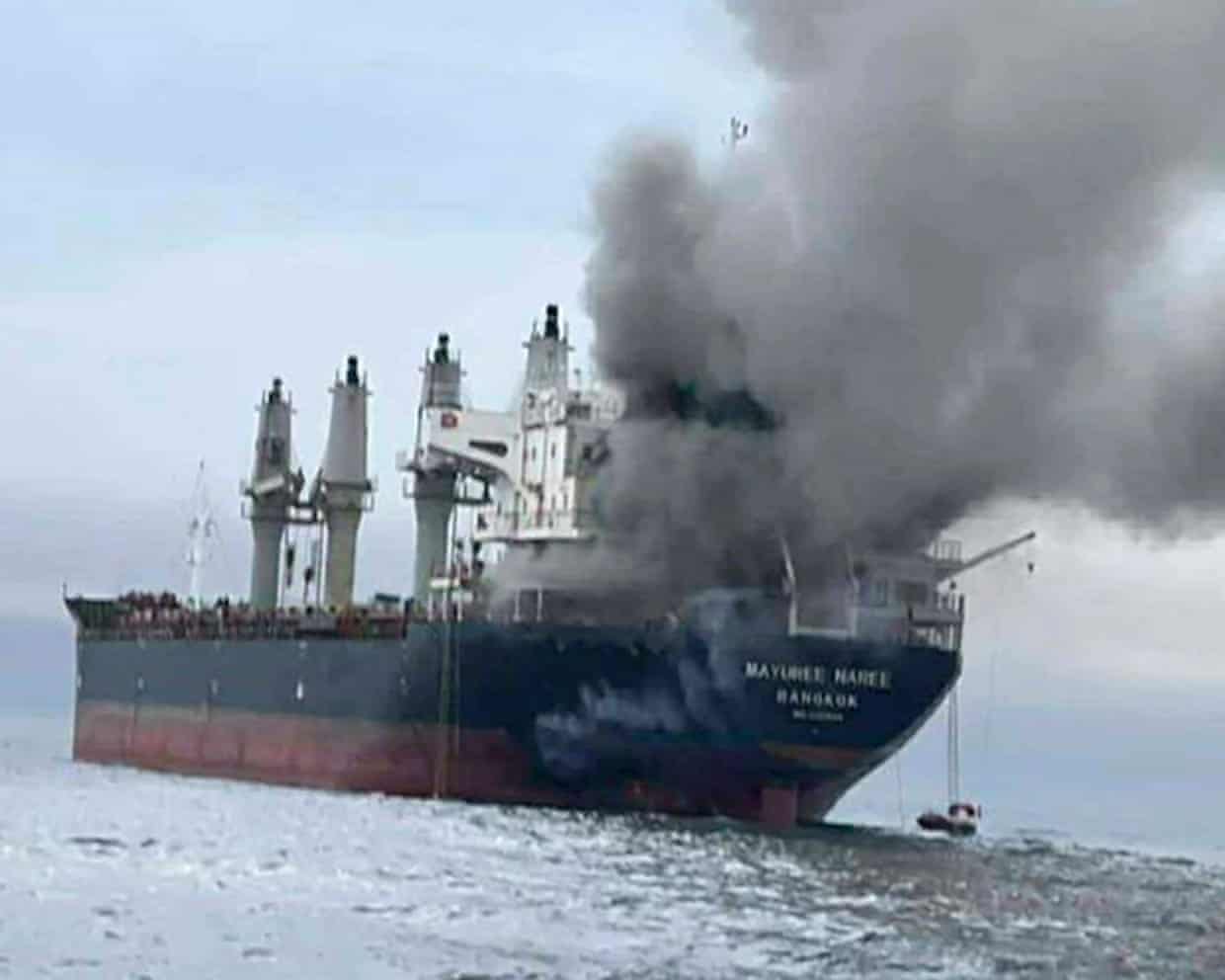
By targeting the Gulf states and shipping in the strait of Hormuz, Iran has demonstrated it can escalate the costs of the war for Washington far beyond its military capabilities to meaningfully counter the US-Israeli attack directly.
Iran’s strikes “are designed to create wedges between the US and the Gulf states by in turn creating wedges between the Gulf states and their societies,” Pape said.
“They are forcing the publics in the Gulf to ask: ‘Why are we paying the price of a war that appears driven by expansionist Israeli policies?’”
Israel has signalled another escalation. Its defence minister, Israel Katz, said on Thursday that he had ordered the military to prepare for expanding operations in Lebanon, where it is fighting the Iran-backed Hezbollah, and that it would “take territory” if Hezbollah rocket fire did not stop.
Robert Malley, a former US envoy to Iran and lead negotiator in the nuclear talks with Tehran, said how the US proceeded in the conflict – and what level of escalation or de-escalation was adopted – was likely to be defined less by clearly delineated strategic considerations than by Trump’s psychology.
“A some point, I assume there will be an exit ramp, but I could imagine the escalation reaching levels we really wouldn’t have contemplated even a month ago … troops on the ground, going after basic infrastructure, taking over parts of Iran, working with Kurdish or other ethnic groups. All of that is escalatory in a different way.

“But that could trigger reactions on the Iranian side, and then who knows what happens. I wouldn’t be shocked if we saw terrorist attacks against soft targets, soft, quote-unquote, American targets. If that were to happen, whether it was directed by Iran or not, who knows how the president then reacts?
“But at this point, what we should fear is that the escalatory ladder is the one that Trump is most comfortable on, because I don’t think the Iranians are going make life any easier for him. I don’t think they’re going to offer him the victory on a platter that he wants and say: ‘Okay, we stop shooting.’”
Jack Watling of the Royal United Services Institute argues that the trajectory of the conflict is being driven by a series of debates: between US defence policy professionals and Trump’s inner circles; between the US and Israel; and between political and military echelons in Iran, not least the Islamic Revolutionary Guards Corps seeking revenge.
“There is a view in the US strategic community, if not in Trump circles, that sees a risk of state-on-state conflict with China in the near future,” he said. From that point of view there has been a desire in the US to avoid the risk of other simultaneous threats and conflicts – involving Russia, Venezuela and Iran – and this has led to a split between those who envisaged the war as a narrow set of achievable objectives to degrade Iran, and Trump’s desire for “coercive control” over the country’s future.
For Iran, he said, the pattern of retaliation in the Gulf was not simply about reciprocal strikes but also re-establishing deterrence in the region. He cautioned that if Iran struggled to maintain its current intensity of missile and drone strikes, it would not necessarily mark the end of Tehran’s horizontal escalation if it transitioned to a longer-term threat against shipping through the strait of Hormuz.
The US author and foreign affairs specialist Robert D Kaplan pointed to another risk, which, while not immediately escalatory, could lead to the same end point – “the slippery slope of incrementalism”.
“If a civil war, or something akin to it, breaks out in Iran, the [Trump] administration may feel compelled to send special forces and advisers to aid one side,” he wrote in Foreign Affairs.
“And the risks of escalation spiral from there. The war in Vietnam took years to evolve into a middle-sized war … The situation in Iran might follow a similar trajectory.”
------------------
