
FACT SHEET: Who Are the Jews of Iran, and How Do They View the War?
 Share
Share Post
Post Pin
Pin Email
Email Share
Share
A statement by Iran’s Jewish lawmaker highlights how Iranian Jewish identity challenges Israel’s claim to represent Jews worldwide.
Who Are the Jews of Iran?
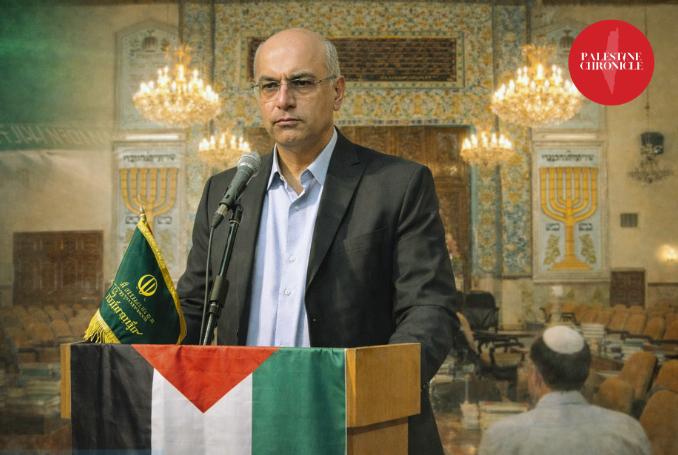
A statement by Iran’s Jewish lawmaker following the reported Israeli assassination of Ayatollah Ali Khamenei has drawn renewed attention to one of the Middle East’s least discussed communities: the Jews of Iran.
Homayoun Sameh, the Jewish representative in Iran’s parliament (Majlis), reportedly expressed condolences and described the assassination as a tragedy affecting the Iranian nation as a whole. The statement reflected a position often articulated by Iranian Jewish leaders—that their identity is tied primarily to Iran, not to Israel.
In the context of the Israeli-US war on Iran, such responses underscore a reality frequently overlooked in political discourse: Jewish communities around the world do not necessarily share a single political identity.
The existence and continued presence of the Iranian Jewish community complicate the narrative—often promoted by Israeli officials—that Israel speaks on behalf of Jews everywhere.
To understand why, it is necessary to look more closely at the history, status, and identity of Iran’s Jews.
How Ancient Is the Jewish Presence in Iran?
The Jewish presence in Iran is among the oldest continuous Jewish communities in the world, with roots that historians trace back more than two millennia.
Over the centuries, Jewish communities developed in various parts of the Iranian plateau, including cities such as Hamadan, Shiraz, Isfahan, and Tehran. These communities participated in trade, scholarship, and local cultural life across different Persian dynasties and empires.
Persian Jewish history is intertwined with the broader history of the region. Jewish communities lived under the Achaemenid, Parthian, and Sassanian empires, as well as under later Islamic dynasties that ruled the region.
The deep historical roots of Jews in Iran mean that the community is often described not simply as a diaspora population but as an indigenous part of Iran’s historical and cultural landscape.
Even as political systems changed, Jewish communities remained embedded in local societies, developing Persian-Jewish cultural traditions and religious institutions that endured for centuries.
How Many Jews Live in Iran Today?
Today, Iran’s Jewish population is relatively small but remains one of the largest in the Middle East outside Israel.
Most estimates place the number of Jews living in Iran at between 8,000 and 10,000 people. Before the 1979 Islamic Revolution, however, the community was far larger, with estimates ranging from 80,000 to 100,000 Jews living in the country.
Political upheaval, economic changes, and regional tensions prompted many Iranian Jews to emigrate in the late twentieth century, particularly to the United States.
Despite this decline, a functioning Jewish communal life continues to exist in Iran.
Most members of the community live in Tehran, which hosts the largest concentration of Iranian Jews. Smaller communities remain in Shiraz and Isfahan, cities with long Jewish histories.
Synagogues, Jewish schools, and community organizations continue to operate, and Jewish religious practices are still observed publicly within the framework permitted by Iranian law.
What Is the Legal Status of Jews in Iran?
Judaism is formally recognized in the constitution of the Islamic Republic of Iran.
Alongside Christianity and Zoroastrianism, Judaism is listed as one of the country’s official religious minorities, meaning that Jewish citizens have legal recognition and limited protections under Iranian law.
One of the most notable provisions is the reserved seat in Iran’s parliament (Majlis) allocated to the Jewish community.
This seat is currently held by Homayoun Sameh, who represents Iranian Jews in the national legislature.
Jewish religious institutions—including synagogues and community centers—operate in several Iranian cities, and Jewish schools continue to function, although they must follow the national education system and curriculum.
Like other religious minorities in Iran, Jews face certain restrictions, including limitations on holding some senior government or military positions. Nevertheless, the constitutional recognition of Judaism reflects an official distinction made by the Iranian state between Judaism as a religion and Zionism as a political ideology.
Do Iranian Jews Identify with Israel?
The relationship between Iranian Jews and Israel is complex and often misunderstood outside the region.
Israel frequently portrays itself as the political representative of Jews worldwide. Yet many Jewish communities across the globe maintain identities shaped primarily by national, cultural, or historical ties to their own societies.
Iranian Jews historically developed a strong sense of belonging to Iran itself.
Community leaders have often emphasized that Judaism is a religion while Zionism is a political movement, and that the two should not be conflated.
This distinction is frequently highlighted in public statements by Iranian Jewish representatives and religious leaders, particularly during periods of heightened tension between Iran and Israel.
For many Iranian Jews, their identity is rooted not only in religious tradition but also in the Persian language, culture, and national history.
How Did the Community React to the Assassination of Khamenei?
Following the Israeli assassination of Ayatollah Ali Khamenei, statements attributed to representatives of Iran’s Jewish community expressed condolences and solidarity with the Iranian nation.
The reaction reflects a pattern that has appeared in several previous political crises in Iran: Jewish leaders publicly emphasizing their belonging to the country and their participation in national mourning or political discourse.
Such responses highlight the extent to which the Iranian Jewish community sees itself as part of the broader Iranian society rather than as an extension of Israel.
For observers outside Iran, these reactions can appear surprising. Yet within the context of Iranian Jewish history, expressions of national solidarity are consistent with the community’s long-standing self-identification as Iranian.
What Does the Iranian Jewish Experience Reveal?
The existence of a Jewish community in Iran complicates a simplified narrative often presented in international politics—that Israel speaks for Jews everywhere.
Jewish communities around the world are diverse in their political views, historical experiences, and national identities.
The Iranian case demonstrates how Jewish identity can coexist with strong local and national affiliations outside Israel.
For more than two millennia, Jews in Iran have lived within Persian society, adapting to changing political systems while preserving religious and cultural traditions.
Today, despite geopolitical tensions between Tehran and Tel Aviv, that ancient community continues to exist.
Its history underscores a broader reality: Jewish identity has never been monolithic, and communities across the world have developed their own relationships with the countries they call home.
For the Jews of Iran, that home has long been Iran itself.
(The Palestine Chronicle)
https://www.palestinechronicle.com/fact-sheet-who-are-the-jews-of-iran/

Geen opmerkingen:
Een reactie posten
Opmerking: Alleen leden van deze blog kunnen een reactie posten.