The Chomsky-Epstein Files: Unravelling a Web of Connections Between a Star Leftist Academic & a Notorious Pedophile


6 Key findings of this investigation:
- Right up until his arrest for child sex trafficking, Chomsky was advising Epstein on crisis management, sympathizing with the “horrible way you are being treated in the press and public.”
- On multiple occasions, Chomsky expressed his desire to visit Little St. James Island, site of Epstein’s infamous sex crimes.
- Chomsky flew on Epstein’s “Lolita Express” jet, stayed at his mansions in Manhattan and Paris, and regularly met him for dinner and other social occasions.
- Chomsky quietly met with a host of other highly questionable characters, including Steve Bannon, Woody Allen, and Ehud Barak.
- Chomsky considered Epstein his “best friend,” and his closest advisor, and regularly exchanged gifts with the disgraced pedophile.
- Chomsky’s relationship with his children broke apart, due in part to their protests over his attempts to name Epstein’s accountant and right-hand man to the board of the family’s trust fund.
Newly released documents have shed light on the unlikely relationship between renowned leftist professor Noam Chomsky and disgraced pedophile Jeffrey Epstein. Analyzing over 3800 emails and texts involving the academic, MintPress News has uncovered a deep, years-long friendship between the two, one where they became “best friends” and each other’s closest confidants. Chomsky flew on Epstein’s notorious “Lolita Express” jet, stayed at his apartments in Manhattan and Paris, and expressed his desire, on multiple occasions, to visit Little St. James Island, the location of many of Epstein’s worst sex crimes.
Years of exchanging gifts and dining together – events that frequently included other highly controversial characters, such as disgraced filmmaker Woody Allen, far-right political strategist Steve Bannon, and former Israeli prime minister, Ehud Barak, turned the pair into the closest of friends. Chomsky became a key figure in Epstein’s attempts at crisis management, sharing his thoughts about strategies to quash and counter what he called “the onslaught of venomous attacks” against him. Meanwhile, Epstein became the star political philosopher’s trusted legal and financial advisor, a fact that would lead to a near collapse in the relationship between Noam and his children.
This is the story of the previously unknown relationship between the man who The New York Times called “the most important intellectual alive” and the world’s most infamous sexual predator.
Noam Chomsky: Jeffrey Epstein’s Crisis Manager
After 36 survivors – some as young as 14 – came forward, billionaire financier Jeffrey Epstein was convicted in 2008 on charges related to child sex crimes. He was, however, given only an 18-month sentence, and served only 13 months in a minimum security prison that he was allowed to leave six days per week. The U.S. attorney who struck this lenient deal reportedly stated that he did so under duress, and was told to “back off,” as Epstein “belonged to intelligence.”
Key to Epstein’s crimes becoming known was the testimony of his victim, Virginia Giuffre. Giuffre alleged that Epstein and his partner Ghislaine Maxwell operated a worldwide sex trafficking operation, where women and girls were kidnapped and forced to have sex with the world’s rich and powerful. This allegedly included royals like Prince Andrew, politicians such as Donald Trump and Bill Clinton, and academics, like Alan Dershowitz. Epstein reportedly made his fortune by keeping copious evidence of their sex crimes and extorting his clients. Previous Epstein Files releases have strongly indicated that Epstein, like Maxwell’s father and family, worked for Israeli intelligence.
The testimony from Giuffre and others sparked worldwide uproar, eventually forcing the U.S. government to act. In 2019, the FBI arrested Epstein, holding him in a high security Manhattan prison. Just weeks later, he was found dead in his cell, under highly suspicious circumstances.
Epstein was aware that the walls were closing in. Months before his arrest, he sent Chomsky a number of panicked emails, desperately asking for guidance on how to squash the widespread demands for his arrest.
On February 23, 2019, he wrote:
“Noam. I’d love your advice on how I handle my putrid press. Its is spiralling out of control. Do I have someone write an oped? Defend myself. Or try to ignore. Realizing that mobs are dangerous!”
“Can use some advice. The press is painting me as a monster. Congress, Senate being fed by plaintiffs. Lawyers only wanting money. I have no skill with the general public or media… Suggestions??” he asked another time.
Chomsky’s suggestion was generally to remain silent, hoping the situation would blow over. “Ive watched the horrible way you are being treated in the press and public. It’s painful to say, but I think the best way to proceed is to ignore it. I’ve had plenty of experience, though of course not on this scale,” he replied, adding that some of his close friends have also gone through the same thing.
“What the vultures dearly want,” he continued, “is a public response, which then provides a public opening for an onslaught of venomous attacks, many from just publicity seekers or cranks of all sorts.”
“Hard to say, but it’s the best advice I can think of,” he concluded, sympathizing with all the “torture and distress” the affair has caused. This is not a reference to the vast numbers of girls and women Epstein trafficked, abused, and raped, but to the mental anguish Epstein himself was going through, as his criminal network was being slowly and very publicly unraveled.
In his emails to Epstein, Chomsky denounced what he described as the “culture of gossip-mongers” destroying his stellar character. “These things have a half-life. The best reaction, I think, is to just stay above the furor, wait it out, go on with what matters.”
On December 29, 2018, Epstein asked his unofficial crisis manager for feedback on an op-ed article he wrote about himself in the third person, which he said he would send to The Washington Post and have published.
The fawning, saccharine piece presented Epstein as a near saint suffering outrageous slanders. As it read:
“The critics are wrong on the facts and the law. They also ignore a fact going to the heart of fundamental fairness: In the decade since paying his debt to society, Jeffrey Epstein has led a life characterized by responsible citizenship, numerous acts of generosity and good deeds. Here are the true key facts: Jeffrey Epstein [is] a successful self-made businessman with no prior criminal history whatsoever.”
It also stated that he “was treated exactly the same (including his time served) as any other state-incarcerated individuals,” for his 2008 conviction, a bizarre claim, considering his lenient sentence and conditions of incarceration.
Despite the fact that this was clearly a sock puppet article (a practice whereby an individual claims to be another entity in order to boost credibility), Chomsky was deeply impressed. “It’s a powerful and convincing statement,” he replied, although he once again advised against drawing even more media attention to the matter:
“Few are willing to think through the arguments and factual details or to try to adjudicate conflicting claims. I’ve seen this happen over and over on other matters… Ugly and bitter as it is, I suspect the best course now is not to stir the pot by raising the issue publicly, opening the door to charges and accusations that can no doubt be answered in the court of logic and fairness — but that’s not the public domain, where innuendo and suspicion and accusation reign.”
Chomsky suggested that, unfortunately, Epstein would simply have to “develop a thick skin” to “fend off whatever ugliness breaks through now and then.” “The great work that you have been doing speaks for itself,” he concluded, without explaining what exactly he was referring to.
Although the emails clearly show the extent to which Epstein trusted Chomsky, his intellect, and his judgment, he did not fully take his advice, and pursued a number of active measures to muddy the waters and improve his public image. One of these was to attempt to produce a documentary film about himself, presenting him in a good light. Epstein went into his Rolodex of influential people, calling in favors to see who would appear on camera endorsing him.
If his texts are to be believed, Chomsky was one of his most enthusiastic backers. “Spoke to Chomsky, he’s all in” he messaged an undisclosed associate in December 2018.
Epstein had leaned on Chomsky’s support previously. In 2017, he asked the professor to write a few paragraphs on why he continued to value his friendship for an article in Forbes magazine, the gist of which, according to Epstein, would be “why people still want his advice after all of his personal travails.” It appears that the article was never published.
Chomsky is often described as an “intellectual rock star,” or an “American Socrates.” The father of modern linguistics, he is more well known for his political work and activism, which has seen him become an icon of the left. First coming to public attention for his opposition to the Vietnam War, he has written in excess of 150 books on politics, social science, and the media.
His first wife, Carol, with whom he had three children, died in 2008. In 2014, he subsequently married Valeria Wasserman, a Brazilian translator 35 years his junior. He suffered a debilitating stroke in 2023, leaving him unable to speak or meaningfully converse. Until his final public appearances, however, he continued to defend Epstein, even after the latter was found dead in his cell.
In 2020, when asked about Epstein’s sex crime convictions, Chomsky was adamant: “There is a principle of Western law, that once a person has served a sentence, he is are the same as everybody else. It seems to be forgotten. Why this obsession but not with more significant characters?” he said, also attempting to deflect, noting that far worse people than Epstein regularly donate to his university, M.I.T.
One of his last interviews was with The Wall Street Journal, who questioned him directly about his connections to the disgraced billionaire. Chomsky was unusually blunt. “That is none of your business. Or anyone’s,” he stated, adding, “I knew him and we met occasionally.”
However, as this investigation will show, that is a self-serving and misleading description of an extremely close relationship forged over many years.
Flying on the Lolita Express, Dreaming of Epstein’s Rape Island

For years, Jeffrey Epstein allowed Chomsky to periodically live a life of extreme luxury, plying him and his wife with gifts, and providing them access to his property, vehicles, and staff.
Emails show that, in May 2016, while he was in New York City for a lecture, Noam met up with Epstein and stayed at his residence. The location in question is very likely to be Epstein’s palatial, seven-floor 51,000 square feet (4,700m²) mansion. A former hospital turned into a single apartment, the property is filled with paintings of naked women and other highly sexualized art, and was where Epstein would traffic and rape his slaves, as well as hold wild sex parties for his powerful guests. Chomsky described it as“that lovely apartment where you once put us up,” indicating he had stayed there previously.
When federal agents raided the property in July 2019, they found a framed photo of Epstein with the Chomskys on a bedside table.
This was not the first time that Chomsky had tasted some of New York’s most luxurious residences, courtesy of Epstein. In 2015, the billionaire booked him into the $1400-per-night Manhattan Suite at the Mark Hotel on the Upper East Side.
And in order to travel in style, he flew aboard Epstein’s private jet, nicknamed the “Lolita Express” – a reference to the child sex crimes widely alleged to have regularly taken place aboard.
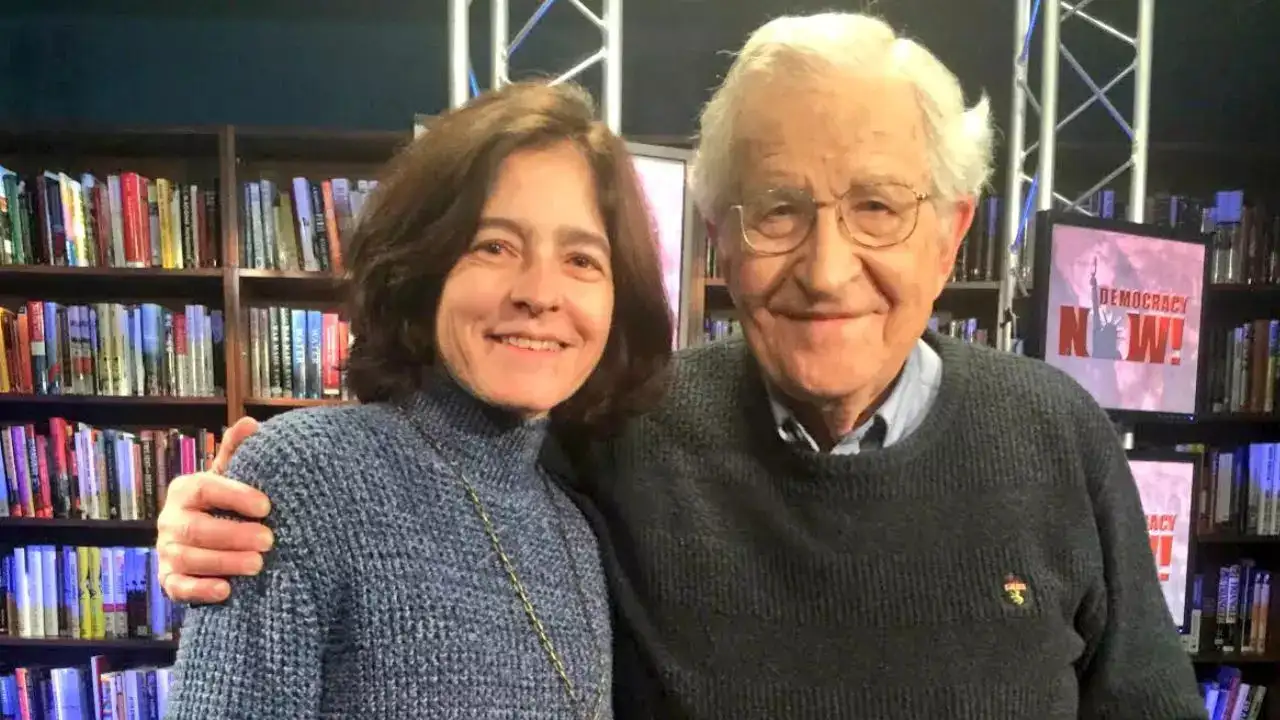
Many years ago, internet sleuths combing through the Facebook profile of Valdson Vieira Cotrin – Epstein’s Parisian butler – were shocked to find an image that appeared to show him arm-in-arm with Chomsky. The latest tranche of emails proves this photo to be accurate.
“Dear Jeffrey, We had a wonderful day. Valdson took good care of us. Drove us to the Louvre, went to pick us up, brought us to your wonderful apartment for a delicious meal. We just missed your company,” Valeria wrote, attaching a selfie for him to enjoy.
The property in question was Epstein’s 7,400-square-foot apartment at 22 Avenue Foch in Paris’ exclusive 16th arrondissement, just a stone’s throw away from the Arc de Triomphe.
Other emails show Epstein was offering his other properties to the Chomskys. “You should also feel free to use my Palm Beach house, for just you and [REDACTED]. You will be well looked after. It’s very warm. Anytime this or next month,” he wrote in February 2016. Noam was tempted. “Lovely offer. Don’t think we’re not thinking about it. Hard,” he replied.
Chomsky, however, had his eyes set on an entirely different property of Epstein’s: the one on Little St. James Island. On multiple occasions, he signalled his eagerness to visit what would come to be known as one of the most notorious houses on the planet.
Epstein’s 70-acre private island became world renowned after U.S. Virgin Islands Attorney General Denise George alleged that dozens of girls, some as young as 12-years-old, were imprisoned and raped at the property. The compound, full of occult symbolism, was put up for sale in 2022 in order to pay for a host of lawsuits.
In February 2016, he offered to send the Lolita Express to Boston to pick up the Chomskys, and take them to Little St. James Island. “Can’t tell you how tempting the invitation is. Have to somehow work out the schedule,” Noam replied.
A few months later, Noam was still dreaming of visiting. “Valeria’s always keen on New York. I’m really fantasizing about the Caribbean island,” he told Epstein in July 2016.
Despite all this, there is no indication in the files that any of the Chomskys saw or partook in any sex crimes or illegal activities with Epstein.
Dining With “Dear Friends” and War Criminals
Jeffrey Epstein, needless to say, was a highly politically-connected man. From princes to presidents, the billionaire trafficker was a central figure among the global elite. One of his closest associates was Donald Trump. Previously disclosed files show Epstein describing himself as “Trump’s closest friend,” and claiming that it was he who introduced the president to his wife, Melania.
Trump’s unlikely electoral victory in 2016 sent shockwaves around the world. But through Epstein, Valeria Chomsky saw a way to directly influence U.S. governmental policy, asking her friend to suggest to the new president that her husband should become his policy advisor. “Once you asked me who I would like to see talking to Noam. Here is a guy!” she said, just days after Trump’s November 2016 victory. “Can you arrange it? He could make good use of Noam’s advices,” she added, also stating that she should also be appointed a political analyst in the White House.
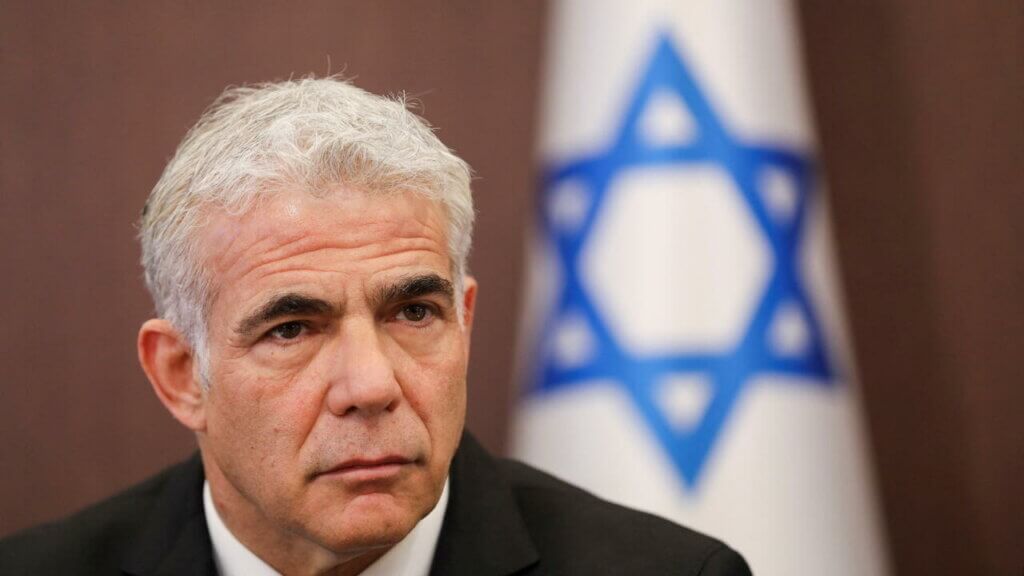
While she may have been joking about her own appointment, the idea that Epstein could arrange something like that for her husband was not far-fetched. Epstein, by this time, had already set Noam up with meetings with influential world leaders. In the summer of 2015, he organized a dinner with former Israeli prime minister, Ehud Barak, a man Chomsky had strongly denounced in print. “I hope [REDACTED] and you enjoyed yesterday as much as the Barak’s and I” Epstein wrote to Noam that September.
At the same time as the Barak meeting, Chomsky planned a trip to Israel, a move that would likely have angered many in the Boycott Divestment and Sanctions movement. In October of that year, however, he cancelled the visit. Not because of Israel’s crimes against Palestine, but because Valeria tore a muscle and had to concentrate on recovering.
In 2018, Epstein invited the Chomskys to a small, private dinner party with Barak and Trump strategist Steve Bannon. For many leftists, the idea of sharing a room with an Israeli prime minister, the world’s most notorious pedophile, and an oft-described “fascist” white supremacist thinker would sound like a nightmare.
Chomsky, however, described his regret at missing out on the opportunity due to work commitments, emailing Bannon directly. “My wife Valeria and I were quite disappointed to have missed you the other night, and hope that we can arrange something else before too long. Lots to talk about,” he wrote.
Months later, they personally invited Bannon to his Arizona home. “Jeffrey is a very dear friend, and we look forward to meeting you. Would it be possible for you to come 4pm tomorrow?” Valeria wrote.
Images of the famous leftist intellectual arm-in-arm and laughing with the driving force behind the alt-right and many of Trump’s most racist and punitive policies caused commotion when they were released as part of a previous Epstein Files disclosure.
Flying on the Lolita Express to Attend a “Pedophile Convention”
Chomsky, however, had long been mingling with controversial figures, thanks to his Epstein friendship.
In October 2015, the emails show, he flew from Boston to New York City with Epstein on his private jet in order to attend a soirée at Epstein’s notorious Manhattan town house with the disgraced film director Woody Allen and his wife, Soon-Yi Previn.
Allen’s proclivities, if anything, were even more well-known than Epstein’s. His long-term, high-profile relationship with actress Mia Farrow ended spectacularly in 1992 after their adopted seven-year-old daughter, Dylan, alleged that he had, for some time, been molesting her.
At the same time as this, Allen had been having an affair with another of Farrow’s adopted children, 22-year-old Soon-Yi Previn. Just five years later, Allen married Previn.
Allen was a frequent guest at these Manhattan dinners, noting that Epstein was like “Dracula with young female vampires to serve him.” Epstein left even less to the imagination when discussing his time with Allen, describing their meetings as a “pedophile convention.”
Chomsky was unrepentant about his actions. When asked directly by The Wall Street Journal, he said, “If there was a flight, which I doubt, it would have been from Boston to New York, 30 minutes.” There is now pictorial evidence that Chomsky did indeed fly with the billionaire molester on his plane. On his association with Allen, he replied, “I’m unaware of the principle that requires that I inform you about an evening spent with a great artist.”
“Deep, Sincere, And Everlasting Friendship”
The overwhelming image that emerges from nearly 4000 newly released documents concerning the pair is a deep, years-long friendship between Noam Chomsky and Jeffrey Epstein. The two would exchange jokes, and talk money, politics, medical problems, and legal troubles. Epstein became Chomsky’s closest friend above all others.
“Dear Jeffrey, We count you as our best friend. I mean ‘the’ one. It is always great to see you,” Valeria Chomsky wrote in 2017.
The world-renowned linguist said as much, signing off one note to Epstein with the words: “Like real friendship, deep and sincere and everlasting from both of us, Noam and Valeria.”
The billionaire showered the Chomskys with gifts, such as a food hamper from Carnegie Deli, an iconic New York City Jewish eatery, and a cashmere sweater for Noam’s 87th birthday. On one occasion, Epstein organized a private car to take the couple to the airport.
The Chomskys reciprocated in kind. In 2016, Noam contributed to Epstein’s birthday book. A previous edition of Epstein’s birthday book contained lurid illustrations of him receiving massages from young girls, and a hand-drawn picture of a naked woman from Donald Trump, replete with language that many have taken to be allusions to sex with underage girls.
There is no indication what Chomsky contributed, nor that he ever saw the book, but Epstein was “thrilled and touched by it,” according to an email.
Epstein and the Chomskys met frequently, and, judging by their interactions, greatly enjoyed their time together. As Valeria wrote, “I am very enthusiastic about these meetings.” Another time, she made Epstein promise to “include her in the next photos,” according to an email from Epstein’s executive assistant, Lesley Groff. Prosecutors are currently weighing up charging Groff for her alleged role in Epstein’s sex crimes, which include scheduling massage appointments from women and girls. Groff has denied all wrongdoing.
A sign of how close the relationship became is that Epstein grew notably fond of Valeria’s cooking. One email from Noam notes that she prepared his “favorite dessert” (possibly a passion fruit mousse, judging by other emails discussing her culinary exploits) ahead of his February 2016 visit to their Massachusetts home.
Epstein and Noam shared their deepest feelings and emotions with each other, as well as lighter topics. Epstein sent messages with subject lines such as “thought you might find this amusing.”
In one exchange, the pair even made sexual jokes with each other. Epstein wrote that he thought of Noam and Valeria as if they were “Pluto and its moon.” Chomsky responded, “Who’s Pluto” in this situation, to which Epstein shared a picture of the Disney character of the same name with its ears sticking up. After Chomsky agreed that he did look like the dog, Epstein quipped that “At your age, if anything sticks up, be proud.” “Ouch,” Chomsky replied, to which Epstein said, “Good, it still has feelings as well,” referencing Chomsky’s penis.
By 2017, the in-person meetings between Epstein and the Chomskys reduced in frequency. Not because of the mounting wave of evidence about the New York oligarch’s misdeeds, but because the pair had moved west to take up a teaching position at the University of Arizona. “We will be here [Tucson] and you are very welcome as always. Noam misses talking to you,” Valeria told Epstein in November 2018, just months before his arrest.
Publicly a Leftist Intellectual,
Privately an Anti-Feminist
Sexual Predator Defender
Chomsky would often talk politics with Epstein, and, while outwardly consistently espousing far-left political positions, some of his private conversations sounded more like the words of conservative figures, such as Jordan Peterson or Ben Shapiro.
He was vociferously critical of #MeToo and the modern feminist movement, describing it as a “hysteria that has developed about abuse of women, which has reached the point that even questioning a charge is a crime worse than murder.”
He vehemently defended his friend Lawrence Krauss, a celebrity scientist with a host of sexual assault and other sexual misconduct charges against him, going back over a decade.
And despite complaining about being called a “neo-Nazi” by “cranks,” he compared feminists asking questions about Krauss to Hitler’s brownshirts and religious zealots. As he wrote:
“Cultures unfortunately can be swept by craziness. Nazism for example. Or the Great Awakening. We’re in one of those phases now. If there’s a charge, it’s true, in fact True. Any response is “mansplaining,” another power play, reinforcing the charge. You’ve seen I’m sure what happened to Lawrence. Full and complete response, amounts to zero. Isn’t even considered. It’s like trying to discuss rationally with religious fanatics.”
He also bitterly attacked Venezuela under socialist presidents, Hugo Chavez and Nicolás Maduro. Chomsky had met Chavez in Venezuela, and publicly praised him, stating “I can see how a better world is being created and can speak to the person who has inspired it.”
With Epstein, though, Chomsky described Venezuela as “a major disaster” brought about by “corruption and incompetence.” He characterized the country as a “completely” top-down bureaucracy and not even “remotely like socialism.”
Trusting Epstein Over His Own Children
Over the years, Epstein became not only Chomsky’s dearest friend, but his closest and most trusted legal and financial advisor. This relationship even damaged the bond with his children, who expressed their alarm at what they called a “dramatic and unexplainable” increase in his spending since his 2014 marriage. “This unexpected outflow is placing your financial future at risk,” they warned.
They also strongly objected to their father’s insistence that Epstein’s personal accountant and close associate, Richard Kahn, be placed on the board of the family trust fund, set up to manage the wealth he had accrued over a life of academia and book publishing – wealth that many in the family had access to.
In July 2017, his three children wrote a joint letter in which they stated, “We beg you once again to meet with us and with the people who set up the Trust, the loan, etc., to clarify these issues,” going so far as to contact a professional mediator to help.
Richard Kahn worked closely with Epstein, managing his finances, investments, payments and other aspects of his life, including affairs at Little St. James Island. A 2021 lawsuit describes him as the “captain” of Epstein’s international sex crime ring, claiming that he, “directed, approved, enabled, and justified millions of dollars in payments that fueled the Epstein Enterprise’s sex trafficking, including payments to women who were forced to have sex with Epstein and/or recruited others to be victimized.” Kahn vehemently denies the charges.
In his later years, Chomsky became somewhat estranged from his children, siding with his wife and Epstein on matters, something that caused great distress to them. “On a personal level, we are heartbroken to feel that we are kept at such a distance from you in your new life,” one of his daughters wrote; “We were thrilled to learn that you had found a new partner, but we were grieved when we began to realize that this meant we are rarely able to see you.”
Chomsky bitterly condemned his children’s behavior, characterizing them as “three multimillionaires” who cared more about the money than his own quality of life. Valeria, meanwhile, compared them to Nazis. The saga took its toll on Noam, who described it as a “painful cloud that I never would have imagined would darken my late years.”
The reason any of this bitter and acrimonious split is known or relevant to the public is that Noam and Valeria Chomsky were forwarding all the messages detailing the affair to Epstein, who advised them at every step of the way. Epstein used his financial and legal contacts, and, at one point, sent Chomsky $270,000 – a sum that was likely simply relating to facilitating the academic move his own funds around.
Throughout the whole affair, the pair were deeply appreciative of Epstein’s expertise. “Once again, redundantly, can’t thank you enough for all of your help and concern,” Noam wrote. Valeria was even more effusive in her praise. “You are a hero, Jeffrey!!!” she said.
Epstein encouraged Noam to cut off his children entirely. One of his last messages suggests that he took his advice. “I wanted the release to acknowledge that they are aware that you’ve decided to leave your entire estate to Valeria,” he wrote.
Manufacturing Age of Consent
The immediate response to the newly-released tranche of Epstein Files from many of Chomsky’s millions of followers was one of disgust and disbelief. “I am heartsick,” wrote Indian intellectual Vijay Prashad, who penned two books with Chomsky. “There is no defense for this, in my view, no context that can explain this outrage… From my side, I am horrified and shocked.”
“Chomsky was a major influence on me and millions of others. He is a seminal figure on the global left. But his consorting with Epstein is unforgivable. A shameful coda to a life dedicated to exposing power and lies,” added British journalist, Matt Kennard.
Even before Epstein’s death in 2019, his relationship with Chomsky was already beginning to raise suspicions. Why was one of the world’s most famous leftist academics so insistent on risking his professional reputation and damaging his relationship with his children, all for Epstein? Chomsky is known as one of the world’s sharpest minds. Yet he dogmatically refused to see the obvious moral danger in associating so closely with a notorious pedophile.
Again, there is no indication in the files that Chomsky was involved in any illegal behavior with Epstein, let alone sex crimes. Nevertheless, his decision to involve Epstein so closely in his life is even more objectionable when compared with the actions of Norman Finkelstein, an academic, disciple, and associate of Chomsky’s. In 2015, when Harvard professor Robert Trivers put Finkelstein and Epstein in contact via email, he responded by calling Epstein a pedophile and told him that he should be put to death for his heinous sex crimes. As he wrote:
“My guess is, if Epstein put your daughter at age 15 in such a position, you wouldn’t publicly describe him as a “friend” and person of “integrity.” In fact, I would hope that you’d promptly throttle both Epstein and [his lawyer Alan] Dershowitz.”
The Chomsky/Epstein relationship is one of profound contradictions. The academic publicly presents himself as an anti-state anarchist, but in private, collaborates with the very embodiment of the so-called “deep state.” And while Chomsky has been one of Israel’s loudest critics, his close friend was an Israeli agent.
The revelations have seriously weakened Chomsky’s standing in public, and his dying years will no doubt be marred by a renewed questioning of both his moral character and his body of work.
Ultimately, then, with his financial clout and know, Epstein may have been able to save Chomsky some cash and provide him with a few days of luxury. But it has cost Chomsky something far more valuable: his reputation.
https://www.mintpressnews.com/the-chomsky-epstein-files/290658/