woensdag 24 december 2025

The New York Times ignores an essential part of the Jeffrey Epstein story — Israel


The New York Times ignores an essential part of the Jeffrey Epstein story — Israel

The New York Times has published a major exposé purporting to explain how Jeffrey Epstein rose to the top of the financial and political world, but it ignores one key topic: Israel.

If you want to understand why conspiracy theories about Jeffrey Epstein flourish, then you must read the interminable investigation the New York Times published, purporting to explain how Jeffrey Epstein clawed himself to the pinnacle of the financial/political/social world. “The Untold Story of How Jeffrey Epstein Got Rich” concludes that Epstein was the greatest conman and swindler that ever lived, and charmed the pants off of every powerful man he met. Some of his marks still curse Epstein for fleecing them. But the paradigm of the article is the execs at Bear Stearns back in the 70s who found out that the former math teacher at Dalton School had invented college degrees from “two California universities” but didn’t fire him because they wanted to give a humble kid from the outer boros a second chance. 

“You lied about your education,” [senior exec Michael] Tennenbaum said.

“Yes, I know,” Epstein calmly replied. He had never graduated from college. Tennenbaum recalls being disarmed by the admission. Decades later, he would regard it as an example of Epstein’s ability to manipulate his marks — in this case, him.

“Why did you do it?” Tennenbaum stammered.

Without an impressive degree or two, Epstein said, “I knew nobody would give me a chance.”

This resonated with Tennenbaum.

That’s a great story, and there is great reporting in this article. But the premise of the article is a stupid myth the NYT wants to believe– That Epstein was just the canniest, boldest con man that ever lived, and he left everybody swooning. The talented Mr Ripley. 

It’s a myth not because Epstein was not a bold and crafty con man – no doubt he was. But even a conman can have an ethos. Look at Gatsby, a mobster with romance. Look at Trump’s fascistic populism. And Jeffrey Epstein had an ethos that he played on over and over again as his racket grew; and that ethos was the love of Israel in the rising Jewish meritocratic establishment of the 70s. 

Almost every player in the Times story is a Jewish success story who lobbied for Israel in prestigious circles, from Dershowitz to Larry Summers, Leon Black, Lynn Forester de Rothschild, and Epstein’s most famous associations, Robert Maxwell and Les Wexner.  

Love of Israel was a lead criterion for inclusion in Epstein’s circle. I don’t think Epstein’s “marks” were even fooled by him. They knew he was a conman who played fast and loose. But they also knew that the Israel lobby has a need for charmers who break the rules, so they looked the other way.   

Epstein did numerous chores for Israel that investigative sites have documented and the Times does not touch: he helped Israel broker financial deals with neighbors, he had an Israeli spy living in his house for a time, and he had a close relationship with former Israeli PM Ehud Barak that included business ventures and politics in Israel.

“It’s well past time to ask questions about the billionaire pedophile’s links to Israel,” Jacobin says. 

Epstein held multiple passports, including one from Austria with a false name and an address in Saudi Arabia.  

Some theorize that Epstein was Mossad and running a “honeytrap” for the Israeli government, videotaping pols having sex so they could be blackmailed to support Israel. I don’t see the evidence for this. However, the evidence in plain sight suggests that Epstein was always willing to help Israel whenever possible, and this service ultimately elevated him. 

As the Times says, in its one reference to Israel: “In 1989, Epstein accompanied Wayne Owens, a Democratic congressman from Utah, on a trip to the Middle East to explore ways to promote business ties between Israel and its neighbors.” That trip came about because of Epstein’s relationship to the Israel-supporter Les Wexner. But the Times studiously avoids the Israel connection when it comes to the two people Epstein was closest to, businessman Wexner and fellow child sex trafficker Ghislaine Maxwell. 

To show you how foolish the Times narrative is, let’s focus on those relationships.  

Maxwell says she met Epstein in 1990 or 1991 when she was 30 and had come to New York from England as an ambassador for her beloved father’s growing media empire in the States. A friend introduced her, she says, and she remembers Epstein, then in his late 30s, having a ketchup stain on his tie.  

Maxwell’s father then vetted Epstein by calling Bear Stearns execs. Here’s the Times version: 

“When the domineering Robert Maxwell learned that his daughter was spending time with Epstein, he contacted Ace Greenberg and Jimmy Cayne, both of whom he was close to, to see what they knew about their former Bear Stearns employee. Greenberg and Cayne apparently vouched for Epstein.”

Ghislaine explained the vetting in her deposition to the Justice Department last summer. Her father was extremely protective of her because he was such a controversial figure that she had been threatened, including a death threat by the Irish Republican Army. So he wanted to get her a bodyguard (she turned him down) and to know who she was dating. And Bear Stearns was “one of our banks.”  

Let’s take Ghislaine at her word…

What doesn’t track in the Times story is the idea that Cayne and Greenberg would “vouch” for Epstein. Wait a second. The Times just recounted one incident after another in Epstein’s career in his 20s and 30s where he ripped people off, lied to them, smiles and waves. Cayne and Greenberg knew this well. They’d fired Epstein after an SEC investigation of trading violations 10 years earlier! They knew Epstein to be a charming fraud who invented his degrees. 

So when their friend and client Robert Maxwell, who is one of the biggest businessmen in the world, calls them to get their take on Epstein as boyfriend material for his beloved daughter — they “vouch” for him. No red flags?? 

I think the truth is that everybody knew this guy was a conman, and Ghislaine wasn’t really his girlfriend, but a consort; it was a business relationship from the start (she claims he was actually dating Eva Andersson until 1994). And in fact, the Bear Stearns execs were vouching for Epstein as a Jewish kid on the make who loved what Robert Maxwell loved — Israel. 

Robert Maxwell was born in Czechoslovakia and lost much of his family in the Holocaust. As Ghislaine Maxwell stated in her deposition to the Justice Department last summer, her father served as an intelligence officer in World War II and essentially functioned as one throughout his life, passing on secrets to governments, including Israel. There is speculation that Maxwell worked for Mossad. After his death by drowning in 1991, Maxwell was given what the press termed a state funeral in Israel, and then was buried in Jerusalem. 

“My father, you know, anything that touches on Israel or the state of Israel, I’m always interested in because my father loved Israel and so I pay attention to it and we have ties to Israel,” Maxwell said.  

Jimmy Cayne also loved Israel; he gave to many causes there. Ace Greenberg gave half his philanthropy to Jewish causes and Israel.

The Times also whitewashes the relationship with Les Wexner, the man who truly elevated Epstein. This is how the Times subtitles their association: “A confidence man meets his most significant mark”

So Les Wexner is a mark? But according to the Times, Wexner’s people saw through Epstein from the start. And Wexner just “didn’t listen” again and again. 

[Harold] Levin told us that he spent an hour with Epstein in his office and immediately got a bad vibe. He found a pay phone and called Wexner. “I smell a rat,” Levin reported. “I don’t trust him.”

Wexner apparently didn’t listen…

Almost immediately, Wexner’s colleagues grew alarmed by his embrace of Epstein. “I tried to find out how did he get from a high school math teacher to a private investment adviser,” the vice chairman of the Limited told The New York Times in 2019….

Once again, Wexner didn’t listen, and thus became the most important contributor to the staggering growth in Epstein’s fortune. One unsolved mystery of the Epstein era is what exactly Wexner got out of their relationship.

Wexner didn’t listen because he didn’t want to listen. As to what he got out of the relationship—well, Wexner cares deeply about Israel. Wexner is married to an Israeli-American, Abigail Koppel, whose father fought in Israel’s foundational war and later opened El Al Airlines in the U.S. Per the latest emails, Koppel and Epstein were close. When her father died in 2006—“In lieu of flowers, the family requests that contributions be made to ‘Friends of the Israel Defense Forces,’”

Wexner is a pillar of the Israel lobby. Just last month at the Jewish Federations conference, Eric Fingerhut, a former Congress member, hailed Wexner as one of those great Jewish leaders who love Israel and combine communal leadership with the ability to stand next to the governor and the mayor. 

Yes, and right after he got in with Wexner, Epstein flew out to Israel with a Utah congressman to promote business deals. 

Once you start connecting Israel dots with Epstein, you can’t stop…. Epstein worked with Dershowitz to try to discredit the authors of the bombshell Israel lobby paper in 2006. 

Epstein’s close associate Leon Black (who was brought down by their association in 2021) gave $1 million to the Birthright program and a large gift to the Israeli defense forces. 

The one time I met Epstein (reporting for this article) he was with Howard Rubenstein, the p.r. guy who was a devoted supporter of Israel. 

You simply cannot separate the shared love of Israel from Epstein’s mysterious rise. The Times investigation is naïve and stupid. No wonder people turn to Tucker Carlson. 


Epstein & Israel: Drop Site News Investigates Jeffrey Epstein’s Ties to Israeli Intelligence


Epstein & Israel: Drop Site News Investigates Jeffrey Epstein’s Ties to Israeli Intelligence

StoryNovember 12, 2025


https://www.democracynow.org/shows/2025/11/12?autostart=true

 A new series by Drop Site News looks at Jeffrey Epstein’s ties to Israeli intelligence and how he secretly brokered numerous deals for Israeli intelligence. Drop Site revealed that Epstein had played a role in brokering a security agreement between Israel and Mongolia and setting up a backchannel between Israel and Russia during the Syrian civil war.

Epstein had an “extensive relationship with Israeli intelligence, U.S. intelligence and the intelligence agencies of other countries, as well,” says Murtaza Hussain, reporter for Drop Site News. “He was a dealmaker and a fixer at a very, very elite level.”


Transcript
This is a rush transcript. Copy may not be in its final form.

AMY GOODMAN: This is Democracy Now!, democracynow.org, The War and Peace Report. I’m Amy Goodman.

As the House of Representatives moves closer to forcing the release of the Epstein files by the Department of Justice, we turn now to look at a new series by Drop Site News looking at Epstein’s ties to Israeli intelligence and how he secretly brokered numerous deals for Israeli intelligence.

On Tuesday, Drop Site revealed an Israeli spy stayed for weeks at a time with Epstein in Manhattan. Drop Site has also looked at Epstein’s role brokering a security agreement between Israel and Mongolia and Epstein’s role in setting up a backchannel between Israel and Russia on Syria.

This all comes as CNN has revealed today Epstein mentioned Donald Trump by name multiple times in private correspondence over the last 15 years, according to newly released emails from Democrats in the House Oversight Committee. CNN is reporting the emails show Epstein asserts Trump spent significant time with a woman whom Oversight Democrats describe as a victim of Epstein’s sex trafficking.

We’re joined now by Drop Site's Murtaza Hussain, who's been reporting on Epstein with his colleague, Ryan Grim.

Murtaza, welcome back to Democracy Now! Explain what you feel the media is not covering. What is the role of Jeffrey Epstein when it comes to U.S. foreign policy?

MURTAZA HUSSAIN: So, there’s been a lot of justifiable focus on Epstein’s very grave crimes and facilitation of the crimes of others related to sex trafficking and sex abuse. But one critical aspect of the story that’s not been covered is Epstein’s own relations to foreign governments, the U.S. government, and particularly foreign intelligence agencies.

Now, this information is not entirely private. A lot of it is out there, actually, in House disclosures, as parts of certain lawsuits which have been leveled against Epstein or over Epstein’s activities over the past few years and in a few databases of leaked emails from certain figures around the world which have come out showing extensive contacts with Epstein.

So, I think that a lot of this coverage of him so far, to date, at least, it’s focused, again, on salacious details of his life and the crimes he was involved in related to minors, women. But the other aspect, the political aspect, and who he was and the role he played at this very high level, facilitating deals, interacting and liaisoning with intelligence agencies in different parts of the world, has not been covered.

We don’t know exactly who Epstein was specifically to be in the position to commit the crimes that he was doing, and our story is aiming to focus and shedding light upon one particular aspect, which is Epstein’s extensive relationship with Israeli intelligence, U.S. intelligence and the intelligence agencies of other countries, as well, too. He was a dealmaker and a fixer at a very, very elite level, and he was making deals that would ultimately wind up, in some cases, being signed as formal security agreements between the government of Israel and other countries. That’s what our series is focusing on right now, and it’s just coming across naturally looking at the information contained in the publicly available data about his communications over the past — during the period of about 2013 to 2016.

AMY GOODMAN: So, tell us who Yoni Koren is. You reveal that this senior Israeli intelligence officer lived in one of Epstein’s apartments, had close personal ties to former CIA Director Leon Panetta. Can you talk about what specific intelligence-gathering operations you believe that Koren was conducting from Epstein’s apartment, and also the relationship between Jeffrey Epstein and the former prime minister of Israel, Ehud Barak, which has been documented over and over again?

MURTAZA HUSSAIN: So, a lot of the information we have now coming out about these intelligence ties do come from private correspondence between Barak and Epstein, which were leaked by hackers some years ago and posted online but have never really been analyzed in great detail, but shed profound light on Epstein’s ties not just to Barak, but officials all over the world and foreign governments in Africa, in Central Asia, in Europe, in Russia, whom he was helping connect Barak with.

Interestingly, Barak was relying on Epstein’s support, rather than vice versa, despite the fact that Ehud Barak was a very powerful figure in the Israeli security establishment. And so, these emails, in addition to House disclosures, which also point to the same information, show that this intelligence agent, who was a longtime military intelligence agent in Israel, who was Barak’s chief aide for many years, lived at Epstein’s house for significant stretches of time, weeks at a time, between this period of 2013 to 2015.

He was staying in Epstein’s house. We don’t know specifically from the communications what they may have been working on or what his role may have been there, the reason he was staying at his house. Barak would also stay at his house sometimes to hold meetings and to do business in New York, that was facilitated by that. But we do see that they were corresponding, and at one point, Epstein just transferred money to Koren.

And there was also communication between Barak and Koren in the inbox which we believe is coded communication, perhaps referring to dead drops of information or something else in New York City that they were engaged in. It’s hard to tell, because part of the reason that this correspondence is interesting is that we knew from the Snowden disclosures many years ago that Barak and Koren were being surveilled by the NSA in New York around this time or in the United States around this time.

So, whatever they were doing with Epstein in his house in New York amongst each other, with money, with sharing information or data or packages or something else, it was taking place in this period. And again, the interesting thing is that even if one would not look at the emails and keep those separate, this information is in the House disclosures. In Jeffrey Epstein’s calendars, it’s mentioned that Koren is coming and going from his home, and the day of his departure, the day he was staying, how long he was staying for.

So, this is stuff that the media could be — the broader media could be covering. It’s just escaped attention for reasons which, you know, one could speculate, or it was hard to say exactly. But, you know, we’re going to continue drilling down on this, not shying away from the political implications of his activities, Epstein’s activities, and the ties he had with powerful figures like Barak and intelligence agents like Koren.

AMY GOODMAN: The leaked emails show that the former Prime Minister Ehud Barak bookmarked a private initiative with Oracle’s Larry Ellison. Can you talk about the significance of this initiative?

MURTAZA HUSSAIN: So, what we saw from the email is effectively that around the time that Epstein and Barak were corresponding, that Koren’s activities in New York at Epstein’s home were going on, Barak himself had gone on to have a separate meeting with Larry Ellison. Now, Larry Ellison is a very well-known pro-Israel donor. He’s a billionaire and the founder of Oracle. Currently, he’s involved in, with his son, buying up much of the American media.

We’ve done other reporting on Ellison, drawing not from this database but from a separate database of communications which were also leaked and posted on a website called the Distributed Denial of Service — Distributed Denial of Secrets, and they show that Ellison had been very involved with the Israeli government in other facets, helping, in a way, shape the American political system for Israel. He was helping vet political candidates at the behest of Israeli officials for their favorability towards Israel to determine who he’d give money to.

So, we don’t know from the correspondence with Barak what he was discussing with Ellison at that time or what the private initiative may have been. There’s no further — you know, not everything was discussed by email; a lot of things were discussed by phone, so not everything is documented in that manner. But we do know that Ellison was very closely involved in promoting the perceived interests of Israel in the United States at that time, and Barak was doing the same thing.

And interestingly, Epstein was doing the same thing. Epstein was helping Barak facilitate Israeli interests around the world, different countries, helping him refine his pitches, connecting him with people to help pursue the geopolitical interests of the Israeli government. And this is all coming as one parcel of that. And so, at Barak’s meeting with Ellison, one can imagine it would have something to do with the ongoing efforts he’d been engaged in.

AMY GOODMAN: And the leaked emails showing Jeffrey Epstein and Barak securing a private meeting with Vladimir Putin in 2013 to orchestrate the removal of Bashar al-Assad, I mean, it didn’t succeed, but in an email exchange, Epstein wrote to the former prime minister of Israel, “with civil unrest exploding in ukraine syria, somolia [sic], libya, and the desperation of those in power, isn’t this perfect for you.” Barak replied, “You’re right [in] a way. But not simple to transform it into a cash flow. A subject for Saturday,” Ehud Barak wrote. Can you talk about, as we wrap up, that relationship between Jeffrey Epstein and Ehud Barak attempting to profit from the war in Syria?

MURTAZA HUSSAIN: Well, that email that you just read out is a very important email, because it kind of explains the broader thesis that Epstein and Barak had been operating under and what they’d been doing exactly.

They’d been going around the world, pitching — Epstein had been pitching Barak as someone who could solve the security problems of different countries and introducing him to powerful people in these countries — we’re going to cover more of those in the weeks and months to come — and telling them that Barak, through his connections with the Israeli intelligence and Israeli intelligence-linked surveillance technology firms especially, could help introduce him to these countries, embed them, and then later sign formal deals with Israel. We did a story about this, how it manifested in Côte d’Ivoire, also Mongolia.

In this tie with Russia, it’s very fascinating, because Epstein was the one who was arranging a backchannel between Barak and Putin to discuss this deal to remove Bashar al-Assad and replace him with, putatively, a pro-Russian dictator who Israel was also OK with. That didn’t come to pass. But I think that the interactions show a tremendous access that Epstein enjoyed not just to Israeli officials or U.S. officials, but also to Russian officials. He had — he would have the ability to get meetings with Putin. He met with Putin himself on numerous occasions, according to his own correspondence. And that is something that — you know, how did that come about? What was the background behind that? We don’t know.

But we do know that, at the very least, Epstein was somebody who considered himself to have the ability to access high-level Russian officials. He claimed in the emails, as I mentioned, that he met Putin, or Putin asked to meet him. That’s Epstein’s own depiction of the interaction. But he did absolutely have the juice to get Barak in the room with Putin. And the funny thing is that Barak had to rely on Epstein for that, to create that backchannel. It shows the tremendous influence and power that Epstein had, which does not really — you know, we have not had a full accounting of that. That has not been accounted for in our public understanding of this case.

We hope to shed more light on that in our own reporting, but we need the government, we need other news outlets to pay attention to this and put together the pieces of who Epstein was and the role he played as an international dealmaker.

AMY GOODMAN: Murtaza Hussain, I want to thank you for being with us, national security reporter at Drop Site News. We’ll link to your new articles about Jeffrey Epstein’s ties to Israeli intelligence.

Coming up, Put Your Soul on Your Hand and Walk, a new documentary on Gaza by the acclaimed Iranian director Sepideh Farsi.

https://www.democracynow.org/2025/11/12/epstein_israel

dinsdag 23 december 2025

Greta Thunberg arrested in London over ‘Palestine Action prisoners’ placard


UK news

Greta Thunberg arrested in London over ‘Palestine Action prisoners’ placard

Two other people held on suspicion of criminal damage after protest at insurance company’s offices
Greta Thunberg has been arrested in London after taking part in a protest holding a sign expressing support for Palestine Action-affiliated hunger strikers.
The Swedish activist arrived after a protest had begun outside the offices of an insurance company in London and she sat down with a sign saying “I support the Palestine Action prisoners. I oppose genocide.”
Two other activists are said to have earlier used repurposed fire extinguishers to cover the front of the building used by Aspen Insurance with red paint before locking themselves to it.
The campaign group Prisoners for Palestinesaid Aspen, a global speciality insurer and reinsurer, was targeted because it provided services to Elbit Systems UK, a subsidiary of an Israeli weapons maker.
Defend Our Juries said the action was also carried out in solidarity with a number of prisoners who have been on hunger strike while awaiting trial for alleged offences relating to Palestine Action before the group was banned.
A total of eight prisoners had been on hunger strike. The first two prisoners to join the protest are now on their 52nd day and at a critical stage for their health. Three of the eight have stopped because of severe risk.
A City of London police spokesperson said hammers and red paint were used to damage a building on Fenchurch Street at 7am on Tuesday.
“A man and a woman have been arrested on suspicion of criminal damage. They glued themselves nearby and specialist officers are working to release them and bring them into police custody,” the spokesperson said.
“A little while later, a 22-year-old woman also attended the scene. She has been arrested for displaying an item (in this case a placard) in support of a proscribed organisation (in this case Palestine Action) contrary to section 13 of the Terrorism Act 2000.”
While hundreds of people have been arrested over the past year at protests for holding placards saying “I support Palestine Action”, campaigners questioned why the wording of Thunberg’s sign had led to her being arrested under counter-terrorism legislation.
Families and supporters of hunger strikers have pleaded with David Lammy to meet them in an attempt to end the impasse. On Monday as the protest reached a dangerous stage, lawyers for the hunger strikers sent a legal letter claiming that by refusing a meeting the justice secretary had failed to comply with the Ministry of Justice’s policy on the handling of hunger strikes.
The demands of the hunger strikers include the granting of immediate bail, ending the ban on Palestine Action and stopping restrictions on their communications.
Thunberg said in a statement: “It is up to the state to intervene and put an end to this by meeting these reasonable demands that pave the way for the freedom of all those who choose to use their rights trying to stop a genocide, something the British state has failed to do themselves.”
Aspen was targeted after it emerged that two insurance firms that were repeatedly targeted by Palestine Action before the group was banned had stopped insuring UK subsidiaries of Israel’s largest arms manufacturer, Elbit Systems.
Allianz and Aviva ended insurance contracts with Elbit Systems UK and UAV Engines respectively. They have all been approached for comment.
On Saturday after Ireland’s Gaelic Athletic Association came under pressure to end its sponsorship by Allianz, the insurance company told RTÉ that it “has no relationship with Elbit Systems and does not engage in any investment or underwriting activity connected to the Middle East”.

---------------------


My Comments :

The long arms of Injustice - almost completely owned now by the ultra-orthodox, ultra theocratic Jewish-Christian Ayatollahs, like the Heritage Foundation and their ilk in Europe and occupied Palestine - are slowly but certainly strangling the last hope for a world, governed by UHDR and other basic humanitarian values.

This fascist and racist religious insanity - and the vital totally uncritical support for this aberration by many deranged bystanders worldwide - has to end, and it has to end NOW.

Je suis Palestine Action

Je suis Greta Thunberg

Je suis Palestinian

Je suis BDS


Don’t single out Jews in the fight against bigotry


Don’t single out Jews in the fight against bigotry

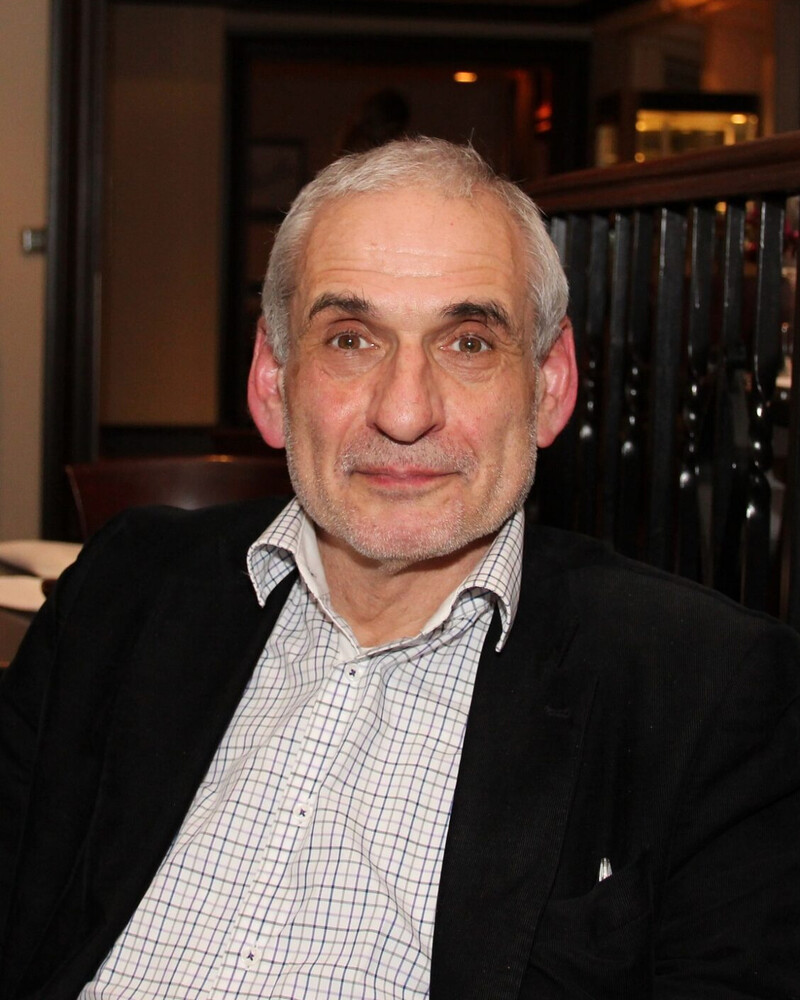
Portrait of a man from chest up

Jaap Hamburger

 Bas Joosse

“I hate the word Holocaust,” Jaap Hamburger replies when asked what it was like to be raised in a family of survivors. “To me the word represents the Americanization of European history.”

In the United States actors with made-up faces had to pass for persecuted Jews on television, Hamburger recalls. But in the Netherlands, real images of World War II dominated screens as he grew up in the 1960s.

“The wartime experiences have always been in the background of the Jewish family where I was raised,” Hamburger told The Electronic Intifada.

Hamburger was born in 1950, a few years after the war. He had an older brother and sister, born in 1940 and 1943.

His mother Rosa Sophie Engers and father David Abraham Hamburger tried to protect the children by sending them into hiding. But a traitor revealed their address to the German occupiers and both children were deported.

Hamburger’s brother Albert David survived the Nazi camps, but his baby sister died in the Bergen-Belsen concentration camp in October 1944, having not lived even a full year.

Her name, Henriette Hamburger, is recorded by the United States Holocaust Memorial Museum.

The war and its aftermath shaped Hamburger’s views on anti-Semitism and how it is now weaponized as an accusation against the Palestinian people’s struggle for liberation – a struggle he strongly supports.

The corpse in the closet

Today Hamburger chairs the organization A Different Jewish Voice – known by its Dutch initials EAJG – and serves on the board of The Rights Forum, founded by former Dutch Prime Minister Dries van Agt. Both groups advocate for Palestinian rights.

“My Jewish background was not religious, not traditional and not Zionist but nevertheless it was very Jewish because the corpse of World War II was in the closet,” Hamburger says.

“You were not allowed to open that door. And when it went ajar, everyone would stare in horror at what was behind. I was brought up in the atmosphere of an emotional taboo around the war.”

But even if it wasn’t talked about openly, the war left deep marks.

“My mother hated everything German,” Hamburger recalls. “My father did too.”

Hamburger’s mother was traumatized by the war her whole life.

“She developed a foolish love for Israel without realizing how that country came about,” according to Hamburger. “She could speak about ‘our oranges’ when she meant Jaffa’s. It irritated me a lot.”

“My father dealt with his pain in a different manner,” Hamburger says. He joined Terre des Hommes, an organization that defends child rights, and the Humanist Alliance.

“He assisted people who came to him for advice about their problems. He also gave lectures on, for example, the Universal Declaration of Human Rights,” Hamburger says. “Tolerance was a very important value to him.”

Hamburger’s mother and her parents survived because they went into hiding with help of non-Jewish Dutch people.

But his father’s parents and brother were murdered in Auschwitz.

As for Hamburger’s father, he was able to survive even without going into hiding because he worked for the electronics giant Philips.

The company’s president during the war, Frits Philips, is credited with saving the lives of hundreds of Jewish workers by placing them in a “special office” whose work, he convinced the Nazis, was indispensable.

“All Jewish employees were placed in the special office’s workplace where they enjoyed a certain protection,” Hamburger explains. “But after a few years the Nazis wanted to close the office. As a Dutch conscript officer, my father heeded a call from the German occupiers to go into captivity.”

He calculated – correctly as it turned out – that his chances of survival were better as a prisoner of war.

All who survived had beaten the odds: Three quarters of the Dutch Jewish population was murdered during the war by the Nazis and their collaborators, the highest proportion in Western Europe.

And yet Hamburger is still uncomfortable with the term Holocaust.

“What the hell do we as Europeans have to do with such an American word originating from ancient Greek etymology?” he asks.

“The term Holocaust survivor often suggests that it concerns people who experienced concentration camps or other Nazi institutions during the war,” Hamburger says. “My parents survived the war and destruction because my mother went into hiding and my father was a prisoner of war.”

Talking about the persecution of Jews is not an adequate alternative to the term Holocaust for Hamburger because it doesn’t cover the mass murder of Jewish people.

“I prefer Judeocide, although it is also not ideal, but I prefer it to that wretched word Holocaust,” he says.

Weaponizing anti-Semitism

With such a background, Jaap Hamburger needs no one to explain to him the importance of countering anti-Jewish bigotry.

Yet he finds it problematic that the Netherlands has appointed a national coordinator to combat anti-Semitism – the same approach taken in other Western countries and by the European Union.

“I am convinced that other groups in our society are more often confronted with forms of discrimination, opposition and suspicion than the Jewish population,” he asserts. “Why do we need a separate coordinator for Jews and another for everyone else?”

Jews always object to being set apart from others — and rightly so — as if they were a special human species,” Hamburger says. “But no objection is raised when there might be any benefit.”

He argues that there is no anti-Semitism in the Netherlands on any scale that justifies appointing a national coordinator. True, some individuals occasionally express anti-Semitic thoughts, and might even find validation from others on social media.

“But there is no question of a political party or dominant body of thought in politics or society, or a leader with an enormous number of followers with an openly anti-Semitic program, let alone anti-Semitism on the part of the state,” Hamburger says. “It’s not at all there in the Netherlands.”

For years, alleged anti-Semitism has been monitored by CIDI, a prominent Dutch Israel lobby group.

But according to Hamburger, CIDI “has every interest in making anti-Semitism appear a bigger problem than it is because it is a weapon to stifle discussions about Israel.”

The politicization and abuse of the term “anti-Semitism” has in Hamburger’s view robbed it of any utility.

“The smoke of Auschwitz blows over the word anti-Semitism,” he says, citing Hajo Meyer who survived that death camp and passed away in 2014.

Anti-Semitism “is used both for Auschwitz and for a damaged tombstone in a cemetery,” Hamburger observes. “That is not a useful analytical conceptual framework. I am therefore in favor of abolishing the term.”

Rather, Hamburger sees the fight against anti-Jewish bigotry as part of the fight against all forms of discrimination and racism. It stems from the same source: hypernationalism and chauvinism.

Complaint to the justice ministry

Last year, A Different Jewish Voice – along with others including this writer – filed a formal complaint against the national coordinator to combat anti-semitism, Eddo Verdoner.

The Dutch government appointed Verdoner to the newly created position in April 2021.

When Verdoner was appointed, it was obvious to Hamburger that he would, just like his German counterpart Felix Klein, and EU anti-Semitism coordinator Katharina von Schnurbein, use the position not to fight hatred against Jews, but to shield the state of Israel.

Notably, Verdoner was a long-time board member of CIDI, the Israel lobby group.

Hamburger also points out that Dutch pro-Israel group CJO (Central Jewish Consultation) pushed for the creation of the position with the support of right-wing, pro-Israel lawmakers Dilan Yeşilgöz-Zegerius, who has been the Dutch justice minister since January, and Joël Voordewind, a Christian Zionist.

And indeed, the national coordinator’s office quickly began using official social media accounts for pro-Israel advocacy.

This prompted the complaint to the justice ministry which appointed an external committee to examine it.

The committee concluded that Verdoner had gone beyond what would be expected given his “role and official position, and government standards of diligence and de-escalation.”

It advised the justice minister to tighten his mandate to avoid the kind of expressions raised in the complaint.

The committee also found that the complaint had been mishandled.

“Complainants shouldn’t repeatedly have to call or send their complaint several times because letters are lost,” it admonished.

It called on the justice minister to investigate how the complaint was apparently lost and then took so long to address. The complainants are still waiting for the ministry’s answer.

But Hamburger thinks the complaint may have led Verdoner to tone down his language, although “of course his thinking has not changed a bit.”

“Whenever he sees the opportunity, he will certainly smuggle Israel into the discussion about combating anti-Semitism in the Netherlands,” Hamburger believes.

Organize and be a little brave

This year, Students for Palestine organized a series of activities during Israeli Apartheid Week (IAW) at Dutch universities.

Hamburger participated in a panel discussion at the national IAW closing event.

He observed that some students may feel concerned about false accusations of anti-Semitism.

“If I compare myself with them, I am in a good position. I am a Jew by birth and upbringing,” he said. “And accusations of anti-Semitism or the variant of being a self-hating Jew slide off me. As if being critical of Israel would suddenly make you a self-hater.”

Now in his early 70s, Hamburger has no need to worry about a career. But for young people it is different. They face organized smear campaigns – like Canary Mission in the United States.

Hamburger fully understands that they have reason to be apprehensive. His advice is to always act together and to secure support from third parties who have some form of authority.

He also urges them “to be a little brave and not to be intimidated.”

Students can take heart from the breakthrough of the realization that Israel is an apartheid state.

“There are convincing arguments from very different quarters,” he says.

Hamburger notes that Zionism started as a form of emancipation for Jews in central and eastern Europe, especially Ukraine and Russia. But the moment that movement came to Palestine to colonize it – and perhaps from its inception – Zionism became a movement of oppression.

“It all strengthens my belief that there is something terribly rotten in the state of Israel,” Hamburger says.

Students may feel inspired by Hamburger’s words to continue their solidarity efforts with Palestinians struggling for liberation.

Adri Nieuwhof is a human rights advocate based in the Netherlands and a former anti-apartheid activist at the Holland Committee on Southern Africa.

https://electronicintifada.net/content/dont-single-out-jews-fight-against-bigotry/35916