woensdag 24 juni 2020

‘Zonder Urgenda zouden kolencentrales niet zijn aangepakt’

NRC.nl, juni 2015


‘Zonder Urgenda zouden kolencentrales niet zijn aangepakt’

Interview

‘Zonder Urgenda zouden kolencentrales niet zijn aangepakt’

Marjan Minnesma | Directeur Urgenda Precies vijf jaar geleden boekte Marjan Minnesma met Urgenda een baanbrekend juridisch succes tegen de staat. Tot een radicale omslag in het klimaatbeleid leidde het niet. „Als het klimaat voor je neus ligt, ben je gewoon te laat.”


Twintig rijksambtenaren van vijf ministeries zaten in februari aan tafel met Marjan Minnesma. Sommige ambtenaren hadden een beduimeld boekje van Urgenda bij zich. Ze glimlacht. „Dat was best leuk om te zien”.
De ambtenaren waren aan de slag gegaan met 54 mogelijke klimaatmaatregelen die de Stichting Urgenda, waarvan Minnesma directeur is, in het boekje had opgesomd. Van duurzaam bosbeheer tot extra budget voor woningisolatie – allemaal maatregelen die het kabinet kon nemen om de CO2-uitstoot toch nog uiterlijk dit jaar sterk te verminderen. Want dat had de rechter bevolen in juni 2015, deze woensdag alweer vijf jaar geleden.
Nooit eerder was een land aangeklaagd omdat het te weinig had gedaan tegen klimaatverandering. Vijf jaar waren voorbij. Urgenda had gewonnen in hoger beroep en in december 2019 zelfs bij de Hoge Raad. Nu was Nederland definitief de eerste staat die ooit een klimaatrechtszaak had verloren – tegen alle verwachtingen van juristen en van politici in.
Op die februaridag in Den Haag zag het er niet goed uit voor het kabinet. Eind 2019 was de CO2-uitstoot 18 procent gedaald sinds 1990. Om op minimaal 25 procent te komen, zoals het vonnis eist, waren er nog twaalf maanden te gaan. Iedereen wist dat het onmogelijk was.
Pas nadat de Hoge Raad op 20 december Urgenda ook in cassatie gelijk had gegeven, sloeg de sfeer in het kabinet „ineens” om, vertelt Marjan Minnesma (1966). We zitten in een voormalig schoolgebouw in Zaandam. In een paar lokalen zetelt de Stichting Urgenda die Minnesma – jurist, bedrijfskundige en filosoof – in 2007 mede oprichtte: minder dan vijftien medewerkers, een jaarbudget van krap 2 miljoen euro. Daarmee kreeg ze de staat op de knieën. De uitspraak werd wereldwijd beroemd onder juristen. Maar Minnesma vraagt zich af wanneer eindelijk het beleid omgegooid wordt. „Als het klimaat voor je neus ligt, ben je gewoon te laat.”
Minister Eric Wiebes (Economische Zaken en Klimaat, VVD) zei laatst over de Urgenda-uitspraak: „We hadden beter eerder kunnen handelen.”
„Ja, ik zie daar een patroon in. Kijk naar de toeslagenaffaire van de Belastingdienst, of de aardbevingsschade. En nu het stikstofdossier. Ze wachten op het allerlaatste moment, terwijl dat niet rationeel is. Wij vroegen niets raars. Als het vorige kabinet meteen na het vonnis in 2015 maatregelen had genomen, was het voor het kabinet nu ook gemakkelijker en goedkoper om het klimaatdoel voor 2030 te halen.”
Daar had de Tweede Kamer in 2015 zelfs al in een motie om gevraagd. Wordt u pas nu serieus genomen?
„Vóór de uitspraak van de Hoge Raad heb ik één gesprekje met Wiebes gehad, dat was het. Nu heeft het kabinet dertig van onze 54 maatregelen overgenomen.”
Verzwakt de coronacrisis uw positie niet? De CO2-uitstoot is ineens zo afgenomen dat het doel voor 2020 toch in zicht lijkt.
„Dat geloof ik niet. Ik heb op hoog niveau met vijf ministeries gepraat. Het kabinet beseft dat de daling van de uitstoot structureel moet zijn. Dus ook voor 2021. Dat besef is er bij Wiebes, maar ook bijvoorbeeld bij Wopke Hoekstra (Financiën, CDA), met wie ik heb gesproken. Die erkende dat ook.”

Was de premier ook bij die presentatie?
„Nee, dat vond ik wel heel erg jammer. Ik heb hem in al die jaren nooit gesproken.”
Heeft u al iets gezien van crisisbesef bij het kabinet?
„Niet echt. Ik geef jaarlijks 150 lezingen, en daarin leg ik in drie kwartier met plaatjes uit waar het over gaat. Ik verdeel het in een derde urgentie en twee derde oplossingen, omdat ik mensen niet depressief naar huis wil sturen. Het eerste deel is niet mals. Bijna altijd krijg ik terug van mensen dat ze daarna zonnepanelen namen, of minder vlees gingen eten.”
U denkt dat het door gebrek aan kennis is dat mensen onvoldoende besef hebben van de ernst van klimaatverandering?
„Ja. We stevenen af op 3 graden opwarming. Als we nog tien jaar zo door gaan, zit er zo veel CO2 in de lucht dat het klimaat op een kantelpunt komt. Ik laat mensen zien: bij anderhalve graad opwarming [het streven van het VN-klimaatakkoord van Parijs, red.] blijft nog 50 procent van het koraal in leven, maar bij twee graden is het vóór 2050 allemaal weg. Toch jammer, alleen maar kwallen in de zee. Bij anderhalve graad kun je nog net in de landen rond de Sahara blijven wonen, bij twee graden wordt het daar echt te warm. Misoogst na misoogst, 200 miljoen mensen raken op drift.
„Ze denken ook: als we in 2050 naar nul uitstoot gaan, dan komt het goed. Premier Rutte roept ‘doe maar rustig aan, we hebben nog dertig jaar’. Maar ik denk niet dat hij weet dat zelfs als we de uitstoot in 2050 naar nul brengen, je de volgende generatie met de verplichting opzadelt om veel CO2 uit de lucht halen. En dat is ingrijpend: je moet wereldwijd ongeveer alle landbouwgebieden volzetten met bomen om de temperatuur een halve graad naar beneden te krijgen. Ik denk dat hij geen flauw idee heeft.”
U bent volop in het nieuws als tegenstander van biomassa. Je kan beter aardgas gebruiken dan biomassa, zei u onlangs bij radioprogramma ‘Dit is de Dag’.
„Ik heb onderzoek gedaan naar biomassa in de drie jaar dat ik aan de Vrije Universiteit werkte. Ik weet er redelijk wat van en denk dat houtige biomassa in een duurzaam energiesysteem niet thuishoort. Maar het is een ingewikkeld onderwerp. Het stoort mij dat voor- en tegenstanders erg tegenover elkaar staan, en op de man spelen. Het is gewoon te laat om op hout voor energie in te zetten. We hebben de tijd niet meer hout te verbranden en vervolgens bomen twintig, veertig jaar te laten groeien om de CO2 weer uit de lucht te halen. We moeten juist bomen erbíj planten.
„ Maar nu lijkt het alsof ik heb gezegd dat we meer aardgas moeten gaan gebruiken. Dat heb ik helemaal niet gezegd. Ik vind dat we aardgas moeten uitfaseren, maar dan moeten we het gas niet vervangen door biomassa.”
Rutte zou telkens op de bühne moeten voor het klimaatprobleem
Marjan Minnesma Urgenda
Urgenda pleit voor 100 procent duurzame energie in 2030, en halvering van het energiegebruik. Is dat wel realitisch?
„Er zijn meerdere scenario’s die op de onze lijken, maar wij maken de omslag al voor 2030. Dat is de enige manier om onder de anderhalve graad te blijven. Het kan, dat hebben we laten doorrekenen. Een elektrische auto is veel efficiënter dan een auto met een verbrandingsmotor, omdat daarin veel warmte verloren gaat. Ook kolencentrales verliezen veel warmte, windmolens en zonnepanelen niet.
„Toen ik met dit verhaal over 2030 begon, hadden we nog achttien jaar. Vorig jaar heb ik het herschreven. Toen heb ik serieus nagedacht: moet ik dat streefjaar veranderen in 2032, of 2035? Ik snap ook wel dat het onmogelijk is om dit in een normale situatie in tien jaar te realiseren. Maar het is geen normale situatie. Het is eigenlijk een crisis, maar zo moeten we die alleen nog gaan behandelen.
„Dat is het enige aardige aan corona, dat je ziet dat we extreme dingen kunnen doen als we doorhebben dat er een crisis is. Rutte zou wat mij betreft telkens op de bühne moeten gaan staan voor het klimaatprobleem. En zeggen: ‘Jongens, dit is heel serieus en het gaat niet goed als we niet een enorme omslag maken’.”
Is het ministerie van Economische Zaken en Klimaat nu goed bezig?
„Op papier is het hoopgevend, maar ik weet dat je erbovenop moet blijven zitten.”
U zegt dat politici te weinig kennis hebben van klimaatverandering. Is het niet vooral de angst voor de consequenties? Er is nu een serieuze politieke beweging die tegengas geeft.
„Ja, dat past heel erg in een transitietheorie. In die versnellingsfase ontstaat er enorm veel weerstand, dat is precies wat je nu ziet. En aan de andere kant beginnen mensen die zich zorgen maken, ook steeds harder te roepen. Ze worden steeds wanhopiger. Daar zitten we nu middenin, en dat is geen leuke fase.”
Het vonnis is baanbrekend. Maar hoeveel heeft het uiteindelijk veranderd?
„Het vonnis geeft mensen hoop, er lopen heel veel vergelijkbare zaken – al heeft tot nog toe niemand gewonnen. In Nederland heeft het vonnis een versnelling gebracht in het klimaatbeleid. Ik denk niet dat Nederland de kolencentrales zou hebben aangepakt zonder dit vonnis. Maar 25 procent CO2-reductie in 2020 is echt niet genoeg om de temperatuurstijging tot anderhalve graad te beperken. Ik ben ook reëel: alles gaat in stapjes, in een transitie is er zelden één ding dat alles doet kantelen.”
Het was de afgelopen dagen 38 graden in Siberië. Is dat te ver weg om een crisisgevoel te krijgen?
„Ja, eigenlijk wel. Vorig jaar, die bosbranden in Australië waarbij een miljard dieren verbrandden. Mensen zien een verbrande koala en dan is men even geschokt. Maar nu vragen ze: wanneer was het ook alweer?”
Vindt u optimisme een verplichting?
„Nee, het is meer mijn aard om te zeggen: zolang het nog kan, ga ik er vol voor. In de geschiedenis hebben we een paar keer omwentelingen gezien die niemand zelfs een maand van tevoren voor mogelijk had gehouden. De val van de Muur, de burgerrechtenbeweging in Amerika.
„Wij proberen alles klaar te zetten voor dat moment waarop iedereen zegt: shit, het is toch veel te erg. Ik ben bij alle bedrijven geweest die veel uitstoten. Iedereen heeft oplossingen op de plank, maar ze voeren ze niet uit, omdat ze dan iets duurder worden. Ze zijn bang dat men naar de concurrent loopt.”
En die gedachte dat het nog kan?
„Die houdt me op de been.”

dinsdag 23 juni 2020

'AMBTENAREN VERDUISTERDEN STUKKEN OVER LELYSTAD AIRPORT'

Binnenlands Bestuur - AG Connect

AMBTENAREN VERDUISTERDEN STUKKEN OVER LELYSTAD AIRPORT'

De aangifte richt zich in het bijzonder op de stikstofberekeningen die voor Lelystad Airport zijn gebruikt. Daaruit zou blijken dat de toekomstige luchthaven voor vakantievliegverkeer zo weinig stikstof uitstoot, dat er geen natuurvergunning nodig is. Een natuurvergunning zou onder de huidige stikstofmaatregelen een belangrijk probleem voor de opening van Lelystad Airport kunnen zijn.


Topambtenaren van het ministerie van Infrastructuur en Waterstaat (vroeger Infrastructuur en Milieu) hebben stukken verduisterd die ongunstig uitpakten voor de opening van Lelystad Airport. Ook hebben zij opzettelijk verkeerde gegevens gebruikt, anderen beïnvloed om verklaringen aan te passen en hun gezag misbruikt. Dat zeggen de twintig Samenwerkende Actiegroepen Tegen Laagvliegen (SATL), die bij het functioneel parket van het Openbaar Ministerie aangifte hebben gedaan tegen vier topambtenaren, vier onderzoeksbureaus en de leiding van Luchthaven Lelystad.
Stikstof
De aangifte richt zich in het bijzonder op de stikstofberekeningen die voor Lelystad Airport zijn gebruikt. Daaruit zou blijken dat de toekomstige luchthaven voor vakantievliegverkeer zo weinig stikstof uitstoot, dat er geen natuurvergunning nodig is. Een natuurvergunning zou onder de huidige stikstofmaatregelen een belangrijk probleem voor de opening van Lelystad Airport kunnen zijn.

Nieuw milieurapport
Deskundigen van SATL bewezen eerder al dat die berekeningen nooit konden kloppen en dat allerlei stikstofbronnen niet meegeteld waren. De actievoerders kregen gelijk van onder meer het Rijksinstituut voor Volksgezondheid en Milieu (RIVM). Eerder ontdekten de actievoerders ook al zulke grote fouten dat er een nieuw milieurapport moest worden gemaakt.

Verkeerd geïnformeerd
Minister Cora van Nieuwenhuizen verklaarde de stikstoffout in de Tweede Kamer door te stellen dat er een verkeerd computerprogramma was gebruikt, maar dat klopt niet, menen de deskundigen na doorspitten van het dossier. Volgens de actievoerders lieten ambtenaren eerder ook al nieuwe rapporten maken door adviesbureaus op basis van herzieningen die in werkelijkheid niet bestaan. De Tweede Kamer is meermalen bewust verkeerd geïnformeerd, zeggen zij, terwijl vragen worden ontweken.

Schandalig
SATL heeft alle betrokkenen waartegen nu aangifte is gedaan vooraf om een reactie gevraagd op de ontdekkingen, maar geen commentaar gekregen. ‘De overheid dient betrouwbaar en integer te zijn. Wat hier is gebeurd, is schandalig. Daarom zijn we naar de rechter gestapt’, aldus SATL. Het OM gaat onderzoeken of er reden is voor een strafzaak. (ANP)


By recognising Palestine, Britain can help right the wrongs of the Balfour declaration


By recognising Palestine, Britain can help right the wrongs of the Balfour declaration

The theft of Palestinian land is a legacy of British colonialism. The UK must stand in the way of further Israeli annexations

Mon 22 Jun 2020 

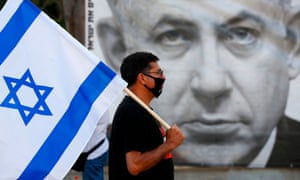
A protest in Tel Aviv’s Rabin Square on 6 June in opposition to Israel’s plan to annex parts of the occupied West Bank. A protest in Tel Aviv’s Rabin Square on 6 June in opposition to Israel’s plan to annex parts of the occupied West Bank. Photograph: Jack Guez/AFP/Getty Images

I
f ever there was a time to re-examine colonial legacies and responsibilities, this is it. The theft of Palestine from the Palestinians is one such legacy. On 2 November 1917, the foreign secretary, Arthur James Balfour, issued his famous declaration in support of “a national home for the Jewish people” in Palestine. In 1917, Jews constituted 10% of the population, the rest were Arabs. Yet Britain recognised the national rights of a tiny minority and denied it to the majority.


In his 2014 biography of Winston Churchill, Boris Johnson described the Balfour declaration as “bizarre”, “tragically incoherent” and “an exquisite piece of Foreign Office fudgerama” — a rare example of sound judgment and historical accuracy from the pen of Johnson.
The Balfour declaration enabled the Zionist movement to embark on the systematic takeover of Palestine, a process the Zionists themselves initially described as settler colonialism, a process which is still continuing.
In 1917, only 2% of Palestine was owned by Jews. In 1947 the UN proposed partitioning the territory of the British mandate in Palestine into two states, one Arab and one Jewish. Under this plan, the Jews were allocated 55% of the land although they still owned only 7%. In the course of the 1948 war, the newly established State of Israel extended the territory under its control to 78% of Mandatory Palestine. This postwar status quo was confirmed in the 1949 armistice agreements concluded by Israel with its Arab neighbours, the only internationally recognised borders it has ever had.
In the June 1967 war, Israel completed the conquest of Palestine by occupying the West Bank and the Gaza Strip. By signing the Oslo Accord with Israel in 1993, the Palestine Liberation Organisation gave up its claim to 78% of Palestine. In return they hoped to achieve an independent Palestinian state on the West Bank and the Gaza Strip with a capital city in East Jerusalem. It was not to be.
There were many reasons for the breakdown of the Oslo peace process but the most fundamental was the relentless expansion of Israeli settlements on occupied Palestinian land in flagrant violation of international law. Settlements consolidate the colonial project beyond the green line, the pre-1967 border. By expanding these settlements, all Israeli governments since Oslo – Labour as well as Likud – have demonstrated that they are more interested in land than in peace.
Having just formed a new coalition government following a third inconclusive election in one year, Benjamin Netanyahu, the Likud leader, has announced his plan to formally annex about 30% of the West Bank, including the settlement blocs and the Jordan Valley. There is a majority in the Knesset, Israel’s parliament, for annexation. If annexation takes place, it would leave the Palestinians with roughly 15% of historic Palestine. It would also hammer the last nail in the coffin of the two-state solution to which the international community still clings.
Support for annexation comes from Donald Trump, Netanyahu’s friend and close political ally. In January 2019, Trump unveiled his much-vaunted “deal of the century”. This is not a peace plan but a US endorsement of every item on Netanyahu’s wish list. Unsurprisingly, it was hailed by Netanyahu and his rightwing cronies as a second Balfour declaration. It gives Israel a free pass to annex roughly a third of the West Bank without having to negotiate with the Palestinians, let alone make any concessions.
To the Palestinians, Trump’s plan offers a paltry reward of $50bn over five years if they acquiesce in a “state” consisting of a collection of enclaves surrounded by Israeli settlements and military bases, with no territorial contiguity, no capital in East Jerusalem, no army, no borders with the outside world, and no control over their airspace or natural resources. They will only be allowed to call this a state if they meet a list of conditions determined by Israel. By any standard, this is a grotesquely unfair and insulting proposal.
Netanyahu is inundated with protests against annexation from leftwing Israeli political parties, from a network of diaspora Jewish organisations, and from a group of 220 former Israeli generals and heads of security services who call themselves Commanders for Israel’s Security. The main arguments advanced by these diverse groups are that annexation will be detrimental to Israel’s security, that it will be difficult and costly to police the extended borders, that it risks igniting a third Palestinian uprising, poses a threat to the peace treaties with Egypt and Jordan, ends the prospect of normalisation with the rest of the Arab world, and turns Israel “officially” into an apartheid state. Significantly, all these arguments are more concerned with Israel’s welfare and reputation than with Palestinian rights.
The same can be said of the group of prominent British Jews describing themselves as “committed Zionists and passionately outspoken friends of Israel”. In a letter to Mark Regev, Israel’s ambassador to London, they warn that unilateral annexation “would pose an existential threat to the traditions of Zionism in Britain, and to Israel as we know it”. Concern for the wellbeing of the oppressor rather than the oppressed is another well-worn trope of colonial discourse.
The British government joined 10 European Union countries to warn Israel against annexation, while 130 MPs signed an open letter urging Johnson to impose economic sanctions on Israel if it went ahead with the move. The MPs are right that action is needed; tepid expressions of disapproval have never deterred the Israeli government. Recognising Palestine as a state within the 1967 borders is another way for Britain to right the wrongs of Balfour and end up on the right side of history.
More than a dozen European parliaments have recognised Palestine but only one government – Sweden. In 2017, Johnson, then foreign secretary, rejected Labour’s call for the UK to mark the Balfour declaration’s centenary by officially recognising the state of Palestine, declaring that “the moment is not yet right to play that card”. Surely today the moment has come.
• Avi Shlaim is emeritus professor of international relations at Oxford and author of The Iron Wall: Israel and the Arab World.

maandag 22 juni 2020

'This is a war': Republicans ramp up bid to control election maps for next decade


'This is a war': Republicans ramp up bid to control election maps for next decade


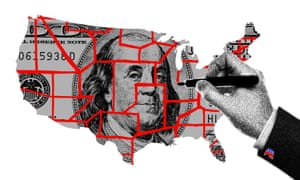
“Redistricting historically was something that occurred behind the scenes in smoke-filled rooms and the people didn’t pay attention,” said Michael Li, senior counsel at the Brennan Center. “Now it’s something that angers people.”“Redistricting historically was something that occurred behind the scenes in smoke-filled rooms and the people didn’t pay attention,” said Michael Li, senior counsel at the Brennan Center. “Now it’s something that angers people.” Illustration: Adam Maida/The Guardian

"He who controls redistricting can control Congress," Karl Rove famously said – and the Republican State Leadership Committee is set to do just that


A little-known Republican group is ramping up millions of dollars in funding from major US corporations such as CitiGroup and Chevron to protect the conservative stronghold on the country.
The Republican State Leadership Committee (RSLC) – which held the key to the GOP’s political takeover a decade ago – launched the Right Lines 2020 campaign last September, taglined: “Socialism starts in the states. Let’s stop it there, too.” It’s hoping to meet a $125m investment goal in an effort to retain 42 state legislature seats that the group says are key to holding power in the House of Representatives in battleground states including Wisconsin, Texas, Florida and New York.
“There’s a decade of power and a decade of dominance that’s truly on the line,” RSLC president Austin Chambers, a 24-year-old Republican operative, told Sean Spicer on his Newsmax show in March. The group recently appointed party strategist Karl Rove and ousted White House chief of staff Reince Priebus to its board.
Ahead of November’s election, Republicans face an intense Democratic challenge to unseat Donald Trump, with dark money pouring in on both sides, and consumers who are significantly more vocal and critical of corporations’ politics, especially in the wake of Citizens United. But this year’s election also coincides with the decennial census, from which demographic data helps determine the number of seats in the House. The state legislatures elected this fall will be in charge of drawing almost all the maps.
The RSLC’s goal is to get Republicans elected in down-ballot races. This can mean funding state candidates and campaign materials, including attack ads. For corporations, funneling their money through the group is a simple way to support lawmakers sympathetic to their bottom line and exert political influence.
The RSLC has gone to extreme lengths to undertake its mission, changing the political landscape in the process. In the run-up to the 2010 midterms, it led an unprecedented strategy, the Redistricting Majority Project, or Redmap, to flip legislatures in competitive states. Once in charge, Republicans manipulated district maps to their advantage, a tactic known as gerrymandering. “He who controls redistricting can control Congress,” Rove famously said in 2010.
In 2012, Democrats won 1.4m more votes than Republicans, yet Republicans maintained a 33-seat margin in the House. A 2019 USC study found that 59 million Americans now live under minority rule, where the party that receives the minority share of the vote in a state election controls the majority of seats in the subsequent state legislature. While both Democrats and Republicans gerrymander, Redmap changed the game.
Over half of the RSLC’s $17m contributions at the end of 2019 came from public companies and trade associations, according to an analysis by The Center for Political Accountability (CPA), which tracks corporate political spending. The largest single donor, however, was the conservative dark money group the Judicial Confirmation Network with $1.1m, the same group behind the nomination of conservative supreme court justice Brett Kavanaugh.

Despite the huge amount of financial support, the RSLC spends relatively little to accomplish their goal, doling out roughly $1m per state in its 2010 coup. The RSLC funnels the money towards groups on the ground that support candidates, or towards independent expenditures, including mailers, robocalls and digital and TV spots – which often veer into attack ads.
“The money doesn’t go out broadly,” said Bruce Freed, CPA president. “It goes to specific states that they see as targets of opportunity. And so the company that contributes has much greater bang for the buck.”
In the recent Wisconsin election, the RSLC spent over $800,000 on TV ads against judge Jill Karofsky attempting to portray her as soft on sex offenders. She unsuccessfully tried to block the ads, and later won the state supreme court seat. Justice Courtney Goodson also sued the RSLC in 2018 when she ran to defend her seat on the Arkansas state supreme court. The RSLC paid for a 15-second spot and mailers lambasting contributions she had received from a friend of her attorney husband, who had been a top donor to her first state supreme court campaign before they married.
But experts said the RSLC and its donors may no longer be able to fly under the radar. Once an arcane process, gerrymandering is now a contentious issue battled by grassroots movements. “Redistricting historically was something that occurred behind the scenes in smoke-filled rooms and the people didn’t pay attention,” said Michael Li, senior counsel at the Brennan Center. “Now it’s something that angers people.”
Rigged maps and their corrosive effects on democracy have drawn fierce protests in states like Wisconsin and Michigan over the past decade. Crowds came out once again last year after the supreme court’s influential ruling drawing a line between political and racial gerrymandering, putting even more pressure on the parties to win control of the redistricting process.
Consumers are also more concerned with corporate politics than they were a decade ago. Think of grocery store chain Publix, which suspended political contributions after Parkland high school students staged protests in their stores over unprecedented donations to gubernatorial candidate Adam Putnam, a self-professed “proud NRA sellout”.
RSLC contributors Citigroup, Chevron, and Dominion Energy are one of a number of companies aligning themselves with the Black Lives Matter protests, though not always directly. Altria and Dominion Energy have both pledged $5m to fight “racial and social inequality”. But these words can ring hollow.
“They can look moderate or woke to the public, even though they don’t spend their money to pursue those issues politically the same way they pursue their narrower [interests],” said Jake Grumbach, an assistant professor of political science at the University of Washington.
The Guardian reached out to the RSLC’s top five corporate donors in 2019, most of which disclose their political contributions on their websites. Chevron, Dominion and Reynolds all replied that companies contribute in a bipartisan, transparent manner according to their business interests, and declined to answer questions about Redmap. Altria and BNSF did not comment. Ultimately, Freed said, companies don’t consider the consequences of their political spending. “Corporations either turned a blind eye or they didn’t pay attention, but they’re responsible through their spending.”
While the RSLC’s counterpart, the Democratic Legislative Campaign Committee, raised only a third as much as the RSLC in 2010, the two groups are virtually neck-and-neck so far in the 2020 election cycle. “Democrats were asleep at the wheel in 2010,” Li said. “Increasingly [they] understand that they need to at least get a blocking position if not control redistricting.”
Former attorney general Eric Holder has launched the National Democratic Redistricting Committee (NRDC), backed by Barack Obama and largely funded by the Pacs of George Soros and Donald Sussman, and shored up by large contributions from leading labor unions.
Dave Abrams, the RSLC deputy executive director, called the Democrats’ pledge to stop partisan gerrymandering “flat bullshit”, and said the RSLC and its supporters were leading the fight against “radical leftists”.
But the two sides’ strategies aren’t exactly the same, said David Daley, who wrote Ratfucked, a book on gerrymandering. “The Republican strategy in 2010 was based on winning trifecta control in all of these states, recognizing that state legislatures represented an inexpensive loophole.” While Democrats have been trying to claw back power, “it’s not about taking complete control of these parties and then drawing themselves in”, Daley said. “They’re too far behind to even think about that.”
Republicans may not be able to hold onto their seats this time. In 2019, the NRDC, Holder’s organization, hit its targets in Kentucky, Virginia, and Louisiana – save for flipping the Louisiana state Senate. Democrats also won Karofsky’s seat on Wisconsin’s conservative-controlled state supreme court election in April.
“Everybody understands this is a war that has real consequences and you’ve got one shot at it,” Li said. “It’s not like we can come back and do this two years like this; this is your moment, and if you’re going to influence what the maps look like, and who’s in power for the next decade.”

Black bank manager wrongly arrested to sue Met for ‘racial profiling’


Black bank manager wrongly arrested to sue Met for ‘racial profiling’

Dale Semper says his life was turned upside down by two-year investigation that was dropped


Home affairs correspondent

Mon 22 Jun 2020

Dale Semperhttps://www.theguardian.com/world/2020/jun/22/black-bank-manager-wrongly-arrested-dale-semper-sue-met-police-racial-profiling


Dale Semper is a driven man who worked six days a week as a high street bank manager to afford a comfortable lifestyle for himself and his family.
As a black man with an expensive car, he says he was used to being stopped by police.
But in August 2017, he was pulled over by Metropolitan police officers and his life was torn apart – with devastating impact on his job, finances and mental health.
Semper’s lawyer has likened his client’s experience to the 1998 action film Enemy of the State, in which the lead character played by Will Smith has his life turned upside down by authorities without explanation or cause.
Semper and his partner, Denise Huggan, believe the 26-month investigation that ensued – ending in no charges and no action taken – was driven by racial profiling.
Semper, 38, and his legal team say the police could not accept a black man would have money without illegal activity behind it and are preparing to sue the force.
Semper was driving Huggan to the train station in her Mini Paceman on 23 August 2017 when they were pulled over by police. “They rushed up to the car, banging on the window, shouting “get out, get out of the car. They handcuffed me. They said they were arresting me – I said ‘for what? You got the wrong guy’,” Semper recalls.
He was escorted back to his home in Enfield, north London, joined by 15 to 20 police officers. When the officers entered his home, the alarm went off. Semper was standing outside, cuffed, as neighbours poured into the street.
“It was so embarrassing,” he recalls.
Finally, he discovered what the police were searching for: firearms. “I said: ‘Firearms? what are you talking about? I’m a bank manager, what would I be doing with firearms?” You’ve got the wrong guy.’”
No firearms were found. During the search the officers found £1,935 in cash in Semper’s safe – all of which he immediately accounted for as funds for renovating his home.
After Huggan left the property, officers shifted tack, announcing Semper was now being investigated for money laundering.
This, he says, is also when comments from officers started: how does someone like you afford these two cars? How can someone like you live here and be so successful? How can someone like you afford that watch, that car, this home?
It was clear to Semper that by “someone” the officers meant a black person.
Semper was hauled into a police station for interview, where he was able to account for every penny he had earned or spent – from his £72,000 annual salary to his rental income and receipts and invoices for purchases.
He was released from custody – but the nightmare continued. His bank accounts were frozen and he was suspended from work. He discovered officers had searched his partner’s home as well as his 55-year-old mother’s home.
“I had to ask my family and friends for money, to pay my bills. I had to rely on Denise’s salary, her credit cards, my mother, my aunts. Everything came from them.
“That killed me. I was always the one who provided for all of them. I felt like it stripped me of my identity.”

Semper appointed a solicitor, Adam Rasul, to deal with the freeze on his bank accounts. Rasul, a senior partner and pre-charge solicitor at Holborn Adams, represents Semper to this day, and says it is the worst case of malicious prosecution and negligence he has come across.
“That warrant was based on false intelligence,” Rasul said. “At that time, there was nothing, and to this date, no evidence has been provided.”
Following Rasul’s representations, Semper’s accounts were unfrozen in November. But the investigation remained open and he was unable to return to work for 18 months – and when he did it was to a downgraded role, in which he remains today.
Rasul says that throughout 2018 they were building “files longer than the Chronicles of Narnia to explain this case needs to be dropped”.
The effect on Semper’s mental health was devastating. He lost two stone within the first two months and developed post-traumatic stress disorder.
Semper and his partner, Denise Huggan
Pinterest
 Semper and his partner, Denise Huggan. The couple say racism played a part in their ordeal. Photograph: Linda Nylind/The Guardian
“I’ve had counselling,” he said. “I’m trying to get my head in shape, keeping me sane. We wanted to have children. But because of this whole thing, the strain it’s caused on our relationship, I’m just not feeling it. I just don’t want to do anything.”
Huggan, 39, who works in HR, said: “It’s been hard, it’s been dark, it’s been depressing.”
On 19 February 2019, different officers attended Semper’s home and arrested him on the front door for another allegation under the Firearms Act. But on the same day, they de-arrested him.
It was not until October last year that he was finally told the police had ended the investigation and there was no further action to be taken. They did it over the phone to Rasul with no apology and still no explanation.
After reflecting on their experience for so long, Semper and Huggan turned to thoughts of racism.
“I never thought at the time it could be that,” Semper said. “But I’ll never forget when they said: ‘How can you get to afford something like this? How did you get that?’
“The reason they came for him was racial profiling,” Huggan said. “We’re black so we’re not supposed to try and excel? We do a lot. We work six days a week. We go out and do it because we want to be able to have something in the future.”
A statement from the Met police said: “This matter is being assessed and we will be in correspondence with the claimants’ representatives.
“Given the complaint and potential legal action, it would be inappropriate to comment in detail on this case. However, we recognise the very serious nature of the allegations made and they will be fully investigated.”