dinsdag 17 december 2019

Steve Bannon: 'We’ve turned the Republicans into a working-class party' David Smith in Washington



Steve Bannon: 'We’ve turned the Republicans into a working-class party'



Steve Bannon Photocall, Paris, France - 17 May 2019Mandatory Credit: Photo by Lewis JOLY/JDD/SIPA/REX/Shutterstock (10241036i) Steve Bannon Steve Bannon Photocall, Paris, France - 17 May 2019Steve Bannon: ‘I think the Democrats ought to take the lessons of the working class. These are lifetime Labour members that voted for a Tory.’ Photograph: Lewis Joly/JDD/Sipa/Rex/Shutterstock

Tue 17 Dec 2019 


The former White House strategist and far-right agitator hails the British election as a ‘victory for populism’ with lessons for the US


S
teve Bannon, the former White House chief strategist associated with global far-right nationalist movements, has urged Republicans to “find our AOCs” – a reference to the Democratic congresswoman Alexandria Ocasio-Cortez – to claim the mantle of the party of the working class.

In an interview with the Guardian at his Capitol Hill townhouse, Bannon, who helped shape the party in Donald Trump’s image, argued that Republicans have to fight back against the “perfect casting” of Democrats elected to Congress last year by boosting equivalents from their own ranks.
The combative 66-year-old is the former executive chairman of Breitbart News, which he once described as “the platform of the ‘alt-right’”, a movement that has embraced racism and antisemitism, and an ex-chairman of Donald Trump’s divisive 2016 election campaign.
His transition to a senior role at the White House was hailed as “excellent” by the former Ku Klux Klan leader David Duke and “amazing” by Peter Brimelow of the white nationalist site VDAR. Bannon left the administration in 2017 after playing a key role in the US president’s equivocation over a deadly white nationalist rally in Charlottesville, Virginia, which was widely condemned, but remains influential.
“We’ve turned the Republican party into a working-class party,” said Bannon, relaxing at a table with an autographed photo of Trump behind him. “Now, interestingly, we don’t have any elected representatives who believe that, but that’s a legacy issue. We’ll get over that. We’ve got to find our AOCs.”
Ocasio-Cortez, a 30-year-old former bartender from New York, was elected to Congress last year and has built a huge social media following as a member of “the Squad”, a group of four progressive women of colour. Her eagerly sought presidential endorsement went to fellow progressive senator Bernie Sanders of Vermont.
The Democrats and their supporters have “better casting”, Bannon admitted. “They did an amazing job in 18. I keep saying I admire AOC. I think her ideology’s all fucked up, but I want her. I want to recruit bartenders. I don’t want to recruit any more lawyers. I want bartenders.”
Congressional Republicans are dominated by ageing white men from comfortable backgrounds. Among Democrats, Bannon also pointed to military veterans such as Max Rose of New York and Mikie Sherrill of New Jersey, both elected as the party swept the House of Representatives in 2018. “That’s perfect casting. That’s why we got smoked.”
Democrats were boosted in the midterms by Mike Bloomberg, the former mayor of New York, who spent $110m through his own political action committee. An impressive 21 of the 24 candidates he supported won their races. Bloomberg is now also running for the Democratic nomination for president in the 2020 US election.
“People are missing the point about Bloomberg,” said Bannon, who co-hosts a radio programme about Trump’s impeachment called War Room. “Trump wouldn’t be impeached if it were not for Bloomberg. It’s Bloomberg’s hundred million dollars that won the seats … The Democrat party is just like Republicans: a pass through. There’s no actual people to do anything. They’re not out in any state ringing doorbells. Those activist groups are. That’s where Bloomberg put his hundred million dollars.”
In a second interview by phone last week, Bannon drew parallels with the British general election, in which Conservative Boris Johnson trounced Labour’s Jeremy Corbyn, accused of failing to stamp out antisemitism in the party. Johnson took a wrecking ball to a “red wall” in traditional working-class areas, just as Trump broke through the “blue wall” in midwestern states in the 2016 election.
“I think it’s a victory for populism,” Bannon said, “Obviously radical economic ideas and socialism and more government involvement, coupled with virulent antisemitism, is not a winning ticket. I believe the Democratic party here, particularly on the far left – the Squad, Elizabeth Warren and Bernie Sanders – should embrace the lessons because I don’t believe it was just Corbyn’s personality.”
He added: “Obviously Corbyn had issues, a personality that seemed to rub people the wrong way, particularly some of his core voters, but this is much deeper than that and you just can’t just turn it off to ‘one guy was more popular than the other’. This was, I think, a very serious vote and people paid a lot of attention to this and wanted to get Brexit done.”
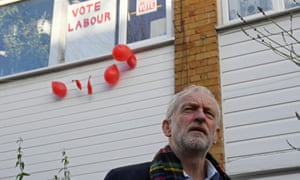
‘I don’t believe it was just Corbyn’s personality. People really voted for Brexit.’ ‘I don’t believe it was just Corbyn’s personality. People really voted for Brexit.’ Photograph: Toby Melville/Reuters

Bannon said he was fascinated by focus groups he saw on British TV during the election campaign. “These were Labour voters and they were not going to vote for Labour and the reason was they kept asking, ‘How are these programmes going to be paid for?’ What I was most impressed with was the specificity and the granularity of the questions.
“People don’t want to be spun any more. They don’t want to be BS’d any more. They want to know what you’re laying out and how you’re going to effectuate it and, most importantly, how you’re going to pay for it and ‘if paying for it means more increased taxes or less opportunities for me, you’re not going to get my vote no matter how good it sounds’.”
He added: “I think the Democrats, on whether it’s Green New Deal or healthcare for illegal aliens or whatever, ought to take the lessons of the working class. These are lifetime Labour members that voted for a Tory.”
Bannon regards Johnson as neither a nationalist nor a populist and likens the prime minister’s vision of Brexit to “Singapore-on-the-Thames” – very different from the version hoped for by those who voted for him. Even so, Bannon argues that both the Conservatives and Republicans should aim to seize their traditional rivals’ territory by appealing to the working class.
Critics say Bannon is an ardent nationalist, nihilist and attention seeker hellbent on disrupting and destroying the political establishment. He suggests his desire to transform the Republican party as a working-class force stems from a worldview that pitches the elites against the so-called “deplorables”, a term based on a comment by Hillary Clinton that was widely seen as an insult to long-disparaged and forgotten people.
“My whole theory on the right is that we if we want capitalism to survive, we need to make people capitalist. The problem is they’re not capitalists. We have oligarchs and serfs. That system is not going to survive. I tell the donors, you may hate me, but all your Paul Ryan bullshit at the Heritage Foundation can’t win national elections. He can’t win Wisconsin, OK? Donald Trump can.”
Trump and Bannon’s claims to champion workers have run into credibility problems. Two years ago the president passed a $1.5tn bill that slashed taxes for corporations and the rich, including himself and members of his cabinet. The nonpartisan Tax Policy Center, a thinktank in Washington, said 80% of the tax cuts would wind up in the pockets of the top 1% while the middle class continued to struggle.
The White House adviser Stephen Miller, a white nationalist, told Bannon in a 2016 radio interview that America could be “decimated” by immigration and lose its sovereignty. Bannon, who has worked with openly racist far-right leaders across Europe, denies that racial resentment is central to the resurgent populism – even though the FBI reported last month that personal attacks motivated by bias or prejudice have reached a 16-year high, with a sharp increase in violence against Latino people.
Recalling the Brexit referendum of 2016, Bannon said: “As soon as we won in London at the end of June, I kept saying this is a lock for Trump, we’ve just got to drive the same topics. That’s why, when I took over the campaign, it was let’s get back to some basics: stop mass illegal immigration, limit legal immigration, protect your workers. Why do you think Trump today is at 34% approval rating in the Emerson polls among blacks and 36% among Hispanics? He’s going to get 20% of the black vote and here’s why: everybody’s working.”

A woman waits for President Donald Trump to arrive for a Black Voices for Trump rally Friday, Nov. 8, 2019, in Atlanta. (AP Photo/John Bazemore) Steve Bannon claims Donald Trump will win 20% of the African American vote. Other polling suggests otherwise. Photograph: John Bazemore/AP

Other polls offer a very different picture. About 78% of likely black voters have an unfavourable opinion of Trump and 84% rate his job as president negatively, according to research published on 13 December by the BlackPac political action committee. In addition, 83% of likely black voters say that economic conditions have not changed or have got worse under Trump, and 87% says they will vote for the Democratic nominee in November 2020.
The Trump administration has notoriously attacked workers’ rights, cutting the number of workplace safety inspectors, tightening qualifications for who must be paid the minimum wage or overtime and pushing trade unions to the margins.
Bannon appears untroubled by having helped put a man endorsed by white nationalists in the Oval Office. “Look, this is what drives me nuts about the left. All immigration is to flood the zone with cheap labour, and the reason is because the elites don’t give a fuck about African Americans and the Hispanic working class. They don’t care about the white working class either. You’re just a commodity.
“So they have unlimited labour and they’re paying you nine bucks an hour. ‘Let more guys in and, by the way, it’s bigger markets.’ It destroys the working class. That’s what we’ve got to protect. Once we show working-class people of every ethnicity and race that you being a citizen you get a special deal, you get that realignment.”
A former naval officer and Goldman Sachs investment banker, Bannon’s emphasis on citizenship would be unlikely to satisfy current US citizens who endure immense class, gender and race inequalities. The gap between the haves and have-nots grew last year to its highest level in more than half a century of tracking income inequality, according to US Census Bureau figures released in September. The independent not-for-profit CDC Foundation says black women are three to four times as likely to die from pregnancy-related causes as their white counterparts.

maandag 16 december 2019

Actually, it all began under Ed…[Miliband]


Jewish Voice for Labour


Actually, it all began under Ed…

JVL Introduction

Well, well, well.
This article from 2014 shows clearly that many Jews were deserting Labour long before Jeremy Corbyn became leader.
It all began under Ed Miliband. There was no claim that antisemitism was a problem then. The issue was clear: it was Miliband’s “toxic” anti-Israeli stance over Gaza and Palestine that caused the offence.
Why aren’t we surprised?
This article was originally published by The Independent on Sun 9 Nov 2014. Read the original here.

History (of wide-ranging and crucial Tel Aviv intervention in UK politics) did repeat itself in 2017/19 (RB)

]

Labour funding crisis: Jewish donors drop 'toxic' Ed Miliband

The leader’s ‘principled’ stance on Palestine deters backers, forcing party ‘to go to unions with begging bowl’
The Labour party is facing desertion by Jewish donors and supporters because of Ed Miliband’s “toxic” anti-Israeli stance over Gaza and Palestine. In a fresh headache for the Labour leader, it is understood that Mr Miliband has been warned that Jewish backers are deserting the party in droves over what community leaders perceive to be a new, aggressive pro-Palestine policy at the expense of Israeli interests.
One prominent Jewish financial backer, a lifelong Labour supporter, said he no longer wanted to “see Mr Miliband in Downing Street or Douglas Alexander as Foreign Secretary”.
A senior Labour MP warned that Mr Miliband now had a “huge if not insurmountable challenge” to maintain support from parts of the Jewish community that had both backed and helped fund Tony Blair and Gordon Brown’s election campaigns.
At the same time, a former cabinet minister privately admitted that Labour’s fundraising efforts were in disarray. The former minister said the party would struggle to raise anywhere near the £19m a party is entitled to spend under electoral law in the run-up to next May’s poll. “We will have to pass the begging bowl round to the unions,” they said. “That would send a bad signal. In return, they [the unions] would demand to call the shots on policy.”
Donations from the Jewish community have been worth hundreds of thousands of pounds a year to the Labour Party. Several previous donors told The Independent on Sunday that they and others are now very unlikely to support the party. They spoke on condition of anonymity.
“There aren’t that many donors to the Labour Party these days, and certainly not the same number of Jewish donors. There is a lot of worry,” said one. “I have been a Labour supporter all my life and I would like to see a Labour government, but, on the other hand, I’m not entirely sure I want to see Ed Miliband in Downing Street or Douglas Alexander in the Foreign Office.”
A Labour source insisted that Ed Miliband had taken a “principled stance” on both Gaza and Palestine and had always been clear that Israel had a right to defend itself. They added that it showed that Mr Miliband was prepared to take decisions he believed to be right and would never allow political donations to influence party policy.
But Jewish supporters say that the previous Labour policy on Israel was principled – and that it is Mr Miliband’s changes which are affecting Jewish support.
Another previous donor said they had been asked by the party to arrange a fundraising dinner for Jewish Labour supporters but had found no takers. “Miliband won’t get that [money], I can tell you that now,” he said. “I was going to do a couple of dinners and invite prominent members of the community, who are quite wealthy, to raise funds. They just wouldn’t touch it. It was too toxic for them to even consider. There is a lot of reluctance to support Miliband financially, unfortunately.”
Last week, the actress Maureen Lipman announced that she was ending five decades of support for the Labour Party over its new foreign policy. [See Maureen Lipman says ‘she can’t vote Labour while Ed Miliband is leader’ – ‘The Chuka Harman Burnham Hunt Balls brigade? I can’t, in all seriousness, go into a booth and put my mark on any one of them’, Ms Lipman wrote of the shadow cabinet]
Several other Jewish supporters, who have given substantial sums to Labour, are understood to be reconsidering their relationship. “When I supported them, this hadn’t happened,” said one. “I’m deeply concerned. I’m not at all sure what I’ll do.”
Another said: “I speak to people. I know what’s going on in the party. And they are finding it tough going. Look at their reports on what’s raised and look at what they’re getting from the unions. They are finding it very difficult raising money.”
Prominent Jewish supporters say problems started in the summer with Mr Miliband’s aggressive condemnation of Israel’s ground incursion into Gaza last August, which he described as “wrong and unjustifiable”. He accused David Cameron of being wrong not to have condemned the land operation and claimed that Israel was “losing friends in the international community day by day”. This was followed by a decision to whip a vote calling on the Government to unilaterally recognise Palestine – against long-standing British and Labour policy that recognition should only be part of a negotiated two-state settlement. That decision was opposed by a number of senior Labour MPs – including at least two shadow cabinet ministers – who warned it would haemorrhage Jewish support.
One said yesterday: “There were no phone calls, no meetings, no discussions, nothing. Ed Miliband and Douglas Alexander simply decided to abandon the even-handed, bi-partisan approach we followed for 13 years in government. Electorally, that will be significant in a few seats but, much more importantly, it sends a signal that Miliband is prepared to play politics with an issue where he should be even-handed and fair.”
A number of Jewish former Labour supporters also compared Mr Miliband’s stance on Gaza unfavourably with David Cameron’s, which, they suggested, had been calibrated to ensure that prominent Tory Jewish supporters stayed on board.

Oxford University can’t hide its role in the Cambridge Analytica scandal


Afbeeldingsresultaat voor Open Democracy logo

Oxford University can’t hide its role in the Cambridge Analytica scandal

Oxford University can't hide its role in the Cambridge Analytica scandal, nor can it hide its Argentine connection.

13 December 2019


The Cambridge Analytica logo is displayed in front of a Facebook screen in Portland, Ore., on March 21, 2018. Cambridge Analytica reportedly harvested data from 50 million Facebook
 | 
Alex Milan Tracy/SIPA USA/PA Images. All rights reserved.


Without former Cambridge University professor Alexander Kogan’s desire to obtain Facebook data for his research, Cambridge Analytica would never have had access to the 87 million profiles they used to elect Trump in 2016. But Dr Kogan was not the only academic who worked with parent company SCL and Cambridge Analytica itself as they developed methods for data gathering, analytics and rolled out unethical campaigns, for Donald Trump, the UK’s Brexit campaign and worldwide. Many of the firm’s academic and commercial collaborators remain unknown, and some universities are actively obscuring their staff’s involvement.
The prominent social scientist, professor Raymond Duch, Director of the Centre for Experimental Social Sciences (CESS) at Nuffield College at Oxford University, once performed data analysis for SCL Elections. Now, on December 5th, Duch is hosting a workshop on social media including another prominent academic, Temple University professor David Nickerson. Nickerson’s talk calls into question the effectiveness of CA’s behavioral microtargeting arguing that personality traits are difficult to predict and only weakly linked to behaviour. He is speaking about “Why I was not worried about Cambridge Analytica (and you should not have been either).” But the connection between this now disgraced network of companies and another of the world’s most prestigious universities mean we should continue to be worried about this firm and its unknown academic ties.
SCL sought to involve academics from universities worldwide, including both Oxford and Cambridge, in their work. Sometimes, they would subcontract Ray Duch, at the suggestion his business partner, then a PhD student at Oxford looking at emotion in campaigns, to aid them in research design, Brittany Kaiser and another source confirmed. Their company, was incorporated in October 2014 and dissolved on 1st March 2016. This service was apparently ‘really expensive and used to design the qualitative and quantitative research programs.’
Duch said he worked on projects for SCL for 6 months only between fall 2014 and February 2015 to help them with sophisticated data analytics on public opinion surveys for a range of clients, the work included regression and identifying missing values in a dataset. He applied the kind of analysis in his 2008 book, ‘The Economic Vote.’
In his academic work Duch has developed a digital app to predict voting through social media; for this project he followed ‘the digital trace of Texas Facebook users to predict the outcome of Texas congressional district elections’ in 2018 and use ‘public, explicit measures of candidate support on Facebook — such as likes, loves or explicitly positive comments — as proxies for voting intention.’ Raymond Duch was using MTurk to do this — paying users $2 to ‘Fill in information about social media users in the USA’ and ‘Navigate to the about page of a given user by carefully following the instructions; fill in a survey about this user with their publicly available info; repeat for the specified number of times and submit the hit.’
This study matched Facebook data with voter data obtained in a non-partisan way for what seem legitimate academic purposes. Duch said no data was shared with campaigns. They did no social media work with SCL and did not work with the company in the US or UK. He had no contact with the Cambridge University professors involved in the recent Facebook scandal. Duch is an expert in online experiments and was awarded a Google Faculty Research Award of $63,913 in August 2014 for “Innovating Behavioral Experiments on the Internet”.
Without former Cambridge University professor Alexander Kogan’s desire to obtain Facebook data for his research, Cambridge Analytica would never have had access to the 87 million profiles they used to elect Trump in 2016.
As Duch used his university email address for the SCL work, I sought information about Duch’s SCL-related projects held by his university via freedom of information requests submitted by an assistant. In particular, we requested information on a SCL project in Argentina.
Former Cambridge Analytica CEO Alexander Nix has admitted that SCL worked in Argentina on an “anti-Kirchner” campaign during his testimony before the Digital, Culture, Media and Sports Committee of the House of Commons, but refused to identify who hired them and implied that it may not have moved forward. Nix has denied it was Paul Singer, the chief of the Elliott Management Company hedge fund. Cambridge Analytica/SCL Group is subject of a major political scandal in Argentina and the company is being investigated by the National Electoral Chamber for work involving the use of fake social media accounts and ‘retired Intelligence and security agency officers from Israel, the United States, U.K., Spain, and Russia’ allegedly aiding President Mauricio Macri’s political party and targeting then-President Cristina Elisabet Fernández de Kirchner.
I have seen an email from 6th June 2015, when Raymond Duch wrote to Alexander Nix saying Duch’s colleague ‘e-mailed yesterday and indicated you were waiting on something from me regarding Argentina. I must have dropped the ball on this — can you remind me what you need and I’ll get it to you asap.’ An anonymous source with knowledge of the work stated that the work in Argentina was on local elections, work undertaken in two parts, between fall 2014 to February 2015. Further work was proposed by SCL in May 2015 but did not go ahead. The anonymous contact did not know whether SCL ended up working on the presidential elections. And I spoke with Duch and he said he had ‘nothing to do with the Argentinian presidential elections’. But asked to confirm which countries he worked on with SCL, Duch said he ‘could not comment on specific clients’.
Nuffield College’s Bursar rejected a freedom of information request and appeal saying, ‘the work which was undertaken by Professor Duch which you refer to below was undertaken in a personal capacity and not as part of his employment as Official Fellow at Nuffield College.”
While Nix admitted that SCL did work in Argentine politics there appear to be no campaign finance records showing the company worked in the country — even though Argentine laws require political parties to report where they get the funds for campaigns and what they have spent them on. Univision’s reporting suggests this may mean CA may have been a subcontractor for the campaign or using another name. It is possible the vital information I have sought from Oxford University may be able to shed light on this and other campaigns. Its release is of significant public interest both to the major ongoing political investigation in Argentina and more widely. It is outrageous they have been denied so far and that work is being dismissed as ‘personal.’
What is concerning is that Nuffield College, without having declared Duch’s interest, is now hosting a workshop where he selected this talk from several suggested by Nickerson, one which dismisses the importance of Cambridge Analytica and the effectiveness of their analytics.
Long before Chris Wylie helped organize Kogan’s partnership with CA, SCL, the parent company, were reaching out to other academics. In February 2011, one employee of SCL, tried to involve Duch’s now-guest speaker, David Nickerson in the company’s work. Between 2009 and 2010, Betsy Stevens was the Chief Behavioural Scientist in PSYOPS at SCL, then worked on ‘Special Projects’ until October 2011. She worked on SCL’s Caribbean campaigns including St Lucia’s election in 2011.
Stevens sought to involve Nickerson, then a political scientist at Notre Dame and stated to an SCL employee in an email on 12th August 2011 that Nickerson ‘was very interested in studying the ‘shadier’ side of elections.’ In the email Stevens said ‘we were discussing his possible involvement in one of our not-so-clean campaigns’ and that Nickerson ‘would love to work with SCL (or someone) to collect some data.’
Nickerson’s Latin American research from 2013–14 included ‘the psychology behind supporting corrupt politicians’ including questions of how poor and rich voters punish corruption differently at the ballot box. Nickerson explained, ‘part of my academic research concerns vote buying, an abhorrent anti-democratic practice’.
In speaking with SCL, he hoped ‘to better understand the phenomenon’ but he and Stevens confirmed he did no work with SCL in the end. Nickerson was transparent about this long-ago exchange, had no further contact with the company, and had no idea Duch had contracted for SCL when he invited him to speak.
David Nickerson later served as “director of experiments” for Obama for America in 2012, then was a Research consultant on Hillary for America in 2015–2016. Betsy Stevens said she did not stay in touch with SCL. She went on to work at Google in “People Operations” in October 2014, where she remains today.
What is concerning is that Nuffield College, without having declared Duch’s involvement, is now hosting a workshop where he selected a talk — from several suggested by Nickerson — that dismisses the importance of Cambridge Analytica and the effectiveness of their analytics. I hope to generate a necessary debate about this, including at the workshop concerned.
It can be difficult for anyone to evaluate the nature of such companies’ work, which is why I’ve argued this influence industry needs greater transparency and regulation. Even people working for influence industry firms — due to the siloed nature of the work and opaque business structures — do not always know the extent of what is done on campaigns they contribute to.
Universities, rightly, encourage academics to be engaged in the ‘real world’ yet need to wise-up to the nature of apparently ‘personal’ paid work in industries that are opaque and often ethically problematic.
Cambridge University were criticised for the way they handled transparency requests during the 2018 scandal. I am revealing this necessary context now, ahead of Prof. Duch’s workshop at Nuffield College because it is shocking that, in the wake of the Cambridge University scandal, another of England’s most prestigious universities sought to host a speaker downplaying Cambridge Analytica’s wrongdoing, without declaring Duch’s relationship to SCL Elections.
All while the university asserts his SCL ties are apparently ‘personal’ and rebuffs efforts by those seeking important information about his work for the firm.
The FOI rejection by Nuffield College is now the subject of a complaint to the British information commissioner and I hope they will decide in favour of the public interest as it might illuminate both how the company operated and events leading up to an important Argentinian presidential campaign.
You can read more of Dr Emma L Briant’s extensive research in her upcoming book ‘Propaganda Machine: Inside Cambridge Analytica and the Digital Influence Industry’ expected 2020. And see her website for further articles and information. Twitter @emmalbriant


Afbeeldingsresultaat voor personality traits

Katan, NRC 2 Dec 2019: evidence that pellets are made from trees


Prof. dr. Martijn B. Katan Voeding en Gezondheid


Katan, NRC 2 Dec 2019: evidence that pellets are made from trees


This Tuesday [Dec 3, 2019], the Dutch Senate will discuss the Coal Act.[1]That states that within five to ten years power stations will no longer be allowed to burn coal because of the CO2emissions. Energy company RWE is therefore switching to biomass for its power stations. For this they use compressed wood sticks, so-called pellets. Opponents say that these are made from whole trees. Because wood emits more CO2 during burning than coal, the problem becomes worse. No, the proponents say, pellets are made from waste that is otherwise burned anyway, so that CO2 does not count.[2]What are pellets really made of?

Video’s abound that show how giant machines cut entire forests in the US. A stream of trucks then drives the logs to the pellet factory.[3]But perhaps those videos are selective and all show one and the same forest. We need quantitative data from reliable sources. Those exist.

The largest pellet manufacturer in the world, the American company Enviva, reports every quarter what their pellets are made of.[4]On average, that is four fifth trees and one fifth waste.[5]Half of the trees consist of pine and the rest of hardwood, especially oak.[6] The RISI report for the American wood and paper industry reported five years ago that three quarters of American pellets were made from trees.[7]That agrees with the Enviva figures. Proponents say no one makes pellets from whole trees, because trees yield more when converted to sawn wood. But the million-dollar subsidies for biomass have made that obsolete. 

According to the RISI report, the market price of freshly harvested trees at that time was $11 per green tonne, but pellet manufacturers offered $ 26 to $ 53 per tonne.[8]The price was boosted by the subsidies.[9]If energy companies receive no subsidies, they cannot even meet the manufacturing costs of pellets, so production stops and the trees remain in the forest. In the Netherlands, the import of pellets also goes up and down with the subsidies. That is why the Netherlands did not import pellets from the US in 2018, as Minister Wiebes recently stated in the House.[10]In 2018 we were just in between two subsidy rounds. What Wiebes did not say is that imports are now rising rapidly thanks to new billion-dollar subsidies.[11]

Proponents say that pellets are made from waste. However, the reports from pellet producer Enviva show that less and less waste goes into their pellets and more and more trees. In 2016, pellets consisted of 25% waste and now 18%. If there is a shortage of waste, it becomes even more unlikely that our power stations will run on wood waste. Indeed, a report from the University of Montana shows that in the woody Northwestern states of the US. hardly any waste wood is available.[12]It is all used up for paper and board, chipboard or as a fuel in the sawmills. Mechanization and rationalization result in less and less wood waste; in 1965, 14% of the harvested forest ended up as waste and, fifty years later, only 3%. That explains why Enviva is putting more and more trees into its pellets. The pellet manufacturers do offer the highest price for what is left of waste, so for chipboard, new trees are now being felled. Converting waste to biomass therefore indirectly leads to harvesting of more forest.

The whole idea that modern coal-fired power stations can run on wood waste is nonsense anyway. Bark, leaves and branches contain too much ash and dirt that clogs the ovens; large power plants require clean tree trunks![13]That is why a Belgian pellet manufacturer emphasized in a hilarious PR film that their pellets are mainly made from logs - from Dutch forests.[14]
American pellets are also mainly made from tree trunks. Reports from the EU,[15]the US Department of Agriculture,[16]Yale University[17]and the English Royal Institute for International Affairs[18]confirm that.

And pellets from the Baltic states, are those made from wood waste? Estonia houses the second pellet manufacturer in the world, Graanul. It also processes entire trees. The amount of waste that is released during regular timber harvesting is far too little to satisfy the fuel requirements of coal-fired power stations. It takes a forest five times the size of the whole of Estonia to provide enough waste wood to fire three coal-fired power plants in the Netherlands.[19]On satellite photos, forests in Estonia are declining rapidly[20], eyewitnesses report about cutting of primeval forests, and recently 35 forest protection organizations from Estonia and the US wrote a well-documented letter begging minister Wiebes and the House of Representatives to stop this.[21]

The only way to produce enough pellets is massive cutting of trees. How can producers claim that their pellets are made from waste? Here is how this works: if the price for wood for pellets is high due to the subsidies, the forest owner harvests an entire forest tract, removes a number of straight trees for saw wood and names the rest 'waste'. Pellets are made from this and are sold for good money.
Without the subsidies, that forest tract would have remained standing, but because of subsidies, the demand for pellets is now rising faster than the demand for saw wood.

A final argument for the sustainability of biomass is that it is certified with strict certification systems. But that is also not correct. First of all, the official Dutch regulations allow biomass to be made from trees.[22]In addition, the certification is a jungle (the SER Council is supposed to bring order into this next year). In the meantime, in order to keep supplies going, the Netherlands allows wood with less sustainable certificates.[23]

If the law banning coal leads to coal being replaced by biomass, it will lead to more instead of less CO2 emissions and to the destruction of forests. That is why a prohibition on wood burning should be coupled with the coal law. That means pulling down coal-fired power stations and huge expenses. I wish the Senate much wisdom.

[2] House of Representatives, November 19, 2019, MinisterWiebes: Answer to questions about the use of biomass as an energy source. "Partly as a result of the strict sustainability requirements, the wood pellets that are used in the Netherlands in practice consist of the inevitable residual flows from the regular production of wood."www.rijksoverheid.nl/documenten/kamerstukken/2019/11/19/beantwoording-kamervragen-over-inzet-van-biomassa-als-energiebron
[5] Waste is described as "sawdust, shavings or residuals from wood manufacturing" or "mill and industry residues". Furthermore, small quantities (<1%) of "Arboricultural sources" or "Landscaping and arboricultural activities". I added that to the waste.
[6] https://www.ncpedia.org/forests-part-2-important-north; Quarterman, E., and Keever, C. (1962). Southern Mixed Hardwood Forest: Climax in the Southeastern Coastal Plain, U.S.A. Ecological Monographs 32, 167–185.
[7] Walker, S. (2015). An Analysis of UK Biomass Power Policy, US South Pellet Production and Impacts on Wood Fiber Markets: Prepared for the American Forest & Paper Association (Boston).
[8] RISI report
[9] In this case it concerned British subsidies; the UK was and is the largest buyer of wood pellets for coal-fired power stations
[11] “Export volumes to the Netherlands, the fourth largest importer of U.S. wood pellets with 2.3% of market share, more than tripled as the country returned to co-firing at the end of 2018.”
[12] Erik Berg, Todd Morgan, Eric Simmons (2016). Timber Products Output (TPO) - Forest Inventory, Timber Harvest, Mill and Logging Residue - Essential Feedstock Information Needed to Characterize the NARA Supply Chain (University of Montana Bureau of Business and Economic Research). P. 21. www.bber.umt.edu/pubs/forest/biomass/NARATimberProdOutputfinal.pdf
[13] Brack, D. (2017). Woody Biomass for Power and Heat (London (UK): Chatham House - the Royal Institute for International Affairs). “various types of roundwood are generally the main source of feedstock for large industrial pellet facilities. Forest residues are often unsuitable for use because of their high ash, dirt and alkali salt content.” www.chathamhouse.org/publication/woody-biomass-power-and-heat-impacts-global-climate
[14] Ecopower CVBA: This is how sustainable Ecopower pellets are made in our factory in Ham. www.youtube.com/watch?v=Fet2zceG9VI
[15] Strange Olesen, A., Bager, S.L., Kittler, B., Price, W., Aguilar, F., European Commission, Directorate-General for the Environment, COWI, and Pinchot Institute for Conservation (2016). Environmental implications of increased reliance of the EU on biomass from the South East US: final report. (Luxembourg: Publications Office). www.aebiom.org/wp-content/uploads/2016/08/DG-ENVI-study-imports-from-US-Final-report-July-2016.pdf
[16] Henry Spelter, Daniel Toth. North America’s Wood Pellet Sector. USDA 2009, p 7: ‘Future growth of pellet manufacturing will inevitably have to spread to alternative fibers, chiefly roundwood, as that resource is available in concentrated volume in compact areas.’ p 8: ‘Long-term growth of wood as fuel ultimately means the need to use roundwood’ www.fs.usda.gov/treesearch/pubs/35060
[17] Drouin, R. (2015). Wood Pellets: Green Energy or New Source of CO2 Emissions? http://e360.yale.edu/features/wood_pellets_green_energy_or_new_source_of_co2_emissions "not enough of such waste wood exists to feed the growing demand for wood pellets" "the majority of the wood used at Enviva’s Ahoskie, N.C., mill comes from hardwood trees"
[18] Brack, D. (2017). Woody Biomass for Power and Heat (London (UK): Chatham House - the Royal Institute for International Affairs). “various types of roundwood are generally the main source of feedstock for large industrial pellet facilities. Forest residues are often unsuitable for use because of their high ash, dirt and alkali salt content.” www.chathamhouse.org/publication/woody-biomass-power-and-heat-impacts-global-climate
[19] If three Dutch coal-fired power plants switch to biomass, they need ten million tonnes of pellets per year. RWE Eemshaven ca 5 Mton, Amer (Moerdijk) and Engie / Riverstone (Maasvlakte) each around 2.5 Mton. What Uniper will do with its coal-fired power station on Maasvlakte is uncertain. Suppose that one in every thirty trees is cut down from a forest each year, leaving 15% of waste.
Calculation, "five times as large as the whole of Estonia":     
Wood pellets needed for RWE Eemshaven en Amer en Engie/Riverstone                         10Mton/yr 
Forest area needed for RWE Eemshaven en Amer en Engie/Riverstone                    1,094km2 
Forest area needed for RWE en Engie/Riverstone if3.33
%
per y is harvested                32,831km2 
Forest area needed for RWE en Engie/Riverstone if3.33
%
per y is harvested, only waste is used and 15% is waste:              218,872km2 
Area of Estonia                  45,227km2 
Forest area needed to provide 10 Mt of pellets  5x all of  Estonia 
[20] www.globalforestwatch.org/map/country/EST
[21] www.dogwoodalliance.org/2019/11/release-ngos-to-dutch-government-biomass-is-not-a-lifeline-for-coal/
[22]www.adviescommissiedbe.nl/file/download/50707666/Toetsingsprotocol+%28versie+2.3%29.pdf p. 29.
[23]Such as PEFC, SFI en ATFS. www.rvo.nl/subsidies-regelingen/stimulering-duurzame-energieproductie/categorie%C3%ABn/biomassa-sde/duurzaamheidseisen#uitzondering-in-2019