dinsdag 11 juni 2019

HOW AND WHY THE INTERCEPT IS REPORTING ON A VAST TROVE OF MATERIALS ABOUT BRAZIL’S OPERATION CAR WASH AND JUSTICE MINISTER SERGIO MORO


Afbeeldingsresultaat voor logo the intercept


Secret Brazil Archive
Part 1

A massive archive of previously undisclosed materials reveals systematic wrongdoing among powerful officials — and the public has a right to know.


June 9 2019, 10:57 p.m


THE INTERCEPT BRASIL today published three explosive exposésshowing highly controversial, politicized, and legally dubious internal discussions and secret actions by the Operation Car Wash anti-corruption task force of prosecutors, led by the chief prosecutor Deltan Dallagnol, along with then-Judge Sergio Moro, now the powerful and internationally celebrated justice minister for Brazilian President Jair Bolsonaro.
These stories are based on a massive archive of previously undisclosed materials — including private chats, audio recordings, videos, photos, court proceedings, and other documentation — provided to us by an anonymous source. They reveal serious wrongdoing, unethical behavior, and systematic deceit about which the public, both in Brazil and internationally, has the right to know.
These three articles were published today in The Intercept Brasil in Portuguese, and we have synthesized them into two English-languagearticles for The Intercept. Given the size and global influence of Brazil under the new Bolsonaro government, these stories are of great significance to an international audience.
This is merely the beginning of what we intend to be an ongoing journalistic investigation, using this massive archive of material, into the Car Wash corruption probe; Moro’s actions when he was a judge and those of the prosecutor Dallagnol; and the conduct of numerous individuals who continue to wield great political and economic power both inside Brazil and in other countries.
Beyond the inherent political, economic, and environmental importance of Brazil under Bolsonaro, the significance of these revelations arises from the incomparably consequential actions of the yearslong Car Wash corruption probe. That sweeping scandal implicated numerous leading political figures, oligarchs, Bolsonaro’s predecessor as president, and even foreign leaders in corruption prosecutions.
Most importantly, Car Wash was the investigative saga that led to the imprisonment of former President Luiz Inácio Lula da Silva last year. Lula’s conviction by Moro, once it was quickly affirmed by an appellate court, rendered him ineligible to run for president at a time when all polls showed that Lula — who was twice elected president by large margins in 2002 and in 2006 before being term-limited out of office in 2010 with an 87 percent approval rating — was the frontrunner in the 2018 presidential race. Lula’s exclusion from the election, based on Moro’s finding of guilt, was a key episode that paved the way for Bolsonaro’s election victory.
Perhaps most remarkably, after Bolsonaro won the presidency, he created a new position of unprecedented authority, referred to by Brazilians as “super justice minister,” to oversee an agency with consolidated powers over law enforcement, surveillance, and investigation previously interspersed among multiple ministries. Bolsonaro created that position for the benefit of the very judge who found Lula guilty, Sergio Moro, and it is the position Moro now occupies. In other words, Moro now wields immense police and surveillance powers in Brazil — courtesy of a president who was elected only after Moro, while he was as judge, rendered Bolsonaro’s key adversary ineligible to run against him.
The Car Wash prosecutors and Moro have been highly controversial in Brazil and internationally — heralded by many as anti-corruption heroes and accused by others of being clandestine right-wing ideologues masquerading as apolitical law enforcers. Their critics have insisted that they have abused and exploited their law enforcement powers with the politicized goal of preventing Lula from returning to the presidency and destroying his leftist Workers’ Party, or the PT. Moro and the prosecutors have, with equal vehemence, denied that they have any political allegiances or objectives and have said they are simply trying to cleanse Brazil of corruption.
But, until now, the Car Wash prosecutors and Moro have carried out their work largely in secret, preventing the public from evaluating the validity of the accusations against them and the truth of their denials. That’s what makes this new archive so journalistically valuable: For the first time, the public will learn what these judges and prosecutors were saying and doing when they thought nobody was listening.
Today’s articles show, among other things, that the Car Wash prosecutors spoke openly of their desire to prevent the PT from winning the election and took steps to carry out that agenda, and that Moro secretly and unethically collaborated with the Car Wash prosecutors to help design the case against Lula despite serious internal doubts about the evidence supporting the accusations, only for him to then pretend to be its neutral adjudicator.
The Intercept’s only role in obtaining these materials was to receive them from our source, who contacted us many weeks ago (long before the recently alleged hacking of Moro’s telephone) and informed us that they had already obtained the full set of materials and was eager to provide them to journalists.
Informing the public of matters in the public interest and exposing wrongdoing was our guiding principle in doing this initial reporting on the archive, and it will continue to be our guiding principle as we report further on the large number of materials we have been provided.
The sheer volume of materials in this archive, as well as the fact that many documents include private conversations among public officials, requires us to make journalistic decisions about which documents should be reported on and published, and which documents should be withheld.
When making these judgments, we employ the standard used by journalists in democracies around the world: namely, that material revealing wrongdoing or deceit by powerful actors should be reported, but information that is purely private in nature and whose disclosure may infringe upon legitimate privacy interests or other social values should be withheld.
Indeed, in our reporting on this material, we are guided by the same rationale that led much of Brazilian society — including many journalists, commentators, and activists — to praise the disclosure in 2016 by Moro and various media outlets of the private telephone calls between Lula and former President Dilma Rousseff, in which the two leaders discussed the possibility of Lula becoming a minister in Dilma’s government. Disclosure of those private calls was crucial in turning public opinion against the PT, helping to lay the groundwork for Dilma’s 2016 impeachment and Lula’s 2018 imprisonment. The principle invoked to justify that disclosure was the same one we are adhering to in our reporting on these materials: that a democracy is healthier when significant actions undertaken in secret by powerful figures are revealed to the public.
But unlike those disclosures by Moro and various media outlets of the private conversations between Lula and Dilma — which included not only matters whose disclosures were in the public interest, but also private communications of Lula that had no public relevance and that many argued were released with the intention of personally embarrassing Lula — The Intercept has resolved to withhold any private communications, audio recordings, videos, or other materials relating to Moro, Dallagnol, or any other parties that are purely private in nature and thus unrelated to matters of public interest.
We have taken measures to secure the archive and all of its component materials outside of Brazil, so that numerous journalists have access to it, ensuring that no authorities in any country will have the ability to prevent reporting based on these materials. We intend to report on and publish stories based on the archive as expeditiously as possible in accordance with our high standards of factual accuracy and journalistic responsibility.
Consistent with journalistic practice in countries where the press operates under the threat of censorship and prior restraint orders, as has been the situation recently in Bolsonaro-led Brazil, we did not seek comment from the powerful legal officials mentioned in these stories prior to publication because we did not want to give them advance notice of this reporting, and because the documents speak for themselves. We contacted them immediately upon publication and will update the stories with their comments if and when they provide them.
Given the immense power wielded by these actors, and the secrecy under which they have — until now — been able to operate, transparency is crucial for Brazil and the international community to have a clear understanding of what they have really done. A free press exists to shine a light on what the most powerful figures in society do in the dark.
Update: June 9, 2019, 8:13 p.m. ET
The Car Wash task force did not refute the authenticity of the information published by The Intercept. In a press release published Sunday evening, they wrote, “possibly among the illegally copied information are documents and data on ongoing strategies and investigations and on the personal and security routines of task force members and their families. There is peace of mind that any data obtained reflects activities developed with full respect for legality and in a technical and impartial manner, over more than five years of the operation.”
Update: June 9, 2019, 9:53 p.m. ET
Justice Minister Sergio Moro also published a note in response to our reporting: “About alleged messages that would involve me, posted by The Intercept website this Sunday, June 9, I lament the lack of indication of the source of the person responsible for the criminal invasion of the prosecutors’ cell phones. As well as the position of the site that did not contact me before the publication, contrary to basic rule of journalism.
As for the content of the messages they mention, there is no sign of any abnormality or providing directions as a magistrate, despite being taken out of context and the sensationalism of the articles, they ignore the gigantic corruption scheme revealed by Operation Car Wash.”

maandag 10 juni 2019

What Changed My Mind About Climate Change?


The Bulwark   


What Changed My Mind About Climate Change?


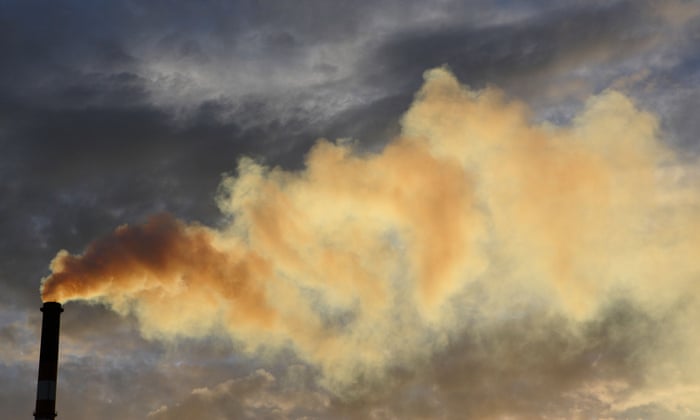
 A doubling of greenhouse gas concentrations above pre-industrial levels will likely warm the planet anywhere between 1.5C and 4.5C. Photograph: Alamy Stock Photo

Conservatives should change how they think about global warming. I did


(Photo by Michael Bocchieri/Getty Images)
I spent the better part of my professional life (1991-2014) working at a libertarian think tank—the Cato Institute—arguing against climate action. As Cato’s director of Natural Resource Studies (and later, as a senior fellow and eventually vice president), I maintained that, while climate change was real, the impacts would likely prove rather modest and that the cost of reducing greenhouse gas emissions would greatly exceed the benefits.
I changed my mind about that, however, because (among other things) I changed my mind about risk management.
If we think about climate risks in the same fashion we think about risks in other contexts, we should most certainly hedge—and hedge aggressively—by removing fossil fuels from the economy as quickly as possible.
Let me explain.

The big debate in climate science right now isn’t whether or not climate change is occurring—or whether human activity is the main cause. The big debate is about scale: How much change will there be, over how long a time frame, and how large (or small) will be the follow-on effects.
Despite many decades of research, scientists are still uncertain about how sensitive the atmosphere is to greenhouse gas loading. Evidence from the peer-reviewed literature suggests that a doubling of greenhouse gases in the atmosphere above pre-industrial levels (which we’re likely to see sometime after mid-century) will eventually warm the planet anywhere between 1.5C and 4.5C (2.7F to 8.1F). That’s a very large spread.
The difference between the low-end and high-end estimates is the difference between a passing event of modest consequence and global environmental and economic convulsion the likes of which we’ve never seen.
The question, then, is largely about what is the most likely outcome from this wide distribution of possible outcomes. While their arguments might differ at the margins, the so-called “lukewarmers” (of which I counted myself during most of my years at Cato), contend that warming will likely be at the very low-end of the range of likely outcomes, and that it will prove of little consequence to the future beneficiaries of a growing economy.
Environmentalists, for their part, argue that warming will almost certainly be at the higher end of the distribution of possible outcomes–and that, accordingly, we have no time to lose. “The world is going to end in 12 years,” claims Rep. Alexandria Ocasio-Cortez (albeit figuratively), “if we don’t address climate change.”
And thus, we find ourselves in the midst of a debate about the most likely outcome of climate change, even though the truth is that neither side can know with certainty which variant will come to pass. And, funnily enough, both sides seem to think that the most-likely outcome will dovetail with their preferred political position on other matters. Conservatives insist that environmentalists are greatly exaggerating risks (as is their wont) and that if we follow their climate agenda and abandon fossil fuels, we’ll destroy the global economy and surrender economic liberty (a claim that I once embraced but no longer do, given the remarkable technological advances in low-carbon energy technology). The left argues that conservatives are like the man jumping off the top of a skyscraper, claiming no discernible harm has come to him yet even as he plummets to his doom, and that the solutions are giant programs like the Green New Deal, which entail everything from fossil fuel independence to the entire social agenda of the Democratic Socialists of America.
How are we supposed to figure out which side is right?

The answer is that we can’t be sure. And that’s okay. Because in life you rarely know for certain what’s going to happen next. You plan for a range of outcomes and try to mitigate your exposure to the worst possible risks. There’s an entire economic discipline on this subject. It’s called risk management.
Risk management is not about discerning the optimal response to the most likely outcome. It is about discerning the appropriate response to the most likely distribution of possible outcomes. That means incorporating the possibility that climate change, either by a bad roll of the geophysical dice or a large and unexpected societal vulnerability to warming, turns into a bigger problem than we expect.
In his most recent book on the economics and policy of climate change, economist Richard Tol outlines three factors that would motivate greater climate ambition if we look beyond the “most likely” outcomes.
The first is that surprises are weighted toward the bad. Despite some technical ambiguity, scientists believe that the chance of a nasty surprise on the climate front is much larger than the chance of a pleasant surprise. The second is that the risk of locking ourselves into a high-carbon, worse-than-expected climate world is larger than being locked into overly-expensive green energy. That is largely because once CO2 is in the atmosphere–where natural residence times are measured in centuries—it is very expensive to remove through technical means. Green energy boondoggles, on the other hand, can be reversed rather easily, and will at least deliver some health benefitsfrom reduced air pollution, regardless of how climate change plays out. Lastly, societies have long demonstrated a willingness to pay in order to avoid prompting risks that are asymmetric, ambiguous, and irreversible. Global warming is all three.
While Tol’s arguments might strike some conservatives as a suspicious attempt to smuggle in the “precautionary principle” (a principle my friend Indur Goklany once railed against in a book I commissioned and edited when I was at Cato), there is an important distinction between accounting for—and managing—risks and uncertainties on the one hand, and applying something akin to the precautionary principle on the other. Conventional risk management treats both sides of the risk equation—the chance that outcomes will be either more favorable or less favorable than anticipated—in an equal fashion. In so doing, it adheres to what economists call the “expected utility” framework.
The precautionary principle does not; it puts its policy thumb on bad outcomes. It just so happens that, in the context of climate change, the asymmetry comes down squarely on the side of managing climate risk, with all its ambiguities and potential irreversibilities.

We make similar decisions about risk in other contexts all the time.
Consider, for instance, that the most likely outcome of investing your money in equities is a better return than you might receive from investing in other financial instruments, such as municipal bonds.
Does this mean you should invest all of your money in equities? No. Most investors understand that there is a great deal of uncertainty in markets, and that the returns on investment in any given year are difficult to predict. Investors thus tend to hedge their bets, particularly when economic risks are nondiversifiable (as they are in the climate context).
Think of the distribution of possible outcomes as a deck of cards. Equities have a greater spread of good and bad draws from the deck than do bonds, which pay the same no matter how the wider economy is doing. Investing in bonds is thus an investment in stability; something that is so attractive to investors that they forgo greater returns elsewhere to secure that stability. Investing in cutting CO2 emissions is akin to investing in bonds on the financial front. In fact, if we think of CO2 in the atmosphere as an asset (albeit one with negative returns), then the issue becomes much clearer.
Unfortunately, no analogy is precisely applicable to the climate debate. We have a great deal of historical data, for instance, to inform our sense of the likely distribution of potential outcomes in the finance sector. We have many fewer data points to repair to in the course of informing our sense of the distribution of potential outcomes in the climate arena. We have imperfect geologic records. We have imperfect computer models, which reflect our imperfect understanding of climate dynamics. But that ambiguity is itself a motivating factor for reducing emissions. Never before have we run an experiment where greenhouse gases were loaded into the atmosphere at today’s rates. We have no backup planet if things go horribly wrong.
When asked why I changed my mind about federal climate policy, this is a large part of my answer. Building an argument against climate action upon a forceful claim about the most likely outcome of greenhouse gas emissions is to build an argument upon analytic sand.
You don’t have to believe with all your heart that the worst-case scenario is sure to happen. You just have to understand that it is one possible outcome. And that we should not be making policy based on an assumption that we are certain of this or that outcome.
When it comes to managing large-scale risks, straight-forward economics suggests that we ought to take climate change very seriously.

maandag 3 juni 2019

Science institute that advised EU and UN 'actually industry lobby group'


Science institute that advised EU and UN 'actually industry lobby group'

International Life Sciences Institute used by corporate backers to counter public health policies, says study

Cola and ice close upIn an email to Coca-Cola and Monsanto executives, ILSI founder, Alex Malaspina, wrote that new US dietary guidelines required they ‘consider how to become ready to mount a strong defence’. Photograph: MKucova/Getty/iStockphoto


Mon 3 Jun 2019 

An institute whose experts have occupied key positions on EU and UN regulatory panels is, in reality, an industry lobby group that masquerades as a scientific health charity, according to a peer-reviewed study.
The Washington-based International Life Sciences Institute (ILSI) describes its mission as “pursuing objectivity, clarity and reproducibility” to “benefit the public good”.
But researchers from the University of Cambridge, Bocconi University in Milan, and the US Right to Know campaign assessed over 17,000 pages of documents under US freedom of information laws to present evidence of influence-peddling.
The paper’s lead author, Dr Sarah Steele, a Cambridge university senior research associate, said: 
“Our findings add to the evidence that this nonprofit organisation has been used by its corporate backers for years to counter public health policies. ILSI should be regarded as an industry group – a private body – and regulated as such, not as a body acting for the greater good.”
In a 2015 email copied to ILSI’s then director, Suzanne Harris, and executives from firms such as Coca-Cola and Monsanto, ILSI’s founder Alex Malaspina, a former Coca-Cola vice-president, complained bitterly about new US dietary guidelines for reducing sugar intake.
“These guidelines are a real disaster!” he wrote. “They could eventually affect us significantly in many ways; Soft drink taxations, modified school luncheon programs, a strong educational effort to educate children and adults to significanty [sic] limit their sugar intake,, curtail advertising of sugary foods and beverages and eventually a great pressure from CDC [the US Center for Disease Control and Prevention] and other agencies to force industry to start deducing [sic] drastically the sugar we add to processed foods and beverages.”
Malaspina – whom Coca-Cola describes as a “longtime scientific and regulatory affairs leader” – said he expected many nations to follow the new guidelines, adding: “We have to consider how to become ready to mount a strong defence.”
According to ILSI’s declared mandatory principles, it “may not directly or indirectly propose public policy solutions or advocate the commercial interests of their member companies or other parties”.
Kristin DiNicolantonio, ILSI Global’s communication director, told the Guardian that “under no circumstance does ILSI protect industry from being affected by disadvantageous policy and laws”.
The study, published on Monday in the journal Globalization and Health, found that when ILSI’s regional offices failed to promote industry-friendly messaging, they were subjected to sanctions.
In another email from 2015, Malaspina wrote: “About the mess ILSI Mexico is in because they sponsored in September a sweeteners conference when the subject of soft drinks taxation was discussed. ILSI is now suspending ILSI Mexico, until they correct their ways. A real mess.”
Malaspina added that “I hope we have now reached bottom [sic] and eventually we will recover as [far as] Coke and ILSI are concerned.”
ILSI says its Mexican affiliate was suspended for “engaging in activities that can be construed to be policy advocacy”.
Around this time, ILSI was caught up in a separate controversy, when the Guardian revealed that ILSI Europe’s vice-president Prof Alan Boobis chaired a UN panel that found glyphosate was probably not carcinogenic to humans.
The final panel report included no conflict of interest statements, even though ILSI Europe had received donations of $500,000 (£344,234) fromMonsanto, which uses glyphosate in its RoundUp weedkiller, and $528,500 from its industry representative, Croplife International.
Corporate figures from companies including Monsanto, Kraft and Nestlé have sat on ILSI’s board, although DiNicolantonio said they did so “in an individual capacity”.
In 2012, the European parliament suspended funding to the European Food Safety Authority (Efsa) for six months over a string of conflicts of interest allegations involving ILSI members on its own board. A separate parliamentary inquiry into the group in 2017 contributed to new EU transparency rules.
The food group Mars last year announced that it would break its ties with ILSI, whose work it described as “advocacy-led”.
But former and current ILSI officials continue to play key roles in the EU’s science advisory mechanism, which recently produced a report that recommends a slew of industry positions on pesticides. These would, for example, replace current rules outlawing any products that could harm human health with a US-style concept of “acceptable risk”.
A similar Efsa approach, the Threshold for Toxicological Concern published earlier this year, emerged from a working group in which the majority of experts had formal links to ILSI, according to the Pesticides Action Network Europe (PAN-E). The new threshold would allow “safe levels of exposure” for many chemicals which have not been fully tested for toxicity.
PAN-E alleges that eight of the 12 EU pesticides risk assessments that it studied had their regulatory use “designed and/or promoted” by the industry.
Over the course of 2015, a World Health Organization (WHO) move to distance itself from ILSI due to links between one of its members and the tobacco industryprovoked a degree of internal anxiety in ILSI, according to the new study.
One email exchange between the University of Washington’s Prof Adam Drewnowski and Malaspina led to suggestions of a direct approach to the WHO director, Margaret Chan.
Drewnowski wrote that Chan had “said that she was ready to be ‘at the table – but not in bed – with industry’ (her own phrase). Since then, her position has hardened considerably. We should remind her of her own phrase and get her to the table.”
Malaspina later sent an email to senior ILSI and Coca-Cola officials, saying: “We must find a way of someone such as a famous scientist arrange to pay her [Chan] a visit. Jim Hill or someone of similar stature or a US government scientist.”
If a dialogue could not be started, Chan “will continue to blast us with significant negative consequences on a global basis”, he continued. “This threat to our business is serious.”
In another email to Barbara Bowman, then the director of the CDC’s Division for Heart Disease and Stroke Prevention, Malaspina complained that the WHO “now do not want to work with industry [but] who finds all the new drugs. Not WHO, but industry. She is influenced by the Chinese govt and is against US. Something must be done.”
In emailed comments, DiNicolantonio said that any suggestion that ILSI had attempted to influence Chan over sugar-sweetened products was “unfounded and inaccurate”.

zondag 2 juni 2019

Rigging the vote: how the American right is on the way to permanent minority rule


Rigging the vote: how the American right is on the way to permanent minority rule


Underhand Republican tactics – gerrymandering, voter suppression, more – underpin a vice-like grip on power


'With the deck this stacked, it isn’t enough to win. ' ‘With the deck this stacked, it isn’t enough to win.’ Photograph: Alex Wong/Getty Images
T
he American right is in the midst of a formidable project: installing permanent minority rule, guaranteeing control of the government even as the number of actual human beings who support their political program dwindles.


Voter suppression is one, but only one, loathsome tactic in this effort, which goes far beyond just winning one election. Minority rule is the result of interlocking and mutually reinforcing strategies which must be understood together to understand the full picture of what the American right wants to achieve.
Examples are everywhere. Take North Dakota. In 2012, Heidi Heitkamp, a Democrat, won a surprise victory in a Senate race by just 2,994 votes. Her two largest county wins were in the Standing Rock and Turtle Mountain Reservations, where she won more than 80% of the vote. Her overall vote margin in counties containing Native reservations was more than 4,500 votes.
Observing that Heitkamp literally owed her seat to Native voters, North Dakota’s Republican legislature enacted a voter ID law that requires voters to present identification showing their name, birth date and residential address. There’s the rub: many Native voters do not have traditional residential addresses, so this law effectively disenfranchises them.
Or take Georgia, where the Republican nominee for governor, Brian Kemp, is the secretary of state and in that capacity has placed more than 50,000 voter registrations on hold, many from urban areas with high black populations. That is in keeping with Kemp’s privately expressed “concern” that high voter turnout will favor his opponent – Stacey Abrams, running strongly to be the first black female governor in US history.
Exacerbating voter suppression is the ongoing partisan gerrymanderingeffort – the redrawing of electoral maps to favor one party over another. After the 2010 census, the Wisconsin legislature (controlled by Republicans) drew a map for the state’s legislative districts explicitly designed to ensure they would retain control of the legislature even if they received a minority of votes. It worked: in 2012, despite receiving only 48.6% of the vote, they won 60 of 99 seats. Democrats won an outright majority of votes cast but secured just 39 seats.
To this, Wisconsin added a voter ID requirement designed to make it harder to vote at all. Voila: voter turnout in the 2016 presidential election was the lowest since 2000 and Donald Trump carried the state. (To be sure, there were other factors at work.) The combined, national effect of partisan gerrymandering is such that in the 2018 midterms, the Democrats might win the popular vote by 10 points and still not control the House.
Legislative maps designed to promote minority rule plus voter suppression of the constituencies opposed to it is a potent combination. And there’s more.
The two most recent Republican presidents have entered office despite receiving fewer votes than their opponent in a national election, thanks to the electoral college, which systematically over-represents small states. (California gets one electoral vote per 712,000 people; Wyoming gets one per 195,000.) With the presidency in hand in the run-up to the 2020 census, minority rule will be further entrenched by adding a citizenship question to the census. This will result in systematic undercounting of the population in heavily Democratic areas, which will in turn further reduce their influence as legislatures draw maps based on the data.
Then there’s the Senate. Because of its bias toward smaller, rural states, a resident of Wyoming has 66 times the voting power in Senate elections as one in California. Thus, in 2016, the Democratic party got 51.4 million votes for its Senate candidates. The Republicans got 40 million. And despite losing by more than 11 million votes, the Republicans won a supermajority (22 of 36) of the seats up for election, holding their majority in the chamber.
The hideously malapportioned Senate and electoral college permit the last piece of the minority rule puzzle to snap into place: the supreme court. In 2016, after losing the contest for the presidency and the Senate by millions of votes, the Republicans were able to install two supreme court justices. There may be more.
In fact, when the Senate confirmed Trump’s first nominee, Neil Gorsuch, it was a watershed moment in American history. For the first time, a president who lost the popular vote had a supreme court nominee confirmed by senators who received fewer votes – nearly 22 million fewer – than the senators that voted against him. And by now, it will not surprise you to discover that the senators who voted for the confirmation of Brett Kavanaugh represent 38 million fewer people than the ones who voted no.
With the supreme court in hand, all those other tactics – partisan gerrymandering, voter ID and the rest – are protected from the only institution that could really threaten them. But it doesn’t stop there. The supreme court can be used to do more than approve the minority rule laws that come before it. It can further the project on its own.
In 2015, the court came within one vote of holding that independent redistricting commissions (which reduce partisan gerrymandering) are actually unconstitutional. The swing vote in that case, Anthony Kennedy, is gone. And the court in 2013 famously invalidated a major portion of the Voting Rights Act which put checks on voter-suppression efforts of the kind now taking place all over the country.
Taken together, this is a powerful set of tools. Draw maps that let you win even when you lose. Use the resulting power to enact measures to suppress the vote of the other side further. Count on a minority rule president to undercount your opponents in the census, and a minority-rule Senate to confirm justices who will strike down any obstacles to the plan.
With the deck this stacked, it isn’t enough to win. Wresting control back from the entrenched minority will take overwhelming victory. It may take, in other words, a genuine political revolution.

zaterdag 1 juni 2019

Italy is evicting Steve Bannon from the medieval monastery he planned to turn into a far-right training academy


Italy is evicting Steve Bannon from the medieval monastery he planned to turn into a far-right training academy


May 31, 2019


By Luiz Romero

Bannon in Rome in September.


The Italian government has delivered a potentially fatal blow to Steve Bannon’s plans to transform a medieval monastery near Rome into a training academy for the far-right.
Italy’s cultural heritage ministry announced on Friday (May 31) that it would revoke a lease granted to Bannon after reports of fraud in the competitive tender process. The former Breitbart chief and aide to US president Donald Trump was reportedly paying €100,000 ($110,000) per year to rent the 13th Century Carthusian monastery, but now will have to search for another spot.
The Italian state allowed the conservative Catholic organization Dignitatis Humanae Institute (DHI) to use the building early last year. Bannon happens to be a trustee of the institute, and planned to convert the space into a “gladiator school for cultural warriors,”where students would learn philosophy, theology, history, and economics, and receive political training from the former Trump aide himself.
But earlier this month, Italian newspaper Repubblica reported that a letter used to guarantee the lease was forged. The letter had the signature of an employee of Danish bank Jyske, but the bank said that employee hadn’t worked there for years, and called the letter fraudulent.
The Economist reported last week that Benjamin Harnwell, the director of the institute, was surprised by the revelation. Bannon, meanwhile, claimed the letter was “totally legitimate.”
“All of this stuff is just dust being kicked up by the left,” Bannon said at the time.
The institute plans to fight the decision in court. “The DHI will contest this illegitimate maneuver with every resource at its disposal no matter how many years it takes. And we will win,” Harnwell told Quartz on Friday. He promised the academy will still start its activities this autumn, “and in the meantime, we relish the opportunity to fight our case in court.”
This is only the latest hurdle that Bannon is facing in his attempt to help the far-right grow its reach in Europe. His funding of extremist parties ended before it even started last year, after the Guardian revealed that foreign donations, like the ones the millionaire was planning to make, would break electoral laws in a dozen European countries.
This story was updated with reaction from Benjamin Harnwell.