zondag 18 maart 2018

Did Cambridge Analytica influence the Brexit vote and the US election?


Did Cambridge Analytica influence the Brexit vote and the US election?

Nigel Oakes’s company is at the centre of a growing controversy over the use of personal data during elections. But is there any evidence that what it does works?
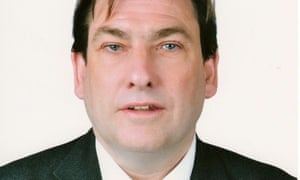

Nigel Oakes, founder of SCL Group, which in turn spawned Cambridge Analytica. Nigel Oakes, founder of SCL Group, which in turn spawned Cambridge Analytica. Photograph: @nigeloakes


On Saturday 23 June 2012, David Miller received an angry email. Miller, a professor of sociology at Bath University, runs something called the Powerbase website, which records the political and business connections of influential people. The writer of the email, who seemed to be based in Russia, explained that “all the content” about Nigel Oakes, a PR fixer and political consultant, published on the website, was “fake” and demanded that it be taken down.
Miller asked for the inaccuracies to be pointed out so that he could make corrections, only for Oakes himself to make contact, a rare event given that, according to ex-colleagues, the old Etonian likes to cultivate an air of mystery. “Nice enough, bit machiavellian,” one said.
An ex-boyfriend of Lady Helen Windsor, Oakes once ran a mobile disco before joining the Tories’ favourite advertising agency, Saatchi & Saatchi.
Powerbase had suggested that Oakes’s claim to “have studied psychology at University College London”, made on one of his firm’s websites, was suspect. Miller has a letter from the university saying it has no record of him studying there. But in his email to Miller, Oakes admitted that while everything on Powerbase about him was true, he wanted it made clear that he had established something called the Behavioural Dynamics Working Group.
The group worked with two respected psychology professors, Adrian Furnham and Barrie Gunter, on understanding and potentially changing people’s behaviour. And it is the key to understanding how a former DJ ended up launching a network of behavioural-profiling firms whose expertise has been eagerly sought by politicians, defence ministries, Brexit campaigners, and now even the US president.
Oakes told Miller that he had been keen to employ the group’s methodology “and required academics to fill in the scientific blanks to my (largely commercial) knowledge”.
But Furnham and Gunter told the website ItalyEurope24 that they cut their ties with Oakes because he was using them to further his career and making claims that could not be substantiated. A spokesman for Oakes insisted he had always had a good working relationship with both men.
The setback did nothing to diminish Oakes’s taste for psychological profiling, and in 1992 he set up a firm that specialised in influencing consumer behaviour through the use of aromas. “Smells can influence attitudes and therefore behaviour,” Oakes said when he launched Marketing Aromatics. The company appears to have had limited success but, by the late 1990s, Oakes had become interested in more than selling products: he was selling politicians. He established Strategic Communication Laboratories (SCL) Group, which in 1999 won a deal to enhance the reputation of Indonesian president Abdurrahman Wahid.
SCL specialised in influencing behaviour by identifying key audiences and developing strategies to connect with them, and it offered a taste of things to come. Those who visited its Jakarta office told the Independent that it resembled “a Tom Clancy novel”, a vast room with huge screens and a huge one-way mirror behind which men and women sat glued to the internet.
The Jakarta ops centre appears very similar to one built by a company called Vision 360 for the James Bond film Goldeneye. This may be more than coincidence: Vision 360 built a similar control room for SCL when, in a bid to win military contracts, it began exhibiting at the annual Defence and Security Equipment International show.
According to a press release, SCL’s Ops centre “contained a 12-screen media feed, a 4x3m LED presenter video wall, 62 computer screens, a large 6x4m rear-projected screen, plus an enormous 10x4m operations overview screen.” It claimed Oakes was delighted with it.
Afterwards, SCL started winning government contracts, including one from the Foreign Office to help counter violent jihadi propaganda in Pakistan.
As more contracts rolled in, SCL attracted funding from powerful investors including Lord Marland, a trade envoy under David Cameron. Oakes’s ambition for his company grew. In 2007, SCL paid $20,000 to a Washington lobbying company, Global Policy Partners, to promote it in the US. SCL won contracts with the Pentagon to conduct surveys in Iran and Yemen. “Psych-ops was big business and people were just chucking money around,” said one person familiar with the company.
In 2015, it secured a $750,000 contract to help Nato states counter Russian propaganda in eastern Europe.
At the same time it was wooing the military, SCL was using its skills to help win elections. Several Caribbean politicians paid handsomely for its services and its reputation flourished. It spawned another company, Cambridge Analytica, which sought to use “data modelling and psychographic profiling [classifying people into personality types] to … connect with people in ways that move them to action”. Cambridge Analytica forged links with the US right, winning contracts with several Republican governors and working for Ted Cruz on his failed campaign to become the Republican presidential candidate.
According to returns filed with the US tax authorities, in 2014 it received more than $1m from America Inc, whose mission is “to educate Americans about traditional American values”. America Inc’s president is L Brent Bozell III, a Tea Party sympathiser who founded something called the Media Research Center “to neutralise leftwing bias in the news media and popular culture”.
The US billionaire Robert Mercer, a major financial supporter of Donald Trump, has reportedly become a Cambridge Analytica shareholder.
Pinterest
 The US billionaire Robert Mercer, a major financial supporter of Donald Trump, has reportedly become a Cambridge Analytica shareholder. Photograph: ddp USA/REX Shutterstock
The US billionaire Robert Mercer – a major Trump supporter who is close friends with Bozell and the former Ukip leader Nigel Farage – was so impressed with Cambridge Analytica that he has reportedly become a major shareholder. Trump’s chief strategist, Steve Bannon, used to sit on its board. Perhaps inevitably, given these connections, the Trump campaign ended up paying almost £5m to the company to help it target swing voters. Mercer introduced Farage to Cambridge Analytica, according to Andy Wigmore, communications director of Leave.EU, the Brexit campaign championed by Farage.
On its website it boasts: “We collect up to 5,000 data points on over 220 million Americans, and use more than 100 data variables to model target audience groups and predict the behaviour of like-minded people.” Its chief executive, Alexander Nix, is an evangelist for the company’s ability to reach voters that ordinary companies can’t.
In an article for Campaign magazine last February, he described how his company had “helped supercharge Leave.EU’s social media campaign by ensuring the right messages are getting to the right voters online.”
But some are dubious about the behavioural prediction claims. Frederike Kaltheuner of Privacy International, the organisation that campaigns against intrusive surveillance, said that she had tested the technology using her own Facebook data. She said: “Cambridge Analytica uses data and machine-learning to profile people and predict personalities and attributes. When I did their test I had a 65% probability of being male, and [was] likely [to be] homosexual.”
How this new generation of profiling companies is collecting data is becoming an issue for privacy campaigners and watchdogs. Responding to the disquiet, the Information Commissioner’s Office has announced that it is to conduct an analysis of the use of big-data analytics, including for political purposes.
A spokesman for Cambridge Analytica said fears about its use of psychographics were misplaced. “There’s nothing magical or Pied Piper-ish about it. It doesn’t give us special powers over people. We’re all trying to better use the behavioural sciences to do our work in more effective ways.”
Indeed, Cambridge Analytica is just one of many new companies trying to reach voters in novel ways. Both Barack Obama and Hillary Clinton’s campaigns employed behavioural profiling companies. The Vote Leave campaign paid £3.5m to a tiny Canadian company called AggregateIQ, which specialises in targeted Facebook advertising and profiling.
Cambridge Analytica’s chief executive, Alexander Nix, at the company’s office on 5th Avenue in New York.
Pinterest
 Cambridge Analytica’s chief executive, Alexander Nix, at the company’s office on 5th Avenue in New York. Photograph: The Washington Post/Getty Images
“The Vote Leave campaign owes a great deal of its success to the work of AggregateIQ,” Vote Leave’s director Dominic Cummings has said. “We couldn’t have done it without them.”
Puzzlingly, the phone number for AIQ’s president, Zack Massingham, is the same as that of SCL Canada, according to a cached version of SCL’s website, now taken down. SCL explained that it had partnered with AIQ in the past and that the Canadian firm had once acted as a point of contact. “It was recently brought to our attention that their contact details were still on the company website, so we updated the page by removing them,” SCL said.
Massingham, who confirmed SCL’s account, told the Observer his company’s focus was about engaging with a campaign’s supporters and tailoring the message to them. “It’s about communicating with them in a timely and meaningful manner, not giving them too much content, and what you do give them is within the lines of what they want to hear.”
A debate is raging. Can behavioural profiling influence elections or is it a hyped technology, albeit with major consequences for privacy? Either way, the industry has come a long way since the 1980s when it first fascinated Oakes. “Behavioural modelling involving big-data analytics has arguably passed an inflection point,” said Dr Simon Moores, an expert on cybersecurity. “Thanks to the growth of predictive analytics, algorithms and big data-mining businesses you can now look forward to a future that’s made up of equal parts Orwell, Kafka, and Huxley.”

Cambridge Analytica: links to Moscow oil firm and St Petersburg university


The Cambridge Analytica Files

Cambridge Analytica: links to Moscow oil firm and St Petersburg university

Data company gave briefing to Moscow firm Lukoil, and the lecturer who developed the crucial algorithm worked for St Petersburg university 


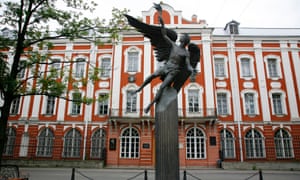
The Twelve colleges building  of St Petersburg university Russia St Petersburg State University, where Aleksandr Kogan taught and received research grants. Photograph: Alamy


Aleksandr Kogan, the Cambridge University academic who orchestrated the harvesting of Facebook data, had previously unreported ties to a Russian university, including a teaching position and grants for research into the social media network, the Observer has discovered. Cambridge Analytica, the data firm he worked with – which funded the project to turn tens of millions of Facebook profiles into a unique political weapon – also attracted interest from a key Russian firm with links to the Kremlin.
Energy firm Lukoil, which is now on the US sanctions list and has been used as a vehicle of government influence, saw a presentation on the firm’s work in 2014. It began with a focus on voter suppression in Nigeria, and Cambridge Analytica also discussed “micro-targeting” individuals on social media during elections.
The revelations come at a time of intense US scrutiny of Russian meddling in the 2016 US presidential election, with 13 Russians criminally charged last month with interfering to help Donald Trump.
In Britain, concerns about Russian propaganda have been mounting, with the prime minister, Theresa May, recently attacking Russia for spreading fake news, accusing Moscow of attempts to “weaponise information” and influence polls.
Lukoil, Russia’s second-largest oil company, discussed with Cambridge Analytica the data company’s powerful social media marketing system, which was already being deployed for Republican Ted Cruz in the US presidential primaries and was later used to back Brexit and Trump.
Alexander Nix, chief executive of Cambridge Analytica, emailed colleagues after initial contacts to say that Lukoil wanted a clearer explanation of “how our services are going to apply to the petroleum business”.
“They understand behavioural micro-targeting in the context of elections (as per your excellent document/white paper) but they are failing to make the connection between voters and their consumers,” he wrote in an email seen by the Observer.
A slide presentation prepared for the Lukoil pitch focuses first on election disruption strategies used by Cambridge Analytica’s parent company, SCL, in Nigeria. They are presented under the heading “Election: Inoculation”, a military term used in “psychological operations” and disinformation campaigns. Other SCL documents show that the material shared with Lukoil included posters and videos apparently aimed at alarming or demoralising voters, including warnings of violence and fraud.
Discussion of services offered by Cambridge Analytica was apparently going right to the top of Lukoil, even though its retail operations in America are a very minor corner of the oil and gas giant’s empire. Asking for a detailed presentation of Cambridge Analyticas’s work in July 2014, Nix told his colleague the document would be “shared with the CEO of the business”.
The chief executive of Lukoil, Vagit Alekperov, is a former Soviet oil minister who has said the strategic aims of Lukoil are closely aligned with those of Russia. “I have only one task connected with politics, to help the country and the company. I’m not close to Mr Putin, but I treat him with great respect,” he told the New York Times.
Cambridge Analytica said an affiliate company had talked to Lukoil Turkey about a loyalty card scheme and proposed a pilot study with a small number of petrol stations there, but the project had not gone ahead. “[The talks] were about potential commercial work in Turkey and did not involve any discussion of political work,” a spokesman said. “Cambridge Analytica and its affiliate companies have not worked in Russia and have not worked for a Russian company or organisation.”
Last month Nix told MPs: “We have never worked with a Russian organisation in Russia or any other company. We do no have any relationship with Russia or Russian individuals.”
That appears to contradict the company documents seen by the Observer, that list Russia as one of the countries where Cambridge Analytica and affiliate companies have clients.
Christopher Wylie, the whistleblower who has come forward to talk to the Observer, said it was never entirely clear what the Russian firm hoped to get from the operation.
“Alexander Nix’s presentation didn’t make any sense to me,” said Wylie, who left Cambridge Analytica soon after the initial meetings. “If this was a commercial deal, why were they so interested in our political targeting?”
Lukoil did not respond to requests for comments.
Kogan, a lecturer who worked with Cambridge Analytica on building up the database of US voters then at the heart of the company’s plans, said he had not had any connection to the Lukoil pitch.
But while he was helping turn Facebook profiles into a political tool he was also an associate professor at St Petersburg State University, taking Russian government grants to fund other research into social media. “Stress, health, and psychological wellbeing in social networks: cross-cultural investigation” was the title of one piece of research. Online posts showed Kogan lecturing in Russian. One talk was called: “New methods of communication as an effective political instrument”.
Cambridge University said academics are allowed to take on outside work but are expected to inform their head of institution, a rule Kogan had complied with. “We understand that Dr Kogan informed his head of department of discussions with St Petersburg University regarding a collaboration; it was understood that this work and any associated grants would be in a private capacity,” a spokesman said.
Apart from that, Kogan appears to have largely kept the work private. Colleagues said they had not heard about the post in St Petersburg. “I am very surprised by that. No one knew,” one academic who asked not to be named told the Observer. Russia is not mentioned in a 10-page CV Kogan posted on a university website in 2015. The CV lists undergraduate prizes and grants of a few thousand dollars and links to dozens of media interviews.
One Cambridge Analytica employee mentioned Kogan’s Russian work in an email to Nix in March 2014 discussing a pitch to a Caribbean nation for a security contract, including “criminal psychographic profiling via intercepts”.
“We may want to either loop in or find out a bit more about the interesting work Alex Kogan has been doing for the Russians and see how/if it applies,” the colleague wrote.
Kogan told the Observer: “Nothing I did on the Russian project was at all related to Cambridge Analytica in any way. No data or models.” His recollection was that the Russia project had started a year after his collaboration with Cambridge Analytica ended.
He said the St Petersburg position emerged by chance on a social visit. A native Russian speaker, Kogan was born in Moldova and brought up in Moscow until he was seven, when his family emigrated to the US, where he later obtained citizenship.
However, he stayed in touch with family friends in Russia and visited regularly. On one trip, he said, he “dropped an email” to the psychology department at St Petersburg.
“We met, had a nice chat, and decided let’s try to collaborate – give me more reason to visit there,” he told the Observer in an email.

zaterdag 17 maart 2018

How Cambridge Analytica turned Facebook ‘likes’ into a lucrative political tool


How Cambridge Analytica turned Facebook ‘likes’ into a lucrative political tool


The algorithm used in the Facebook data breach trawled though personal data for information on sexual orientation, race, gender – and even intelligence and childhood trauma


Play Video
13:04
 Cambridge Analytica whistleblower: 'We spent $1m harvesting millions of Facebook profiles' – video


The algorithm at the heart of the Facebook data breach sounds almost too dystopian to be real. It trawls through the most apparently trivial, throwaway postings –the “likes” users dole out as they browse the site – to gather sensitive personal information about sexual orientation, race, gender, even intelligence and childhood trauma.
A few dozen “likes” can give a strong prediction of which party a user will vote for, reveal their gender and whether their partner is likely to be a man or woman, provide powerful clues about whether their parents stayed together throughout their childhood and predict their vulnerability to substance abuse. And it can do all this without delving into personal messages, posts, status updates, photos or all the other information Facebook holds.
Some results may sound more like the result of updated online sleuthing than sophisticated data analysis; “liking” a political campaign page is little different from pinning a poster in a window.
But five years ago psychology researchers showed that far more complex traits could be deduced from patterns invisible to a human observer scanning through profiles. Just a few apparently random “likes” could form the basis for disturbingly complex character assessments.
When users liked “curly fries” and Sephora cosmetics, this was said to give clues to intelligence; Hello Kitty likes indicated political views; “Being confused after waking up from naps” was linked to sexuality. These were just some of the unexpected but consistent correlations noted in a paper in the Proceedings of the National Academy of Sciences journal in 2013. “Few users were associated with ‘likes’ explicitly revealing their attributes. For example, less than 5% of users labelled as gay were connected with explicitly gay groups, such as No H8 Campaign,” the peer-reviewed research found.
The researchers, Michal Kosinski, David Stillwell and Thore Graepel, saw the dystopian potential of the study and raised privacy concerns. At the time Facebook “likes” were public by default.
“The predictability of individual attributes from digital records of behaviour may have considerable negative implications, because it can easily be applied to large numbers of people without their individual consent and without them noticing,” they said.
“Commercial companies, governmental institutions, or even your Facebook friends could use software to infer attributes such as intelligence, sexual orientation or political views that an individual may not have intended to share.”
To some, that may have sounded like a business opportunity. By early 2014, Cambridge Analytica CEO Alexander Nix had signed a deal with one of Kosinski’s Cambridge colleagues, lecturer Aleksandr Kogan, for a private commercial venture, separate from Kogan’s duties at the university, but echoing Kosinski’s work.


Dr Aleksandr Kogan
 Dr Aleksandr Kogan

The academic had developed a Facebook app which featured a personality quiz, and Cambridge Analytica paid for people to take it, advertising on platforms such as Amazon’s Mechanical Turk.
The app recorded the results of each quiz, collected data from the taker’s Facebook account – and, crucially, extracted the data of their Facebook friends as well.
The results were paired with each quiz-taker’s Facebook data to seek out patterns and build an algorithm to predict results for other Facebook users. Their friends’ profiles provided a testing ground for the formula and, more crucially, a resource that would make the algorithm politically valuable.

To be eligible to take the test the user had to have a Facebook account and be a US voter, so tens of millions of the profiles could be matched to electoral rolls. From an initial trial of 1,000 “seeders”, the researchers obtained 160,000 profiles – or about 160 per person. Eventually a few hundred thousand paid test-takers would be the key to data from a vast swath of US voters.
It was extremely attractive. It could also be deemed illicit, primarily because Kogan did not have permission to collect or use data for commercial purposes. His permission from Facebook to harvest profiles in large quantities was specifically restricted to academic use. And although the company at the time allowed apps to collect friend data, it was only for use in the context of Facebook itself, to encourage interaction. Selling data on, or putting it to other purposes, – including Cambridge Analytica’s political marketing – was strictly barred.
It also appears likely the project was breaking British data protection laws, which ban sale or use of personal data without consent. That includes cases where consent is given for one purpose but data is used for another.
The paid test-takers signed up to T&Cs, including collection of their own data, and Facebook’s default terms allowed their friends’ data to be collected by an app, unless their privacy settings allowed this. But none of them agreed to their data possibly being used to create a political marketing tool or to it being placed in a vast campaign database.
Kogan maintains everything he did was legal and says he had a “close working relationship” with Facebook, which had granted him permission for his apps.
Facebook denies this was a data breach. Vice-president Paul Grewal said: “Protecting people’s information is at the heart of everything we do, and we require the same from people who operate apps on Facebook. If these reports are true, it’s a serious abuse of our rules.”


The scale of the data collection Cambridge Analytica paid for was so large it triggered an automatic shutdown of the app’s ability to harvest profiles. But Kogan told a colleague he “spoke with an engineer” to get the restriction lifted and, within a day or two, work resumed.
Within months, Kogan and Cambridge Analytica had a database of millions of US voters that had its own algorithm to scan them, identifying likely political persuasions and personality traits. They could then decide who to target and craft their messages that was likely to appeal to them – a political approach known as “micro-targeting”.
Facebook announced on Friday that it was suspending Cambridge Analytica and Kogan from the platform pending information over misuse of data related to this project.
Facebook denies that the harvesting of tens of millions of profiles by GSR and Cambridge Analytica was a data breach. It said in a statement that Kogan “gained access to this information in a legitimate way and through the proper channels” but “did not subsequently abide by our rules” because he passed the information onto third parties.


My Comments : 

1. The Trump super PAC-master, and Jewish zionist Robert Mercer (*) - himself made a billionaire by applying programmed algorithms (rather than gambling driven human intuition) to discover the most profitable investment trends in stock market funds - took a majority share at Cambridge Analytica (CA) and installed Bannon on the Board of Directors.

2. With the STOLEN (by someone with a suspect nationality) concept - and its application concentrated on the so-called Swing States, where micro-targeting of voters could make the difference - Mercer & Co subsequently went on, against all odds, to win the presidential elections for the most unlikely candidate of the century.

3. Micro-targeting had not only been used for influencing those who - according to the ICT program-weighed data, composed of not only likes, but also of all kinds of other data that had been bought by Mercer et al. from a great number of sources - already tended to lean towards Trump (and the GOP), but also to approach those voters, that tended to vote for Clinton and the Democrats.

4. The latter group had been targeted by the people of CA in order to try to a. either stop them to vote at all, or b. to seduce them to vote for Trump / GOP.

5. The word seduce is the right term to use in this context, for micro-targeting - just as many classical sophisticated advertising messages are pretending - did not only colour the exact messages that voters were offered, to try to make them vote one way or the other, but it did so on a stealth, subconscious manner.

6. Dependent on the outcome of the (automated) constructed personal psychological profiles, the voter most literally was brainwashed into their own choice-making process, to make them act in the way, the Trump campaign wanted them to vote.

7. So, together with another Mercer owned company - i.e. the "alt-right" Breitbart news outlet, that also had been provided for by Mercer, of an effective white-supremacist ideologue, Bannon - that had been broadcasting a lot of politically motivated dog-whistling messages to its audience, Mercer and Co did factually gained the key to White House and to Congress (for this tool had also been used for the (partly) to be elected Houses of Congress).

8. The use of those two crucial power-keys permitted Mercer et al. to - not only chose carefully who would be acquiring what job in the WH (including the Trump administration, but as well to) - determine the exact set of policies, that would have to to be executed by Trump and his team.

9. Although it has yet to be scientifically researched / detremined, what percentage of the election victory might be contributed to the factors I mentioned before - such as the electrifyingly powerful combination of both CA and Breitbart (among other political tools such as old-fashioned election addresses / political rallies by the main candidate Trump) - at this stage one has to seriously reckon with the probability, that without those tow major factors, Trump might not have won the presidential elections and the GOP might not have gained a majority in both Congressional Houses.

10. Whether there might have been a Russian factor into the USA election activities of the CA company, has also yet to be established, but Mercer had entertained relations with Russian elements in the past, and as we know, there is a major mutual attraction (exchange / cooperation) between the ultra ethno-nationalists on the Russian side of the political equation and the their USA counterparts.

11. However, there is also another ehtno-nationalist factor involved into the USA election, and that factor had been accentuated (not necessarily introduced) by the arrival of the Jewish-Supremacist son in law of Trump, Jared Kushner, who, to the surprise of many observers, had been handed over the hyper-sensitive portfolio of main "USA Peace Envoy of the ME".

12. As final contributing factor I have to mention the peculiar fact, that there can be established a highly remarkable link between Cambridge Analytica - via the London based CA parent group SCL - and the USA / some security agencies.

13. After all, the SCL group in the recent past had been closely associated - as a commercial defense contractor - with the NATO / CIA, in order to help them win elections in the African continent by way of regime change by software, in stead of the usual practise of regime change by military hardware.

14. So (both the decisive Brexit campaign and) the regime changing USA election campaign had been dominated by an entity (CA), that is (in)directly connected to NATO / CIA political electioneering programs.

15. This realisation does - i.a. observations - add a highly unexpected dimension to the Mueller investigation into a possible collusion between the Trump team and the Kremlin, and well in the sense that the most influential factor into the 2016 presidential and Congressional elections might be not only be claimed by "the Russians", but might as well be claimed by a possible (possibly rogue) coterie from within the USA security apparatus itself. 

16. What exact role the owners of (a majority stock in) Facebook have been playing into the political weaponization of Facebook is also a factor that needs to be investigated in high priority of order, because lately some incriminating data has been published on the alleged way, zio-Jewish Zuckerberg and Co allowed foreign regimes to manipulate the highly effective FB tool for their own political advantage. 

17. In this respect - the brainwashing ("the manufacturing of consent" / dissent) of the human mind by Artificial Intelligence or AI (be it at this stage, instigated by a part of the all too human political and economical elite) - the ominous prediction from the late genius Stephen Hawking, that AI might become the most threatening factor in the future for the total destruction of the Human Species, might have already started to have been materialising today....

(*)  Borh Jewish zionist Mercer an jew-supremacist Sheldon Adelson poured millions of dollars in their respective super-PAC/s for White supremacist Trump, in order to generate the maximum their political influence on the USA political agenda and on the composition of the Trump administration and the WH staff. and one might conclude that they succeeded beyond any expectation...