dinsdag 28 maart 2017

I am an Arctic researcher. Donald Trump is deleting my citations


Afbeeldingsresultaat voor logo the guardian

I am an Arctic researcher. Donald Trump is deleting my citations


These politically motivated data deletions come at a time when the Arctic is warming twice as fast as the global average
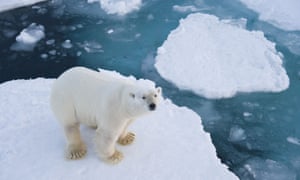

melting ice‘In the waning days of 2016 we were warned: save the data.’ Photograph: Andrew Stewart / SpecialistStock

Tuesday 28 March 2017 


As an Arctic researcher, I’m used to gaps in data. Just over 1% of US Arctic waters have been surveyed to modern standards. In truth, some of the maps we use today haven’t been updated since the second world war. Navigating uncharted waters can prove difficult, but it comes with the territory of working in such a remote part of the world.
Over the past two months though, I’ve been navigating a different type of uncharted territory: the deleting of what little data we have by the Trump administration.
At first, the distress flare of lost data came as a surge of defunct links on 21 January. The US National Strategy for the Arctic, the Implementation Plan for the Strategy, and the report on our progress all gone within a matter of minutes. As I watched more and more links turned red, I frantically combed the internet for archived versions of our country’s most important polar policies. 
I had no idea then that this disappearing act had just begun. 
Since January, the surge has transformed into a slow, incessant march of deleting datasets, webpages and policies about the Arctic. I now come to expect a weekly email request to replace invalid citations, hoping that someone had the foresight to download statistics about Arctic permafrost thaw or renewable energy in advance of the purge. 
In the waning days of 2016 we were warned: save the data. Back up the climate measurements. Archive the maps of America’s worst polluters. Document the education portals that teach students about backyard ecosystems.
Anticipating a massive overhaul by the new administration, scientists around the world sounded the alarm to copy as many files off of government sites before they were altered or removed. As the inauguration neared, hundreds of guerrilla archivists took up the call. From Philadelphia to Toronto, hackers raced against the clock to protect crucial datasets before they disappeared. Volunteers tried tirelessly to save what they could, but the federal government is a massive warehouse of information. Some data was bound to get left behind.
All in all, emails about defunct links of sites that weren’t saved are annoying, but harmless. Finding archived materials to replace them add maybe 20 minutes of internet searches to my day – and a bit of anger at the state of the country.
The consequences of vanishing citations, however, pose a far more serious consequence than website updates. Each defunct page is an effort by the Trump administration to deliberately undermine our ability to make good policy decisions by limiting access to scientific evidence.
We’ve seen this type of data strangling before.
Just three years ago, Arctic researchers witnessed another world leader remove thousands of scientific documents from the public domain. In 2014, then Canadian prime minister Stephen Harper closed 11 department of fisheries and oceans regional libraries, including the only Arctic center. Hundreds of reports and studies containing well over a century of research were destroyed in that process – a historic loss from which we still have not recovered. 
These back-to-back data deletions come at a time when the Arctic is warming twice as fast as the global average. Just this week, it was reported that the Arctic’s winter sea ice dropped to its lowest level in recorded history. The impacts of a warming, ice-free Arctic are already clear: a decline in habitat for polar bears and other Arctic animals; increases in coastal erosion that force Alaskans to abandon their homes; and the opening up of shipping routes with unpredictable conditions and hazardous icebergs. 
In a remote region where data is already scarce, we need publicly available government guidance and records now more than ever before. It is hard enough for modern Arctic researchers to perform experiments and collect data to fill the gaps left by historic scientific expeditions. While working in one of the most physically demanding environments on the planet, we don’t have time to fill new data gaps created by political malice. 
So please, President Trump, stop deleting my citations.

zondag 26 maart 2017

'We see them as monsters. At least Israel makes normal, typical war': As Isis caliphate shrinks, Syrian anger grows


Afbeeldingsresultaat voor logo the independent


'We see them as monsters. At least Israel makes normal, typical war': As Isis caliphate shrinks, Syrian anger grows

The great geopolitical battles in Iraq seem far away until you notice the contrails sweeping the skies far above Jibl Jarrah
    Sunday the 27th of March 2017

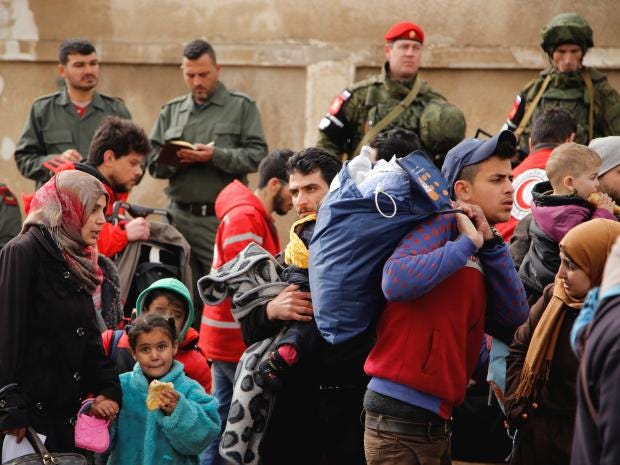
syrian-army.jpgSyrian army and Russian soldiers monitor as rebel fighters and their families evacuate the a district of Homs Reuters

It must be the most beautiful front line in the world. Turn right at the ancient city of Qatna, drive east for 40 miles and you’ll come to a village called Telwared, the “Hill of Roses”. There are fields of yellow flowers, sheep and cattle and almond orchards and an old T-62 tank and then a series of largely empty, slightly sinister two-storey houses and a row of gentle hills to the south. That’s where Isis holds its ground, an ideology quite divorced from all this beauty and bright sky and sunlight.
They’re just the other side of the low mountain range to the south which stretches all the way across to Palmyra. But it’s difficult to shrug off the lethargy. Surely the old shepherd sitting with his back to the road, two cows tethered beside him, isn’t worried about the war. Can the children playing with their mother behind a red-painted house have the slightest idea why there’s a Syrian army checkpoint down the road at Jibl Jarrah, the very last bit of territory before the forward troops of the shrinking Isis caliphate?
The great geopolitical battles in Iraq seem far away until you notice the contrails sweeping the skies far above Jibl Jarrah and the military map in the local company headquarters which depicts three bleak grey and black circles to the right. “South al-Mushairfeh, east Habra, west Habra” are written in them. Isis holds these villages to this day.
On the highway driving out here, there were Russian military engineering convoys on the Palmyra run, heavy armoured vehicles between each truck, soldiers with cloth webbing draped from their helmets to their chins. Some of them wear Ray-Bans and you remember that this is also a European war, that these are Putin’s men, their equipment gleaming, their heavy machine guns pointed up the road.
You’d think the crusty Syrian colonel round the corner, billeted in an ancient shrine, would be watching the television news of the fighting for Mosul, the suicide bomb attacks on his Iraqi brother soldiers far to the east. Nothing of the sort. Isis mortared Jibl Jarrah a few hours ago. They send in artillery rounds each night. When their men captured and held the village for six hours on 21 January, the colonel managed to evacuate every civilian safely – but it cost the lives of three soldiers, another 12 in the neighbouring village of Mesaudia, and six members of the local ‘national guard’ militia.
So much for the hill of roses. The colonel saw one of the Isis men who was captured on the road. “They send in Syrians first and then foreigners behind them,” he said. “Chechens and Afghans. He was a short man, blond-haired, about 19 or 20. He said he was from the village of Ankalhawa. He said they wanted to attack with waves of fighters. Fifteen at first, then maybe 200. They failed. Isis couldn’t operate here if they didn’t have Syrians with them. All of us grew up on loving our homeland, but they’ve played on the sectarian question to turn these people into extremists.
“We never thought a Syrian would turn a gun against another Syrian but the Arab nations – Qatar, Saudi Arabia – they give them the money and ideology. This situation is very strange to us.”
As the colonel says repeatedly, most of the Isis men on the other side of these gentle hills are clearly not Syrians. Repeatedly, Syrian intelligence officers monitoring their radio chat find themselves listening to Dari (the Afghan version of Persian) and Chechen, which is meaningless to them.
The Syrian soldiers agree that they all talk about the motivation of these strange men. The colonel saw a lot of prisoners in Idlib. “I arrested a lot of Syrian fighters. Before this, I thought they were forced to fight; but when they were questioned, they said they believed in what they did.”
Deceptive, too, are the quiet roads leading west from Jibl Jarrah. You would never imagine that the blasted old building at Alamod was a school targeted by a suicide bomber two years ago. Thirty children were killed, all Shia Muslims, four from one family, the killer a Sunni Muslim. In Mukharam, there’s a pulverized building in the corner of the square, where another Sunni man, an Islamic student well-known in the village, blew himself up among his neighbours just four months ago, wearing a suicide belt, waiting till market day to kill as many as possible.
No wonder the colonel, puffing away on his Armenian cigarettes – they say that Akhtamar cigarettes have to be smoked to be believed – is so puzzled. This web of villages, right up to the front line, has for years been a blaze of mixed religion so typical of Syria; Christians, Shiites, Alawites, Sunnis. Many people here are Sunni Circassians and the locals insist their white complexion comes from Russia generations ago. And looking at the young Russian soldiers on their Palmyra convoys, you can see a faint similarity.
The colonel kept shaking his head. “We see Isis as kind of monsters,” he said. “Even traditional enemies are more honest than these people. Killing pregnant women. Why would anyone do such a terrible thing? At least Israel makes normal, typical war.” The colonel wasn’t being kind to Syria’s traditional enemy. He merely hasn’t fathomed what lies behind Isis and he’s too far from Mosul to work out if his monsters are in their death throws.
But like as not – if they any of them can get out of Mosul, or if the Iraqi army and Americans let them – Isis will move across to the lands east of Homs and try another attack on this all too beautiful front line.

donderdag 23 maart 2017

Israeli teenager arrested over bomb threats to US Jewish targets


Afbeeldingsresultaat voor logo the guardian

Israeli teenager arrested over bomb threats to US Jewish targets

Israeli Jewish man, 19, is suspected of being behind dozens of anonymous calls and communications

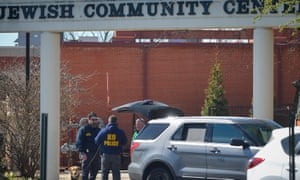
Police officers outside a Jewish community centre in Louisville, Kentucky, after it received bomb threats.Police officers outside a Jewish community centre in Louisville, Kentucky, after it received bomb threats. Photograph: Bryan Woolston/Reuter

A 19-year-old Israeli Jewish man has been arrested in Israel on suspicion of making multiple bomb threats to Jewish organisations and an airline in the US and elsewhere.
The unnamed individual – who lives in Israel, reportedly in the southern city of Ashkelon, but has joint US-Israeli citizenship – was arrested at the request of the FBI, which has been examining a wave of threats against Jewish centres.
The arrest took place after a months-long undercover investigation by an Israeli police unit specialising in cybercrime.
Police seized a number of computers as well as other equipment during the arrest. Micky Rosenfeld, an Israeli police spokesman, said the motives behind the threats were unclear.
Rosenfeld alleged the suspect was “the guy who was behind the JCC threats” – referring to Jewish community centres – and said advanced technologies had been used to mask the origin of calls and communications to synagogues, community buildings and public venues.
“He didn’t use regular phone lines. He used different computer systems so he couldn’t be backtracked,” Rosenfeld said. The suspect also made threats in New Zealand and Australia, Rosenfeld alleged.
According to a recording acquired by the Jewish Telegraphic Agency, in one call to the airline Delta the caller is heard threatening to kill Jews onboard a flight.
The suspect’s lawyer said her client suffers from a “very serious” medical condition that may have affected his behaviour. Galit Bash told reporters outside a courthouse that the young man’s condition had prevented him from serving in the army or going to school. The medical condition could “affect the investigation”, Bash added.
The US Anti-Defamation League has tallied 166 hoax bomb threats to Jewish schools, synagogues and cultural centres since 9 January. There has also been a spate of vandalism in Jewish cemeteries, leading to fears of rising antisemitism in the US.
The Trump administration was accused of not speaking out quickly enough on the threats, though last month the White House denounced them and rejected “antisemitic and hateful threats in the strongest terms”.
Despite efforts to mask the source of the calls, police investigators in New Zealand and Australia were able to identify the IP address of the computer used as being inside Israel. According to some reports, the equipment used included a large antenna and unusually sophisticated computer hardware. The caller also used technology to alter the sound of their voice.
An Israeli police official said sophisticated methods were used. Yaniv Azani, the head of technology in the Israeli police’s cyber unit, said several different means were used “to camouflage the various layers of communication mechanisms” to carry out the calls.
According to Nimrod Vax, a co-founder of the US-Israeli cybersecurity company BigID, the phone calls required a level of sophistication but were “not too difficult” for an experienced hacker.
Rosenfeld said the investigation was carried out with the help of the FBI and police from other countries.
The suspect is the second person to be arrested in connection with the hoax bomb threats in the US. Earlier this month, Juan Thompson, a former journalist, was arrested in relation to eight of the bomb threats. Federal officials said some of the calls were made in the name of Thompson’s former partner as part of a campaign to harass and intimidate her.
Commenting on Thursday’s arrest, Israel’s public security minister, Gilad Erdan, said: “We hope that this investigation will help shed light on some of the recent threats against Jewish institutions, which have caused great concern both among Jewish communities and the Israeli government.”

Don’t Buy the Latest Trump Surveillance Hype

Afbeeldingsresultaat voor logo wired

Don’t Buy the Latest Trump Surveillance Hype


House Permanent Select Committee on Intelligence Chairman Devin Nunes (R-CA).CHIP SOMODEVILLA/GETTY IMAGES


ON WEDNESDAY, HOUSE Intelligence Committee Chair Devin Nunes made an unexpected revelation. The president and his associates, Nunes told a gaggle of reporters, were swept up in “incidental collection” by US intelligence agencies. 
It’s a charge that almost sounds like it validates Trump’s recent tweeted accusations that President Obama “wiretapped” Trump Tower. But it doesn’t.
As with any story where so much of the underlying information remains classified, there aren’t many details to work with. A close look at what Nunes said today, though, fails to confirm any of Trump’s previous assertions. If anything, it raises more questions.

Incidental Contact

In case there’s any doubt, the Trump team has already championed the Nunes comments as validation. When asked if he feels vindicated by Nunes a few hours alter, Trump said “I somewhat do… I very much appreciated that they found what they found.”
In a throatier statement, the Trump-fundraising Great America PAC sent out an email blast to its members that included the following (including the emphasis):
“Friends, we’ve been vindicated and there’s nothing the mainstream media can do about it now… And once again, our President was right.”
But here’s the thing: Nothing in the Nunes comments indicates that to be so, especially if you hold Trump to his original tweets.
Let’s start from the top.
“I recently confirmed that on numerous occasions the intelligence community incidentally collected information about US citizens involved in the Trump transition,” Nunes said to open his comments this morning.
“Incidental collection” means something very specific. It’s a term that’s used in connection with Section 702 of the Foreign Intelligence Surveillance Act, and it refers to the communications of US citizens that get swept up in surveillance of a foreign national. It’s also incredibly common, especially given the broad authority that Section 702 grants the intelligence community.
“It sweeps in such a huge pool of foreign targets,” says Elizabeth Goitein, co-director of the Brennan Center for Justice’s Liberty and National Security Program. “Thereby assuring that the incidental collection will be massive.”
Think of it like this: In the same way a shrimping net will invariably pick up algae and discarded beer cans, monitored communications yield chatter from anyone within a given target’s orbit. So right away, what Nunes is describing is nothing abnormal. Rather, the most abnormal thing about his comment isn’t the content, but the fact that he made it at all.
Then Nunes seemed to confirm FISA’s role in the communications. “This appears to be all legally collected foreign intelligence under FISA, where there was incidental collection that ended up in reporting channels and it was widely disseminated,” he said.
Yes, legal. While the scope of Section 702 draws plenty of scrutiny from civil liberties activists, there’s nothing illicit about it. It also doesn’t imply illegality on the part of its targets; foreign nationals don’t need to be under any sort of investigation to be targeted, they just need to hold some sort of intelligence value. Fold in that the surveillance Nunes brought to light today allegedly primarily took place during Trump’s transition months—a time when he and his team would be in touch with their counterparts around the world—and the revelation starts to look less like a scandal and more like common sense.
“It’s completely unsurprising that members of the Trump transition team would have been caught up in Section 702 surveillance,” says Goitein. “You would absolutely expect members of Congress, members of the administration, members of a transition team to be routinely caught up in that surveillance incidentally.”
Nunes made other complaints that may be more valid, especially the allegation that members of the transition team were “unmasked,” which is to say they were identified by name in intelligence reports. And he expressed frustration that the intel was “widely disseminated in intelligence community reporting.”
Here, though, Nunes is makes the assumption that unmasking a US citizen is inherently pernicious. Not so, says former NSA lawyer April Doss. In fact, it’s only done so when fully understanding that the intelligence depends on knowing that identity. It’s also not used to unmask that person to a wide audience.
“When you consider that all of these reports are written with classified channels, marked with classification designations, intended to be accessed by people with an authorized need to know, the fact that a US person is named in intelligence is not necessarily shocking,” says Doss. “Sometimes you simply need that name to understand that intelligence.”
And in fact, according to a statement in response to Nunes from Democratic Rep. Adam Schiff, who heads up the Intelligence Committee alongside Nunes, it turns out that most of the names in the intercepted communications were masked after all.
“The Chairman informed me that most of the names in the intercepted communications were in fact masked, but that he could still figure out the probable identity of the parties,” said Schiff.
So much for that. And so much for the implication that what Nunes revealed validates Trump’s claims. In fact, one more Nunes quote might be helpful to underscore just how little any of this supports that initial Twitter flurry.
“I’ve always said from day one that there wasn’t a physical wiretap of Trump Tower,” Nunes said. “I still don’t have any evidence of that at all.”

A Source, of Course

What Nunes did accomplish was to provide just enough cover for the White House to excuse a few embarrassing tweets. He did so, though, at potentially serious cost.
Take a step back to consider Nunes’s actions. First, just two days after excoriating national security leakers during a hearing on Russian election interference, he went public with information about an investigation, based on information from an unnamed source, before speaking with Democratic ranking member of the Intelligence committee Rep. Adam Schiff, the White House, or anyone outside of House Speaker Paul Ryan and the heads of the CIA and NSA.
That also means it’s all unconfirmed, therefore conveniently impossible to parse. Then, Nunes took the further step of bringing this intelligence directly to the White House, a group of people that his committee should be overseeing, rather than assisting. All of which happened within the context of an investigation into Trump and his surrogates’ ties to foreign powers.
“I have expressed my grave concerns with the Chairman that a credible investigation cannot be conducted this way,” said Schiff in his statement.
Outside voices were even more outspoken.
“I’ve got to believe that other members of the committee are horrified at what they just witnessed,” said former DOD Chief of Staff Jeremy Bash in an MSNBC interview. “It’s very concerning, particularly when what he is saying is that the collection was lawful, it was court-ordered by lifetime federal judges against valid foreign intelligence targets.”
Not, since it needs repeating, against Trump or his team.
So no, Nunes did not vindicate Trump. In what appears to be an attempt to, though, he sowed confusion and mistrust, both within his committee and for US citizens at large. That might make for a good fundraising email. But it’s hell on democracy.

CIA espionage orders for the last French presidential election


Afbeeldingsresultaat voor logo wikileaks

Press Release (English)

16 February, 2017


CIA espionage orders for the last French presidential election


All major French political parties were targeted for infiltration by the CIA's human ("HUMINT") and electronic ("SIGINT") spies in the seven months leading up to France's 2012 presidential election. The revelations are contained within three CIA tasking orders published today by WikiLeaks as context for its forth coming CIA Vault 7 series. Named specifically as targets are the French Socialist Party (PS), the National Front (FN) and Union for a Popular Movement (UMP) together with current President Francois Hollande, then President Nicolas Sarkozy, current round one presidential front runner Marine Le Pen, and former presidential candidates Martine Aubry and Dominique Strauss-Khan.
The CIA assessed that President Sarkozy's party was not assured re-election. Specific tasking concerning his party included obtaining the "Strategic Election Plans" of the Union for a Popular Movement (UMP); schisms or alliances developing in the UMP elite; private UMP reactions to Sarkozy's campaign stratagies; discussions within the UMP on any "perceived vulnerabilities to maintaining power" after the election; efforts to change the party's ideological mission; and discussions about Sarkozy's support for the UMP and "the value he places on the continuation of the party's dominance". Specific instructions tasked CIA officers to discover Sarkozy's private deliberations "on the other candidates" as well as how he interacted with his advisors. Sarkozy's earlier self-identification as "Sarkozy the American" did not protect him from US espionage in the 2012 election or during his presidency.
The espionage order for "Non Ruling Political Parties and Candidates Strategic Election Plans" which targeted Francois Holland, Marine Le Pen and other opposition figures requires obtaining opposition parties' strategies for the election; information on internal party dynamics and rising leaders; efforts to influence and implement political decisions; support from local government officials, government elites or business elites; views of the United States; efforts to reach out to other countries, including Germany, U.K., Libya, Israel, Palestine, Syria & Cote d'Ivoire; as well as information about party and candidate funding.
Significantly, two CIA opposition espionage tasks, "What policies do they promote to help boost France's economic growth prospects?" and "What are their opinions on the German model of export-led growth?" resonate with a U.S. economic espionage order from the same year. That order requires obtaining details of every prospective French export contract or deal valued at $200m or more.
The opposition espionage order also places weight on obtaining the candidates' attitudes to the E.U's economic crisis, centering around their position on the Greek debt crisis; the role of France and Germany in the management of the Greek debt crisis; the vulnerability of French government and French banks to a Greek default; and "specific proposals and recommendations" to deal with "the euro-zone crisis".
The CIA espionage orders published today are classified and restricted to U.S. eyes only ("NOFORN") due to "Friends-on-Friends sensitivities". The orders state that the collected information is to "support" the activities of the CIA, the Defence Intelligence Agency (DIA)'s E.U section, and the U.S. State Department's Intelligence and Research Branch.
The CIA operation ran for ten months from 21 Nov 2011 to 29 Sep 2012, crossing the April-May 2012 French presidential election and several months into the formation of the new government.