Pompeo says Israel has biblical claim to Palestine and is ‘not an occupying nation’
Trump’s secretary of state makes comments on podcast to defend former administration siding more openly with Israel
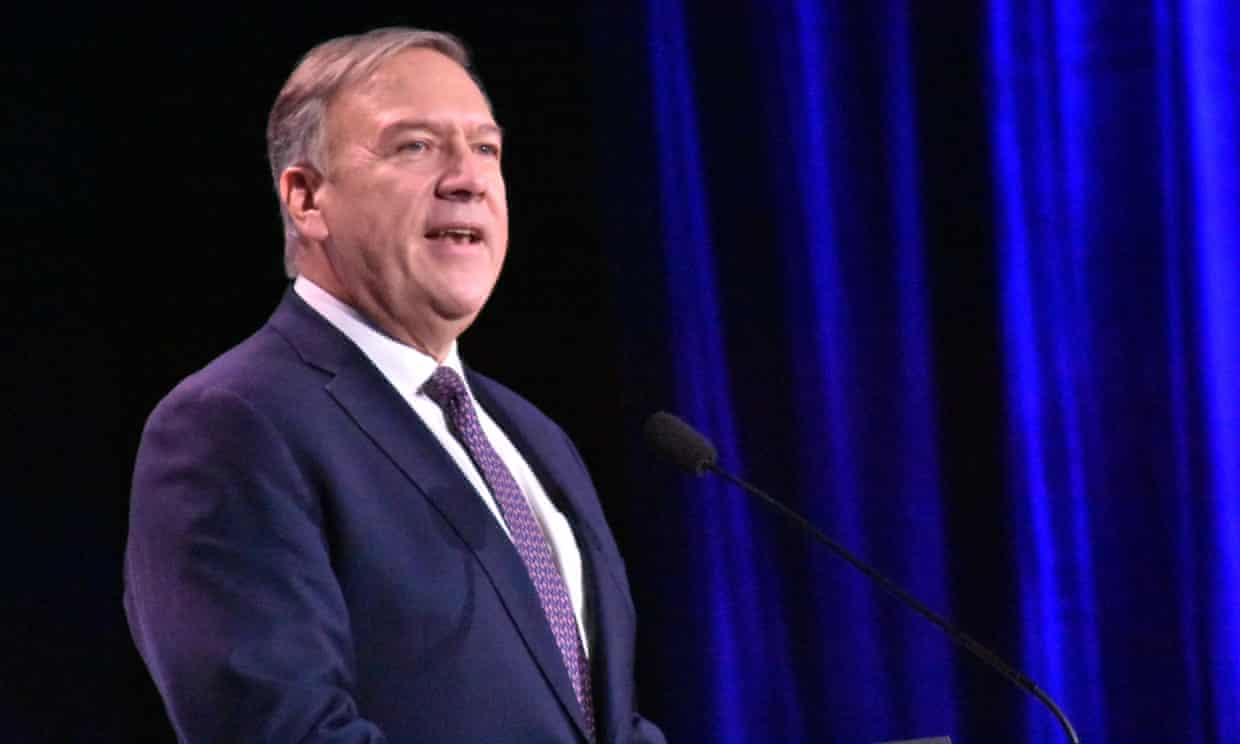
Pompeo spoke ahead of the publication of his book, fuelling speculation he is laying the groundwork for a presidential run. Photograph: Anadolu Agency/Getty Images
Mike Pompeo, the former US secretary of state, has defended Israel’s decades-long control of the Palestinian territories by claiming that the Jewish state has a biblical claim to the land and is therefore not occupying it.
Pompeo told the One Decision podcast that his religious beliefs, US strategic interests and his view of the Palestinian president, Mahmoud Abbas, as a “known terrorist” underpinned his support as the Trump administration’s top diplomat for the shift in US policy away from mediating a two-state solution and toward more openly siding with Israel.
“[Israel] is not an occupying nation. As an evangelical Christian, I am convinced by my reading of the Bible that 3,000 years on now, in spite of the denial of so many, [this land] is the rightful homeland of the Jewish people,” he said.
Pompeo, who referred to the occupied West Bank by its Israeli name of Judea and Samaria, declined to support a two-state solution of an independent Palestine alongside Israel – an increasingly diminishing prospect after years of failed negotiations and the rise to power of politicians in Israel who advocate annexing the occupied territories.
“I’m for an outcome that guarantees Israeli security and makes the lives better for everyone in the region,” he said.
Pompeo, who once suggested that God sent Trump to save Israel, was speaking ahead of publication of a book, Never Give an Inch: Fighting for the America I Love, that has fuelled speculation he is laying the groundwork for a presidential run.
As secretary of state he reversed a number of longstanding US policies, including overturning legal advice from 1978 that declared Israel’s settlements in the West Bank “inconsistent with international law”. Most western governments, such as the UK, say the settlements and Israel’s annexation of occupied East Jerusalem are a breach of the Geneva conventions and are therefore illegal.
Pompeo was Trump’s CIA director before his appointment as secretary of state in 2018. He played an instrumental role in an administration thatrecognised Jerusalem as Israel’s capital and moved the US embassy to that city from Tel Aviv. The move was widely criticised, including by Washington’s allies, as pre-empting a final agreement between Israel and the Palestinians.
Pompeo said it is in the US’s interests to back Israel whatever its policies, and he blamed the Palestinians for the failure of peace negotiations.
“What’s in America’s best interest? Is it to sit and wait for Abu Mazen [Abbas], a known terrorist who’s killed lots and lots of people, including Americans … to draw a line on a map? That’s what the state department would do,” he said.
“The previous secretary of state ran back and forth from Tel Aviv to Ramallah and tried to draw lines on a map. We said: ‘That’s not in America’s best interest. Let’s go create peace,’ and we did.”
Pompeo was part of the Trump administration team that negotiated the Abraham accords normalisation agreements between Israel and several formerly hostile countries, including the United Arab Emirates, Morocco and Sudan. At the time he said the accords were part of the administration’s efforts to ensure that “that this Jewish state remains”.
“I am confident that the Lord is at work here,” he said.
1. The world according to evangelical christians like Pompeo, are posing a major thread to the safety of the entire world population, for they - once in a position of political power - are (forcibly by their convictions) inclined to design major (also foureign) policies, that are exclusively in favour of certain religious persuations and therefore against the welbeing of all of us, that do not belong to those special religious interest groups.
2. Calling Abbas (and the like) a terrorist - while the Palestinians like Abbas, never did anything else but defending their legitimate territorial rights against major and longterm cruel western colonialism, with the very means that have been applied by authentic terrorists like Begin or Shamir, be it that the latter ones did indeed represented the invaders, and have to be called terrorists - and calling christian and jewish-zionist claims to Palestine a devine right (if not plight) to persue, does mean the world is in the hands of highly dangerous reli-fanatics, who in reality do resemble people, who in fact do suffer from serious deranged mental delussion (meant here, in the sense of a highly serious mental disorder).
3. Do furthermore see this highly distorted vision of the world in the light of the recent explosive publications of the existence of concerted jewish-zionist efforts (by means of so-called commercial offshoots from certain safety services) to manipulate major international newsoutlets and national political processes all over the world, in order to - not simply make financial profit, but to - further the special interests of their distorted religious beliefs and ditto convictions.
World risks descending into a climate ‘doom loop’, warn thinktanks
Report says simply coping with escalating impacts of climate crisis could override tackling root cause
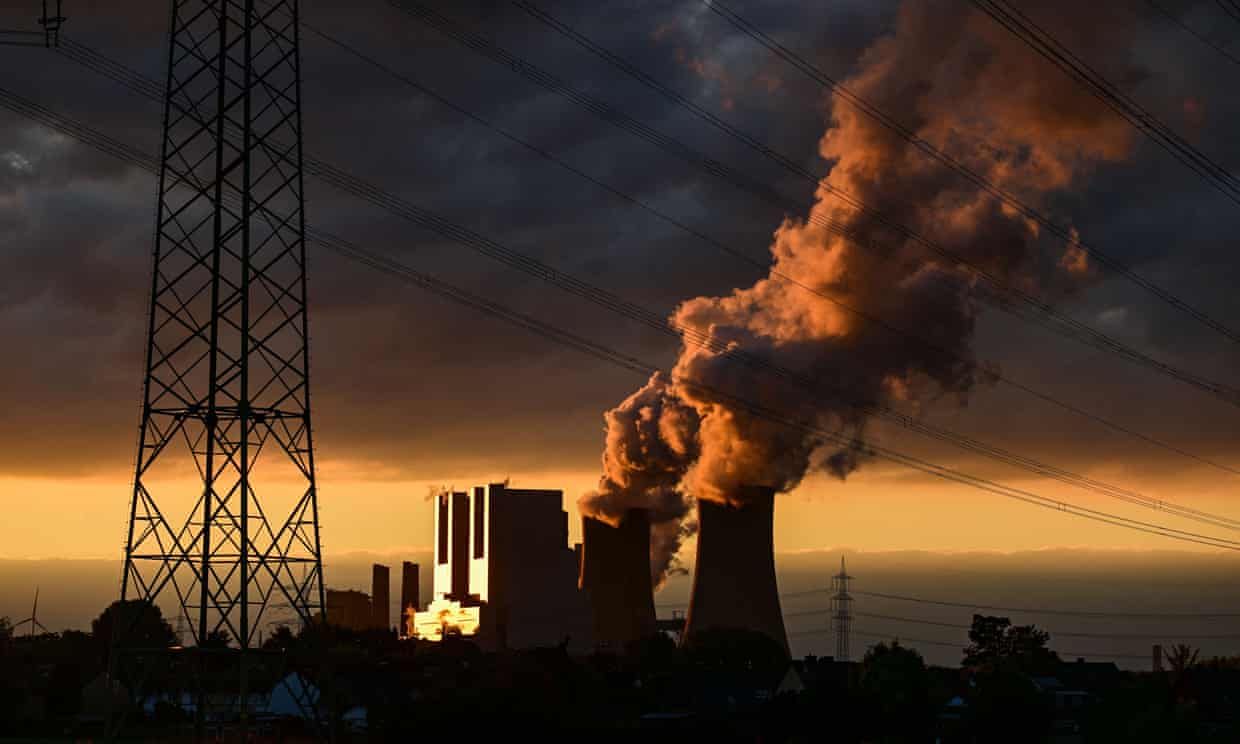
The research said an example of the impact of the climate crisis complicating climate action was the debate over whether a global temperature rise below 1.5C was still possible. Photograph: Ina Fassbender/AFP/Getty Images
The world is at risk of descending into a climate “doom loop”, a thinktank report has warned.
It said simply coping with the escalating impacts of the climate crisis could draw resources and focus away from the efforts to slash carbon emissions, making the situation even worse.
The damage caused by global heating across the globe is increasingly clear, and recovering from climate disasters is already costing billions of dollars. Furthermore, these disasters can cause cascading problems including water, food and energy crises, as well as increased migration and conflict, all draining countries’ resources.
The researchers, from the Institute for Public Policy Research (IPPR) and Chatham House, said a current example of the impact of the climate crisis complicating efforts to reduce emissions and other action was the debate over whether keeping the global temperature rise below 1.5C – the international goal – was still possible.
Those arguing 1.5C was still possible risked perpetuating complacency that today’s slow pace of action was sufficient, the researchers said, while those arguing it was not possible risked supporting fatalism that little that could now be done, or “extreme approaches” such as geoengineering.
Avoiding a doom loop required a more honest acceptance by politicians of the great risks posed by the climate crisis, the researchers said, including the looming prospect of tipping points and of the huge scale of the economic and societal transformation required to end global heating. This should be combined with narratives that focused on the great benefits climate action brought and ensuring policies were fairly implemented.
“We’ve entered, sadly, a new chapter in the climate and ecological crisis,” said Laurie Laybourn, an associate fellow at IPPR. “The phoney war is coming to an end and the real consequences now present us with difficult decisions. We absolutely can drive towards a more sustainable, more equitable world. But our ability to navigate through the shocks while staying focused on steering out the storm is key.”
The report said: “This is a doom loop: the consequences of the [climate] crisis draw focus and resources from tackling its causes, leading to higher temperatures and ecological loss, which then create more severe consequences, diverting even more attention and resources, and so on.”
It noted that, for example, Africa’s economy was already losing up to 15% of GDP a year to the worsening effects of global heating, cutting into funds needed for climate action and emphasising the need for support from developed countries, which emit the most carbon dioxide.
“The thing I’m most concerned about is that we’re not factoring in the cascading risks to societies,” said Laybourn. “It’s not just the big city-smashing storms we should be concerned about, it’s the consequences that ripple through our globalised systems.”
“For the UK, it may not necessarily be the sheer cost of responding to disasters that’s the biggest distraction. It could be that it has to deal at the same time with a food price shock and resurgent nativism, playing off fears about so-called climate refugees,” he added.
Laybourn said the narratives used to describe the situation were very important. For example, he said, greener transport was not simply about switching to electric vehicles, but about better public transport and redesigned cities that meant people were closer to the jobs, education and healthcare they needed. This in turn meant reevaluating local authority budgets and taxes to implement the change.kip past newsletter promotion.
after newsletter promotion
Unfairness in climate policy could drive the doom loop, Laybourn said, because if people felt unaffordable changes were being forced on them they would reject the need for a green transition. But, he added: “If you have fairness at the heart of things, it can instead be a virtuous circle, if you’re in a situation where people recognise that switching to a heat pump and having better insulation will be better for them regardless of the climate crisis.”
Making progress on climate action resilient to difficulties posed by climate impacts was also crucial. “I’m a massive fan of citizens’ assemblies, because if people feel they have a role in decision making, they’re more likely to maintain their support, even in a future in which the shocks start to rack up. They become moments where we actually do build back better,” said Laybourn, unlike after the 2008 crash and Covid pandemic.
Bob Ward, of the Grantham Research Institute on Climate Change at the London School of Economics, said: “This report rightly highlights the critical point we have reached, namely the increasing likelihood that global temperature will rise by more than 1.5C. This does not mean that we should abandon the target.
“Our main aim should still be radical emissions cuts to try to avoid breaching 1.5C, but we should now also be considering what happens if we continue to fail.
“This will mean bringing temperatures back down [and] we will have to invest in geoengineering options such as carbon dioxide removal and even solar radiation management. But it also means we will have to spend far more on dealing with [climate] damage, which will make it more difficult to make the transition to a sustainable, inclusive and resilient world.”
Group sells hacking services and access to vast army of fake social media profiles
Evidence unit behind disinformation campaigns across world
Mastermind Tal Hanan claims covert involvement in 33 presidential elections
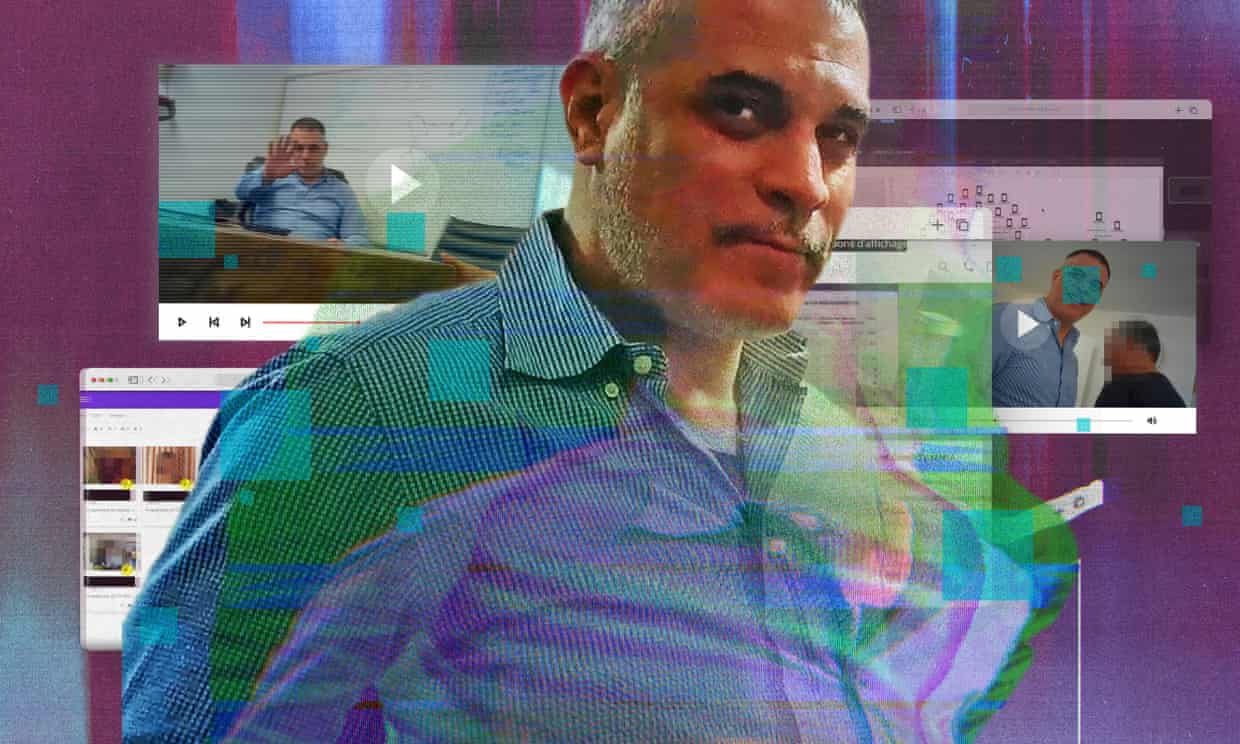
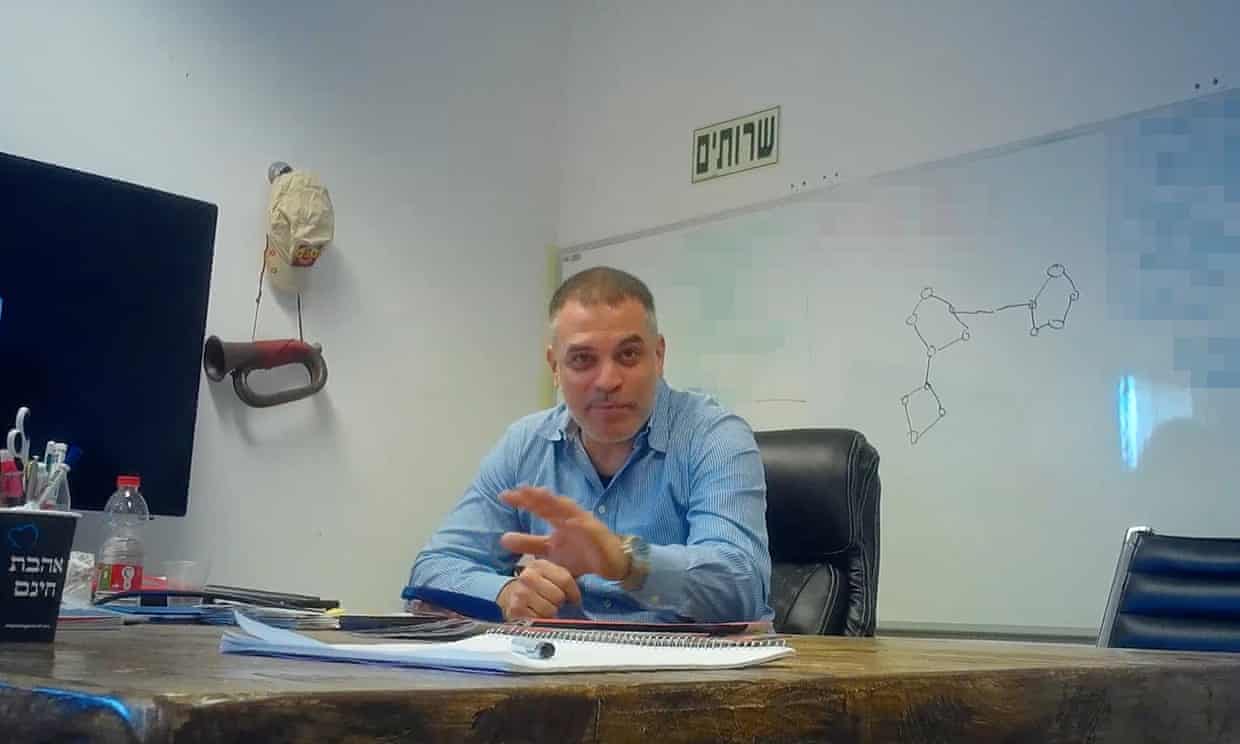
Tal Hanan has always denied any wrongdoing. Composite: Guardian Design/Haaretz/The Marker/Radio France
A team of Israeli contractors who claim to have manipulated more than 30 elections around the world using hacking, sabotage and automated disinformation on social media has been exposed in a new investigation.
The unit is run by Tal Hanan, a 50-year-old former Israeli special forces operative who now works privately using the pseudonym “Jorge”, and appears to have been working under the radar in elections in various countries for more than two decades.
He is being unmasked by an international consortium of journalists. Hanan and his unit, which uses the codename “Team Jorge”, have been exposed by undercover footage and documents leaked to the Guardian.
Hanan did not respond to detailed questions about Team Jorge’s activities and methods but said: “I deny any wrongdoing.”
'Team Jorge' unmasked: the secret disinformation team who distort reality – video
The investigation reveals extraordinary details about how disinformation is being weaponised by Team Jorge, which runs a private service offering to covertly meddle in elections without a trace. The group also works for corporate clients.
Hanan told the undercover reporters that his services, which others describe as “black ops”, were available to intelligence agencies, political campaigns and private companies that wanted to secretly manipulate public opinion. He said they had been used across Africa, South and Central America, the US and Europe.
One of Team Jorge’s key services is a sophisticated software package, Advanced Impact Media Solutions, or Aims. It controls a vast army of thousands of fake social media profiles on Twitter, LinkedIn, Facebook, Telegram, Gmail, Instagram and YouTube. Some avatars even have Amazon accounts with credit cards, bitcoin wallets and Airbnb accounts.
The consortium of journalists that investigated Team Jorge includes reporters from 30 outlets including Le Monde, Der Spiegel and El País. The project, part of a wider investigation into the disinformation industry, has been coordinated by Forbidden Stories, a French nonprofit whose mission is to pursue the work of assassinated, threatened or jailed reporters.
Quick Guide
About this investigative series
Show
The undercover footage was filmed by three reporters, who approached Team Jorge posing as prospective clients.
In more than six hours of secretly recorded meetings, Hanan and his team spoke of how they could gather intelligence on rivals, including by using hacking techniques to access Gmail and Telegram accounts. They boasted of planting material in legitimate news outlets, which are then amplified by the Aims bot-management software.
Much of their strategy appeared to revolve around disrupting or sabotaging rival campaigns: the team even claimed to have sent a sex toy delivered via Amazon to the home of a politician, with the aim of giving his wife the false impression he was having an affair.
The methods and techniques described by Team Jorge raise new challenges for big tech platforms, which have for years struggled to prevent nefarious actors spreading falsehoods or breaching the security on their platforms. Evidence of a global private market in disinformation aimed at elections will also ring alarm bells for democracies around the world.
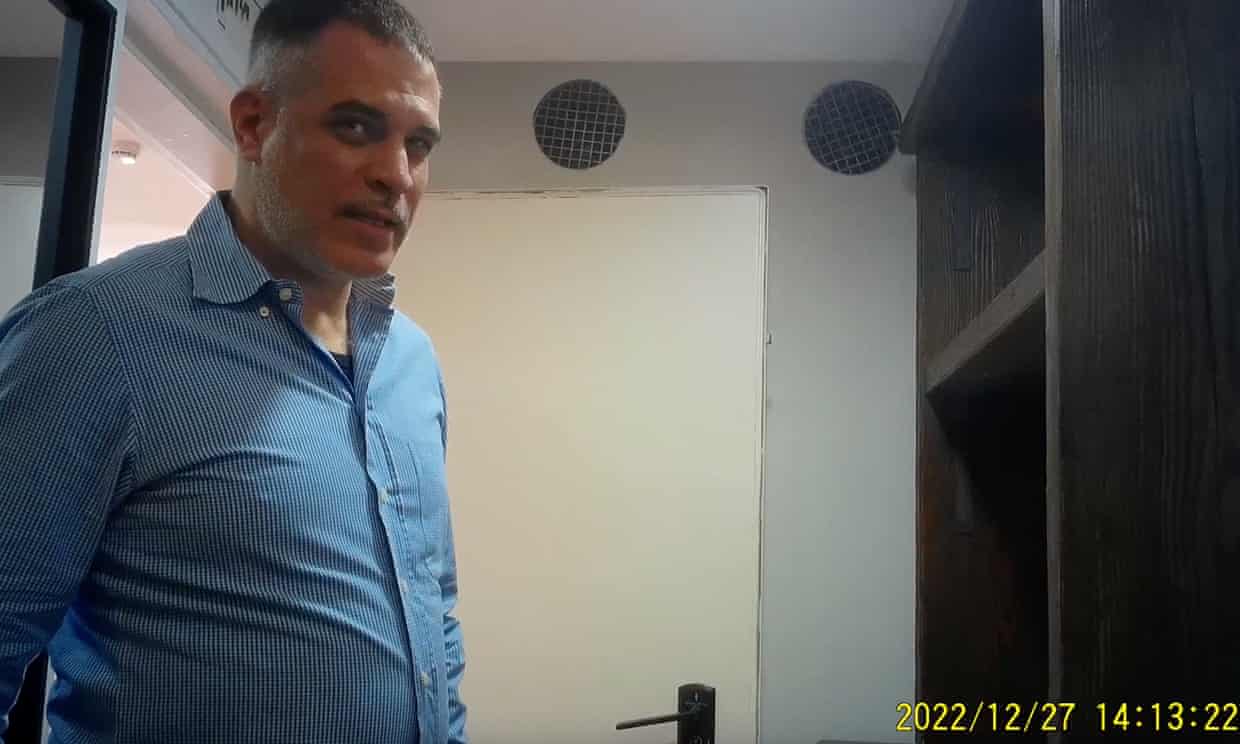
Tal Hanan and his colleagues met reporters at an office in Modi’in, about 20 miles outside Tel Aviv. Photograph: Haaretz/TheMarker/Radio France
The Team Jorge revelations could cause embarrassment for Israel, which has come under growing diplomatic pressure in recent years over its export of cyber-weaponry that undermines democracy and human rights.
Hanan appears to have run at least some of his disinformation operations through an Israeli company, Demoman International, which is registered on a website run by the Israeli Ministry of Defense to promote defence exports. The Israeli MoD did not respond to requests for comment.
The undercover footage
Given their expertise in subterfuge, it is perhaps surprising that Hanan and his colleagues allowed themselves to be exposed by undercover reporters. Journalists using conventional methods have struggled to shed light on the disinformation industry, which is at pains to avoid detection.
The secretly filmed meetings, which took place between July and December 2022, therefore provide a rare window into the mechanics of disinformation for hire.
Three journalists – from Radio France, Haaretz and TheMarker – approached Team Jorge pretending to be consultants working on behalf of a politically unstable African country that wanted help delaying an election.
The encounters with Hanan and his colleagues took place via video calls and an in-person meeting in Team Jorge’s base, an unmarked office in an industrial park in Modi’in, 20 miles outside Tel Aviv.
Hanan described his team as “graduates of government agencies”, with expertise in finance, social media and campaigns, as well as “psychological warfare”, operating from six offices around the world. Four of Hanan’s colleagues attended the meetings, including his brother, Zohar Hanan, who was described as the chief executive of the group.
In his initial pitch to the potential clients, Hanan claimed: “We are now involved in one election in Africa … We have a team in Greece and a team in [the] Emirates … You follow the leads. [We have completed] 33 presidential-level campaigns, 27 of which were successful.” Later, he said he was involved in two “major projects” in the US but claimed not to engage directly in US politics.
It was not possible to verify all of Team Jorge’s claims in the undercover meetings, and Hanan may have been embellishing them in order to secure a lucrative deal with prospective clients. For example, it appears Hanan may have inflated his fees when discussing the cost of his services.
Team Jorge told the reporters they would accept payments in a variety of currencies, including cryptocurrencies such as bitcoin, or cash. He said he would charge between €6m and €15m for interference in elections.
Quick Guide
The undercover footage
Show
However, emails leaked to the Guardian show Hanan quoting more modest fees. One suggests that in 2015 he asked for $160,000 from the now defunct British consultancy Cambridge Analytica for involvement in an eight-week campaign in a Latin American country.
In 2017 Hanan again pitched to work for Cambridge Analytica, this time in Kenya, but was rejected by the consultancy, which said “$400,000-$600,000 per month, and substantially more for crisis response” was more than its clients would pay.
There is no evidence that either of those campaigns went ahead. Other leaked documents, however, reveal that when Team Jorge worked covertly on the Nigerian presidential race in 2015 it did so alongside Cambridge Analytica.
Alexander Nix, who was the chief executive of Cambridge Analytica, declined to comment in detail but added: “Your purported understanding is disputed.”
Team Jorge also sent Nix’s political consultancy a video showcasing an early iteration of the social media disinformation software it now markets as Aims. Hanan said in an email that the tool, which enabled users to create up to 5,000 bots to deliver “mass messages” and “propaganda”, had been used in 17 elections.
“It’s our own developed Semi-Auto Avatar creation and network deployment system,” he said, adding that it could be used in any language and was being sold as a service, although the software could be bought “if the price is right”.
Team Jorge’s bot-management software appears to have grown significantly by 2022, according to what Hanan told the undercover reporters. He said it controlled a multinational army of more than 30,000 avatars, complete with digital backstories that stretch back years.
Demonstrating the Aims interface, Hanan scrolled through dozens of avatars, and showed how fake profiles could be created in an instant, using tabs to choose nationality and gender and then matching profile pictures to names.
“This is Spanish, Russian, you see Asians, Muslims. Let’s make a candidate together,” he told the undercover reporters, before settling on one image of a white woman. “Sophia Wilde, I like the name. British. Already she has email, date birth, everything.”
Hanan was coy when asked where the photos for his avatars came from. However, the Guardian and its partners have discovered several instances in which images have been harvested from the social media accounts of real people. The photo of “Sophia Wilde”, for instance, appears to have been stolen from a Russian social media account belonging to a woman who lives in Leeds.
The Guardian and its reporting partners tracked Aims-linked bot activity across the internet. It was behind fake social media campaigns, mostly involving commercial disputes, in about 20 countries including the UK, US, Canada, Germany, Switzerland, Mexico, Senegal, India and the United Arab Emirates.
This week Meta, the owner of Facebook, took down Aims-linked bots on its platform after reporters shared a sample of the fake accounts with the company. On Tuesday, a Meta spokesperson connected the Aims bots to others that were linked in 2019 to another, now-defunct Israeli firm which it banned from the platform.
“This latest activity is an attempt by some of the same individuals to come back and we removed them for violating our policies,” the spokesperson said. “The group’s latest activity appears to have centred around running fake petitions on the internet or seeding fabricated stories in mainstream media outlets.”
In addition to Aims, Hanan told reporters about his “blogger machine” – an automated system for creating websites that the Aims-controlled social media profiles could then use to spread fake news stories across the internet. “After you’ve created credibility, what do you do? Then you can manipulate,” he said.
‘I will show you how safe Telegram is’
No less alarming were Hanan’s demonstrations of his team’s hacking capabilities, in which he showed the reporters how he could penetrate Telegram and Gmail accounts. In one case, he brought up on screen the Gmail account of a man described as the “assistant of an important guy” in the general election in Kenya, which was days away.
“Today if someone has a Gmail, it means they have much more than just email,” Hanan said as he clicked through the target’s emails, draft folders, contacts and drives. He then showed how he claimed to be able to access accounts on Telegram, an encrypted messaging app.
Tal Hanan. Photograph: Source: Haaretz/TheMarker/Radio France
One of the Telegram accounts he claimed to penetrate belonged to a person in Indonesia, while the other two appeared to belong to Kenyans involved in the ongoing general election, and close to the then candidate William Ruto, who ended up winning the presidency.
“I know in some countries they believe Telegram is safe. I will show you how safe it is,” he said, before showing a screen in which he appeared to scroll through the Telegram contacts of one Kenyan strategist who was working for Ruto at the time.
Hanan then demonstrated how access to Telegram could be manipulated to sow mischief.
Typing the words “hello how are you dear”, Hanan appeared to send a message from the Kenyan strategist’s account to one of their contacts. “I’m not just watching,” Hanan boasted, before explaining how manipulating the messaging app to send messages could be used to create chaos in a rival’s election campaign.
“One of the biggest thing is to put sticks between the right people, you understand,” he said. “And I can write him what I think about his wife, or what I think about his last speech, or I can tell him that I promised him to be my next chief of staff, OK?”
Hanan then showed how – once the message had been read – he could “delete” it to cover his tracks. But when Hanan repeated that trick, hacking into the Telegram account of the second close adviser to Ruto, he made a mistake.
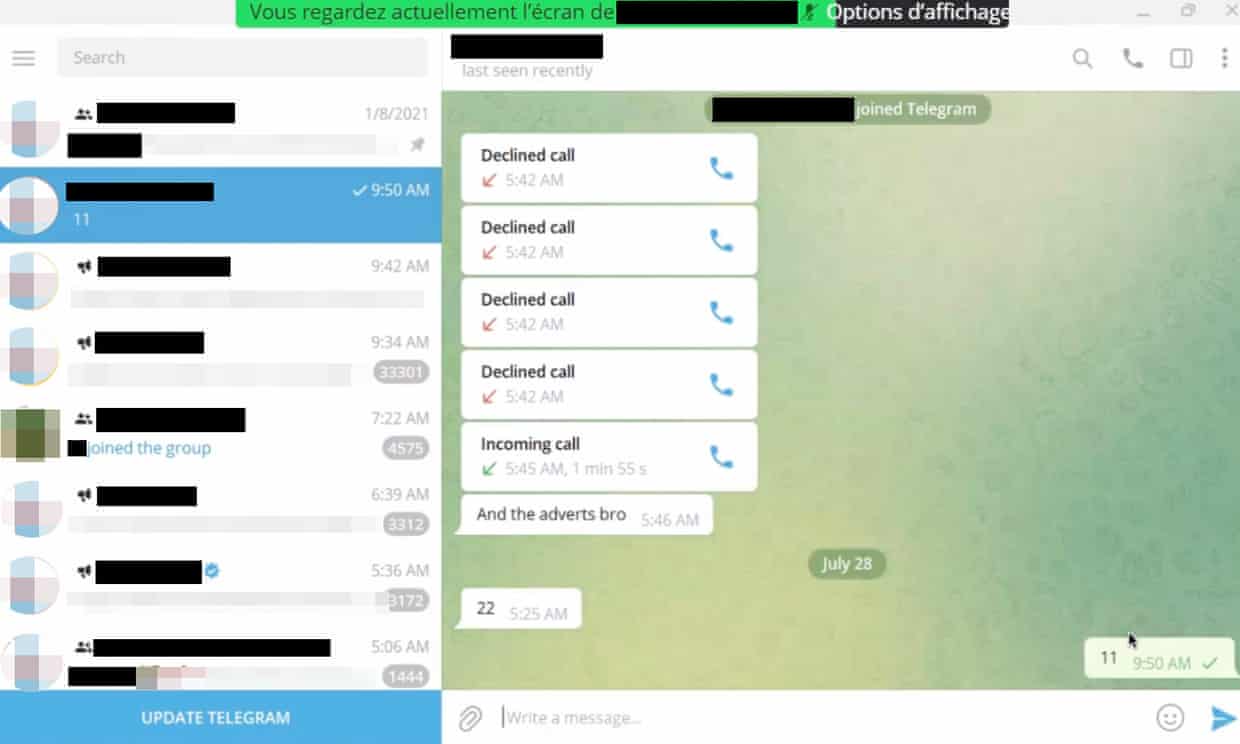
After sending an innocuous Telegram message consisting only of the number “11” to one of the hacking victim’s contacts, he failed to properly delete it.
Hanan sent a Telegram message consisting only of the number 11 to one of the hacking victim’s contacts. Photograph: Haaretz/TheMarker/Radio France
A reporter in the consortium was later able to track down the recipient of that message and was granted permission to check the person’s phone. The “11” message was still visible on their Telegram account, providing evidence that Team Jorge’s infiltration of the account was genuine.
Hanan suggested to the undercover reporters that some of his hacking methods exploited vulnerabilities in the global signalling telecoms system, SS7, which for decades has been regarded by experts as a weak spot in the telecoms network.
Google, which runs the Gmail service, declined to comment. Telegram said “the problem of SS7 vulnerabilities” was widely known and “not unique to Telegram”. They added: “Accounts on any massively popular social media network or messaging app can be vulnerable to hacking or impersonation unless users follow security recommendations and take proper precautions to keep their accounts secure.”
Hanan did not respond to detailed requests for comment, claiming that he needed “approval” from an unspecified authority before doing so. However, he added: “To be clear, I deny any wrongdoing.”
Zohar Hanan, his brother and business partner, added: “I have been working all my life according to the law!”
This is another episode in de long running saga of all kinds of special interest groups (varying from political parties till secret services), that are aiming to undermine common political processes by targeted campaignes, either by desinforming people around the wordl by methods on a subconsious level via social media, and / or by planting false newsstories in all kinds of news media..
Journalists that are trying to expose these practizes by blowing the whistle on them, are being systematically intimidated - untill the degree of blunt murder - by these criminal special political interest groups.
I can not think of a more effective way, to kill off our political systems, based on democracy and on our entire justice apparatous, then these dis-information wars, that are constantly raging around our world.
So, be aware of these cynical wars - weaponise yourself against these criminals - and defend our precious democratic and judicial institutions.