vrijdag 13 januari 2017

'Kompromat:' The Storied and Sordid History of Russian Blackmail


Afbeeldingsresultaat voor logo haaretz

'Kompromat:' The Storied and Sordid History of Russian Blackmail

A look at some notable examples of 'compromising material' in the wake of unsubstantiated allegations that Russia plotted against Donald Trump.


The Associated Press Jan 11, 2017 9:18 PM


Blurry video of highly placed men engaging in sexual acts, audio recordings of influential figures profanely insulting their nominal allies — in Russia these appear enough that a special word has evolved: "kompromat," or "compromising material."

In the wake of unsubstantiated allegations that Russia has gathered kompromat against President-elect Donald Trump, Kremlin spokesman Dmitry Peskov brushed them off as an attempt to undermine potentially improved U.S.-Russia ties once Trump takes office.

"The Kremlin does not engage in collecting compromising information," he told reporters on Wednesday.

But such material has shown up in Russia for decades. Recent examples of kompromat often support Kremlin interests or appear via media believed to have close ties to President Vladimir Putin's administration.

Some notable examples:

Victoria Nuland

As demonstrations against Ukraine's Russia-friendly President Viktor Yanukovych spiraled in February 2014, an audio recording emerged apparently of Nuland, an assistant U.S. secretary of state, and U.S. Ambassador Geoffrey Pyatt discussing which opposition leaders Washington would like to see as prime minister.

The recording's initial release was presented as evidence of open American instigation in the turmoil. But what attracted much of the attention was Nuland's obscene dismissal of the European Union, whose envoys the U.S. regarded as indecisive and slow-moving in the crisis.

The recording was widely believed to have been made by Russia. Nuland herself called it "impressive tradecraft."

Mikhail Kasyanov

Kasyanov was Putin's first prime minister before becoming one of the more prominent figures in Russia's beleaguered and fragmented opposition. His party was running in last year's parliamentary election and he also has been seen as a possible dark horse challenger to Putin in the 2018 presidential election.

In March 2016, grainy video was broadcast that appeared to show Kasyanov and a woman identified as an opposition activist having sex and speaking dismissively of other opposition figures. The video appeared on NTV, a state-controlled TV channel noted for especially vehement criticism of the opposition and support for Putin.

Boris Nemtsov

Before he was assassinated on a bridge near the Kremlin in 2015, Nemtsov was one of the most determined and charismatic of Putin's opponents. He was a leading figure in the massive anti-Kremlin demonstrations in Moscow in late 2011 following parliamentary elections plagued by allegations of fraud.

The size and persistence of the demonstrations apparently caught officials by surprise and sent them scrambling for ways to tamp them down without mass arrests.

On the eve of one of the planned protests, the website Life News, closely connected with the Kremlin and Russian security services, released recordings of Nemtsov apparently insulting other notable opposition figures. The recordings reinforced the personal and tactical disagreements that have undermined the opposition.

Nemtsov said some of the recordings were manipulated or faked but acknowledged that some were authentic.

Yuri Skuratov

In 1999, Boris Yeltsin was president while Putin headed the FSB security agency, apparently positioning himself to take over from Yeltsin.

Skuratov, at that time Russia's prosecutor-general, had been investigating corruption in the Yeltsin administration; Yeltsin tried to fire him, but the parliament refused.

A videotape appeared on state television of a man resembling Skuratov apparently having sex with prostitutes, prompting parliament to suspend him. Putin publicly identified the man as Skuratov.

Weeks after Putin became acting president on New Year's Eve 1999, the parliament dismissed Skuratov.
read more: http://www.haaretz.com/world-news/europe/1.764512

Fury at Azaria Verdict is Israel’s Trump Moment


Fury at Azaria Verdict is Israel’s Trump Moment

Nazareth.
The United Kingdom has Brexit. The United States, an incoming president Trump. And Israel now has Elor Azaria. It may not have the same ring, but ultimately the turning point could prove as decisive.
Two fallacious narratives have greeted the army medic’s manslaughter conviction last week, after he was filmed firing a bullet into the head of a wounded and helpless Palestinian, 21-year-old Abdel Fattah Al Sharif.
The first says Azaria is a rotten apple, a soldier who lost his moral bearings last March under the pressure of serving in Hebron. The second – popular among liberals in Israel – claims the conviction proves the strength of Israel’s rule of law. Even a transgressing soldier will be held accountable by the world’s “most moral army”.
In truth, however, the popular reaction to the military court’s decision was far more telling than the decision itself.
Only massed ranks of riot police saved the three judges from a lynching by crowds outside. The army top brass have been issued bodyguards. Demands to overrule the court and pardon Azaria are thunderous – and they are being led by prime minister Benjamin Netanyahu.
Azaria is no rogue soldier. He is “everyone’s child”, according to much of the public. The unexceptional nature of his act is vouched for by the complete indifference of his colleagues as Azaria pulled the trigger. Polls show overwhelming support – 84 per cent – for Azaria among 18- to 24-year-olds, the age of ­Israel’s conscript army.
The trial, meanwhile, reflected not the law’s sanctity – it is 12 years since the last soldier, a Bedouin, was convicted of manslaughter. It revealed only the growing pressures on Israel. Cameras in phones are making it harder to cover up soldiers’ crimes. By prosecuting Azaria in a case where the filmed evidence was unequivocal, Israel hopes to ward off war crimes investigations by the International Criminal Court.
As Israeli columnist Nahum Barnea noted, Azaria’s defence team also erred. Riding a wave of populist indignation, they accused Azaria’s superiors of lying and bullying. Prosecutors had already reduced a murder charge to manslaughter. The court would probably have settled for convicting a repentant Azaria of misusing a firearm. But given the defence’s framing of the case, the judges had to choose: side with the soldier or the army.
Like Brexit and Trump, Azaria’s trial exposed not only a deep social fissure, but also a moment of transition. Those who see a virtuous system punishing a rotten apple are now outnumbered by those who see a rotten system victimising a hero.
Polls show the Israeli public’s faith plummeting in most institutions, from the courts to the media, which are seen, however wrongly, as dominated by the “extreme left”. Only the army is still widely revered.
That is in part because so many Israeli parents must entrust their sons and daughters to it. To doubt the army would be to question the foundational logic of “Fortress Israel”: that the army is all that prevents Palestinian “barbarians” such as Sharif from storming the gates.
But also, unlike those increasingly despised institutions, the army has rapidly adapted and conformed to the wider changes in Israeli society.
Rather than settlers, we should speak of “settlerism”. There are far more settlers than the 600,000 who live in the settlements. Naftali Bennett, leader of the settlers’ Jewish Home Party and education minister, lives in Ranana, a city in Israel, not a settlement.
Settlerism is an ideology, one that believes Jews are a “chosen people” whose Biblical rights to the Promised Land trump those of non-Jews such as Palestinans. 
Polls show 70 per cent of Israeli Jews think they are chosen by God (sic).
The settlers have taken over the army, both demographically and ideologically. They now dominate its officer corps and they direct policy on the ground.
Azaria’s testimony showed how deep this attachment now runs. His company, including his commanders, often spent their free time at the home of Baruch Marzel, a leader of Kach, a group banned in the 1990s for its genocidal anti-Arab platform. Azaria described Marzel and Hebron’s settlers as like a “family” to the soldiers.
By their very nature, occupying armies are brutally repressive. For decades the army command has given its soldier free rein against Palestinians. But as settler numbers have grown, the army’s image of itself has changed too.
It has metamorphosed from a citizens’ army defending the settlements to a settler militia. The middle ranks now dictate the army’s ethos, not the top brass, as ousted defence minister Moshe Yaalon discovered last year when he tried to stand against the swelling tide.
This new army is no longer even minimally restrained by concerns about the army’s “moral” image or threats of international war crimes investigations. It cares little what the world thinks, much like the new breed of politicians who have thrown their support behind Azaria.
The soldier’s trial, far from proof of the rule of law, was the last gasp of a dying order. His sentence, due in the next few days, is likely to be lenient to appease the public. If the conviction is nullified by a pardon, the settlers’ victory will be complete.
A version of this article first appeared in the National, Abu Dhabi.

donderdag 12 januari 2017

From Russia With Love: The Complicated Web Connecting Trump To Russian Telecoms


Hsquared Magazine


From Russia With Love: The Complicated Web Connecting Trump To Russian Telecoms


A Russian Telecom Incorporates in Bermuda 

and Things Get Murky From There


POSTED ON OCTOBER 02, 2016


Renaissance Technologies is a “quant hedge fund”, an investment firm which trades on quantitative models. Founded in 1982 by James Simons (Wikipedia describes him as “an award-winning mathematician and former Cold War code breaker”), the New York company’s day-to-day operations are split between Robert Mercer and Peter Brown, who share co-CEO title. Mr. Simons now serves as Board Chair.
OpenSecrets.org reports Simons has donated “about $11.5 million” in the 2016 election cycle, while Mercer “has spent upwards of $18.5 million. The organization also notes “Renaissance is a house politically divided.
According to federal data, Renaissance Technologies has contributed $11,500,000 to outside groups supporting Hillary Clinton (D) for president, and $15,500,000 to outside Republican groups supporting Donald Trump’s bid for the White House.
Ignoring for a moment that Renaissance’s Robert Mercer has donated heavily to conservative organizations includingBreitbart.com (Breitbart’s former head, Stephen Bannon, was named Trump’s campaign manager in August 2016; and, Kellyanne Conway, who has close ties to Mercer and his businesses, provides campaign services to both Trump, and GOP PACs.), the Heritage Foundation, and the Media Research Center; devaluing the impact this type of conservative influence would have on U.S. domestic policy; side-stepping the big elephant in the room that a hedge fund with positions in finance and banking (17.32%), technology (17.27%), and consumer cyclicals (12.68%) is the leading contributor in the 2016 election cycle, – there is the more serious question of Renaissance’s larger positions in Russian telecommunication firms, and, the type of information Renaissance is afforded as an investor in Russian firms with ties to Russian government.
Renaissance holds 866,100 shares in a class of stocks known as Sponsored American Depository Receipts (ADR) in a corporation named Vimpelcom LTD (VIP), a telecommunication firm incorporated in Bermuda with headquarters in Amsterdam.
VIP is a holding company for telecommunication providers in Russia.
Renaissance’s shares in VIP represents .01% of its portfolio or about $3,360,000, according to its most recent SEC filings. (Abram’s Capital Management, L.P., a firm with its largest holdings in Wells Fargo, has approximately $72 million invested in the company. Wells Fargo has shares with a market value of $ 1,344,000 invested in VIP as of its June 2016 filings.) 
An SEC Investor’s Alert describes Sponsored ADRs as instruments which allow a non-U.S. company to enter “agreement directly with a U.S. bank”, at which time the U.S. bank may “arrange for record keeping, forwarding of shareholder communications, payment of dividends, and other services.”ADRs are issued by banks “on behalf of the foreign company whose equity serves as the underlying asset.”
PJSC VimpelCom, the first Russian company to trade on the U.S. stock exchange, is a telecommunication corporation founded in 1992, with headquarters in Moscow.
In 2008, OJSC merged with Golden Telecom (a provider of internet and communication services in Russia), and acquired a 50% stake in Euroset, Russia’s largest mobile phone retailer.
Prior to 2009 (the year the Russian firm fully merged with Vimpelcom LTD), it was this Russian version of the firm which traded on NASDAQ as VIP.
The most recently incorporated VIP has investments in telecommunication and technology products in Russia, the Ukraine, Italy, Greece, Algeria, Pakistan, and Bangladesh. In September, 2016, the company announced a partnership with Cisco Jasper (Cisco acquired Jasper for $1.4 billion dollars in March 2016), to expand B2B services. Jasper is an IoT technology firm with U.S. firms Ford, Amazon Kindle, Boston Scientific, and numerous cloud-based service providers.) 
A 2014 CNNMoney article, “Who’s scared of a little geopolitical risk?”, made note Renaissance was “doubling down” in Russia, a region of the world which was not generating confidence from other analysts, skittish of the political and State unrest occurring in the Ukraine.
The reporter described Renaissance’s investment in Russia as one in which the hedge fund “may be betting that tension won’t escalate to dangerous levels.”
In August 2016, Bloomberg reported VimpelCom and MegaFon had “signed an agreement in the development and operation of “new base stations with 4G support” to be deployed in “10 regions” in Russia. Bloomberg added the operation costs and profit would be divided between the companies.
According to an anonymous Russian blog, Sergey Vladimirovich Soldatenkov, MegaFon’s Chief Executive Officer, graduated in 1986 from the Saint Petersburg State University of Aerospace as a radio engineer, and served as an Aerospace engineer in the Russian army.
VIP has several new positions are U.S. telecommunication firms, including Yahoo Inc. (total shares held 1,313,700), COMCAST (total shares 827,238), ORACLE (1,809,132 total shares), Apple (1,096,033 total shares), and Palo Alto Networks, an enterprise provider offering security and firewall protection to corporations.
The other Russian firm mentioned in CNNMoney’s report on VIP’s position in Russia is Mobile TeleSystems OJSC (MBT), Russia’s largest mobile provider.
To describe these entangled corporations and subsequent volumes of records as transparent is to naively minimize the obliqueness which occurs when hedge funds and corporations are free to breed like Gremlins, and, when these funds are able to do so without transparency to either the government or investors as to how each of the funds and investments relate to another. 
Renaissance, with between 11-25 total clients, has three funds totaling $71,839,022,318 (Form ADV from 2016-03-30) in assets under management. 
In a July 5, 2016, Bloomberg noted the “Renaissance Institutional Equities Fund was up 4.6 percent last month” and that Renaissance Technologies, a $32 billion fund, also saw gains. The information was provided by an anonymous source. 
It may be that analysts at Renaissance were relying on DNC leaks, which were released by Gufficer 2.0 in June in their models. However, since Bloomberg’s July article, Donald J. Trump has all but assured his loss in the Presidential election.
Looking forward, one question becomes how secure Americans feel in the validity of the information they have been provided by Trump and his surrogates, as to his campaign’s relationships with Russia, albeit technology firms or government.
Another curious thought might be how confident Donald Trump is in the information he has been provided by his advisers about Eastern Europe, the region and Putin. Mr. Trump has proven to be an ill-judge of character and has not demonstrated any sense of concern to the reputation of his own. Mr. Trump appears highly persuadable on matters, and he does not demonstrate a need for opinion outside his closely knit group of advisors, and fans. 
It’s interesting to ponder how vulnerable the Republican party might be, if it is discovered Russia has influenced the U.S. presidential election (by financial or other means), and if it is somehow demonstrated that Russia’s ability to do so was influenced in some by way of a connection to the GOP candidate for presidential office.
From here, things go from bad to worse.
The U.S. government has escalated the tone in its alerts of Russia’s involvement in the U.S. presidential election.
The Department of Homeland Security has grown so alarmed, that the agency issued an August 2016 advisory notice offering the federal government’s assistance in aiding states in securing state voting machines and networks.
Georgia’s Secretary of State Brian Kemp rejected DHS’s offer and was quoted in a NextGov article as saying, “The question remains whether the federal government will subvert the Constitution to achieve the goal of federalizing elections under the guise of security.” The irony of this hubris is that NextGov reports Georgia utilizes Windows 2000 in its election machines.
The question also remains whether a state government’s or lawmaker’s ignorance will subvert the Constitution under the guise of state’s rights.
The United States lacks a quorum on the Supreme Court. If a hanging chad were to occur during this election cycle, the battle to the court the country goes. But this time, the Justices will be tasked with weighing national security interests against democratic processes.
This version of a court deciding an election because a government could not do its job would involve issues of federal versus state authority.
Which, is really what it has only been about for the last 50-years or so.
Does the Federal government have the power to decide in the interest of all Americans, when a state or local government is unable or incapable of ensuring the federal rights of those Americans who are at the mercy of ill-informed, or self-interested, governors and attorney generals?
Voting rights are a bedrock of American democracy.
For Southern states with ties to Donald’s Trumps brand of conservatism to not meet federal standards in concern to securing voting systems; with growing alarm over Russia’s attack on U.S. networks and databases; and, with open questions as to Donald Trump’s business and political connections in Russia, it is in the federal government’s interest to begin containing the problem, which will grow far more serious as we near the November 8 election.
Questions of the validity of a U.S. election will have ramification throughout the world, ensuring both instability on our streets and throughout the world.
The instability (unnecessary at its core) is unfathomable: Americans will be forced to withstand days, weeks and potentially months of attorneys filing motions; the news will run on 24-hour cycle reminding everyone the Republican Senate Judiciary Committee announced in February 2016 it would not hold hearings on any Obama Supreme Court nominees for the remainder of the year; and, constituents will be asking why a Supreme Court lacks a quorum, and therefore, cannot legally or practically provide assistance if the cases before the high court were to resolve in tie.
There is also a human component, as millions of Americans suffer under the uncertainty of a vulnerable and unstable government.
The question hinges on whether the federal government still maintains the constitutional power of war granted it following September 11, 2011.
If not, there may be a light: the court wrote in New York Times Co. v. United States, the U.S. has been granted “inherent power:
“So any power that the Government possesses must come from its “inherent power.” The power to wage war is “the power to wage war successfully. But the war power stems from the declaration of war.”
In the matter of NYTs v. U.S., the Court’s primary area of focus was whether the first amendment rights of the New York Times had been violated by a government with no constitutional authority (on merit), to abridge the freedom of the press.
As the press of 2016 is as curious as any entity as to what might be found in a trove of Trump documents, it isn’t likely the DOJ would face a first amendment challenge from respected media outlets.
If a United States intelligence community has reasonable suspicion the voting process in the U.S. is under imminent threat of foreign attack, it is bound by powers outlined within the U.S. Constitution. President’s Obama’s authority and power begin to take shape in Article II, Section I and Article VI.
A Southern Republican governor has refused the expertise of the greatest (to everyone but Donald Trump) spy agency in the world.
This seems (to the non-deplorable among us) to poorly reflect on the Governor’s ability to process relevant national security information against irrelevant (in the face of things) party interests.
Meanwhile, the Russian hack-a-thon continues unabated. In August 2016, NBC News reported that Russian hackers had broken into two U.S. voter databases. A breach occurred in Arizona’s voting system, and over 200,000 Illinois voter records were stolen.
Polls collected by Real Clear Politics i has Clinton leading Trump in Illinois between 6% – 13% in a two-way race. These numbers change in a 4-way race.
Let’s hope the records of all deceased have been purged from state voting databases, especially those databases which do not provide a print-out to voters.  
As any good leader, executive or parent knows, there comes a time when the adult in the room must take charge.
In the matter of federal rights versus state’s rights, the adult in the room will be the branch of government who acts in the immediate and best interests of all Americans, and visitors.
To the victor goes the spoils (or the oil, if Trump has much to say about the outcome.)

woensdag 11 januari 2017

These Reports Allege Trump Has Deep Ties To Russia


Afbeeldingsresultaat voor buzzfeednews logo

These Reports Allege Trump Has Deep Ties To Russia

A dossier, compiled by a person who has claimed to be a former British intelligence official, alleges Russia has compromising information on Trump. The allegations are unverified, and the report contains errors.
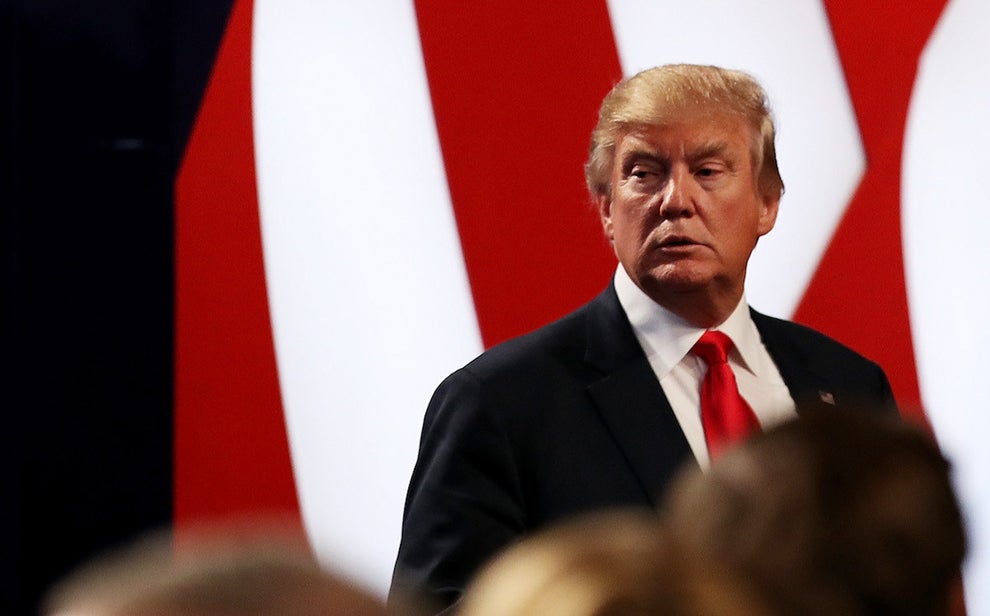
Drew Angerer / Getty Images
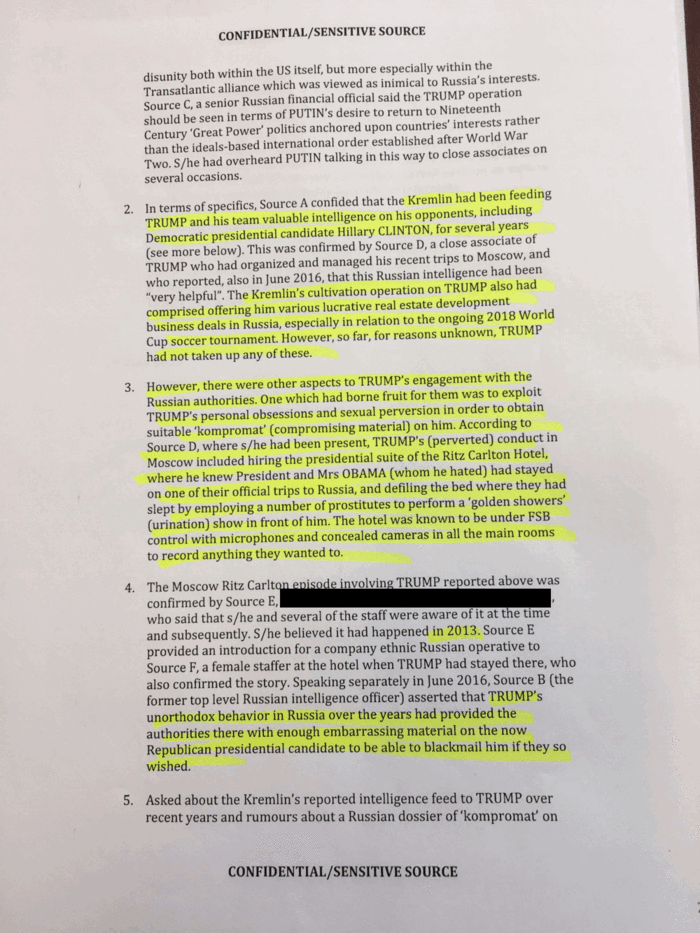
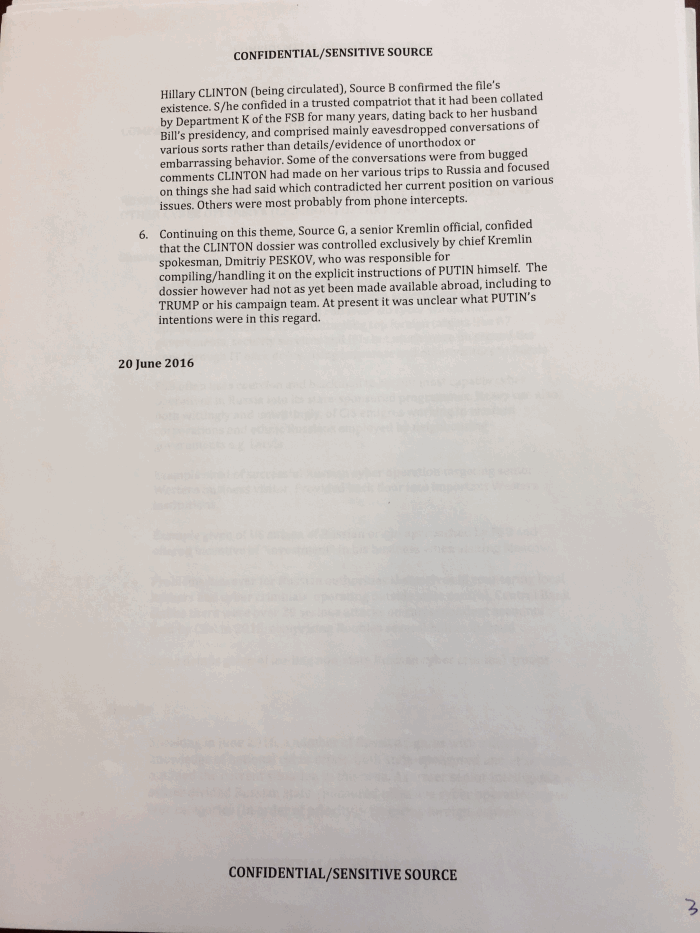
A dossier making explosive — but unverified — allegations that the Russian government has been “cultivating, supporting and assisting” President-elect Donald Trump for years and gained compromising information about him has been circulating among elected officials, intelligence agents, and journalists for weeks.
The dossier, which is a collection of memos written over a period of months, includes specific, unverified, and potentially unverifiable allegations of contact between Trump aides and Russian operatives, and graphic claims of sexual acts documented by the Russians. 
BuzzFeed News reporters in the US and Europe have been investigating various alleged facts in the dossier but have not verified or falsified them. CNN reported Tuesday that a two-page synopsis of the report was given to President Obama and Trump.
Now BuzzFeed News is publishing the full document so that Americans can make up their own minds about allegations about the president-elect that have circulated at the highest levels of the US government.
The document was prepared for political opponents of Trump by a person who is understood to be a former British intelligence agent. It is not just unconfirmed: It includes some clear errors. The report misspells the name of one company, “Alpha Group,” throughout. It is Alfa Group. The report says the settlement of Barvikha, outside Moscow, is “reserved for the residences of the top leadership and their close associates.” It is not reserved for anyone, and it is also populated by the very wealthy.
The Trump administration’s transition team did not immediately respond to BuzzFeed News’ request for comment. However, the president-elect’s attorney, Michael Cohen, told Mic that the allegations were absolutely false.
“It’s so ridiculous on so many levels,” he said. “Clearly, the person who created this did so from their imagination or did so hoping that the liberal media would run with this fake story for whatever rationale they might have.”
And Trump shot back against the reports a short time later on Twitter.
His former campaign manager and current senior White House adviser, Kellyanne Conway, also denied the claims during an appearance on Late Night With Seth Meyers, adding that “nothing has been confirmed.” She also said Trump was “not aware” of any briefing on the matter.
The documents have circulated for months and acquired a kind of legendary status among journalists, lawmakers, and intelligence officials who have seen them. Mother Jones writer David Corn referred to the documents in a late October column. BuzzFeed News reporters in the US and Europe have been investigating various alleged facts in the dossier but have not stood them up or knocked them down.
Harry Reid spokesman Adam Jentleson tweeted Tuesday that the former Senate Democratic leader had seen the documents before writing a public letter to FBI Director James Comey about Trump’s ties to Russia. And CNN reported Tuesday that Arizona Republican John McCain gave a “full copy” of the memos to Comey on Dec. 9, but that the FBI already had copies of many of the memos.

Read the report here:

Ken Bensinger is an investigative reporter for BuzzFeed News and is based in Los Angeles. His secure PGP fingerprint is 97CC 6E32 10A2 23FE 4E84 98B4 9CFF 4214 9D26 8AA7
Contact Ken Bensinger at ken.bensinger@buzzfeed.com.
Miriam Elder is the world editor for BuzzFeed News and is based in New York. Her secure PGP fingerprint is 5B5F EC17 C20B C11F 226D 3EBE 6205 F92F AC14 DCB1
Contact Miriam Elder at miriam.elder@buzzfeed.com.
Pulitzer-prize winner Mark Schoofs is the investigations and projects editor for BuzzFeed News. While working at The Village Voice, Schoofs won the 2000 Pulitzer Prize for International Reporting for his series on AIDS in Africa.
Contact Mark Schoofs at mark.schoofs@buzzfeed.com.
https://www.buzzfeed.com/kenbensinger/these-reports-allege-trump-has-deep-ties-to-russia?utm_term=.gpKK33YkL#.tpW5MMrAL